


National Energy: How Much Do We Really Need and How Can We Manage It?
Have you ever looked at your electricity bill and wondered, "Just how much energy is my entire country using?" It's a massive question. As nations strive for energy security and a cleaner future, understanding the scale of our national energy consumption is the first step toward smarter management. The challenge isn't just generating more power; it's about optimizing what we have, integrating renewables, and storing energy intelligently for when it's needed most. In this article, we'll explore the realities of national energy demand and how modern solutions, particularly advanced energy storage, are becoming the linchpin for a resilient grid.
The Immense Scale of National Energy Consumption
Let's put some numbers to the question, "national energy how much?" The United States, for instance, consumed about 4,000 terawatt-hours (TWh) of electricity in 2023. To visualize, one terawatt-hour can power roughly 70,000 U.S. homes for a year. Europe, as a whole, consumed approximately 2,800 TWh. These figures are staggering, and they're driven by everything from industrial manufacturing and commercial data centers to our homes and the growing fleet of electric vehicles.
This demand isn't flat. It has daily peaks (like evenings when people return home) and seasonal spikes (heat waves requiring air conditioning). The grid must be built to handle these peak loads, often relying on less efficient "peaker plants" that can be costly and polluting. This is the fundamental tension: building infrastructure for peak demand that is only used a fraction of the time.
The Core Problem: Supply, Demand, and Intermittency
The energy landscape is getting more complex. The push for decarbonization means a rapid increase in variable renewable energy (VRE) sources like solar and wind. While this is excellent for reducing emissions, it introduces a new challenge: intermittency. The sun doesn't always shine, and the wind doesn't always blow when energy demand is highest.
This mismatch creates a dual problem:
- Curtailment: During periods of high renewable generation and low demand (e.g., sunny afternoons), grid operators may have to waste or "curtail" perfectly good clean energy because there's no way to store it.
- Reliability Gaps: When renewable generation drops suddenly, traditional power plants must ramp up quickly to fill the gap, a process that can be slow, expensive, and carbon-intensive.
So, the question evolves from "national energy how much?" to "national energy when and how?" Managing the timing and quality of power is now as critical as the total quantity generated.
The Solution: Energy Storage as a National Grid Asset
This is where Battery Energy Storage Systems (BESS) transform the equation. Think of them as a giant, national-scale "buffer" or "shock absorber" for the electricity grid. They don't generate power, but they intelligently manage its flow, providing services that are essential for modern grids.
| Grid Service | How Storage Helps | National Impact |
|---|---|---|
| Frequency Regulation | Responds in milliseconds to tiny fluctuations in grid frequency, keeping it stable. | Prevents blackouts and protects sensitive industrial equipment. |
| Peak Shaving | Discharges stored energy during high-demand periods, reducing strain on peaker plants. | Lowers overall energy costs and defers costly grid infrastructure upgrades. |
| Renewable Integration | Stores excess solar/wind energy and releases it when generation is low. | Maximizes clean energy use, reduces curtailment, and cuts carbon emissions. |
| Backup Power & Resilience | Provides immediate power during outages, acting as a grid resource or for critical facilities. | Enhances national energy security and community resilience against extreme weather. |

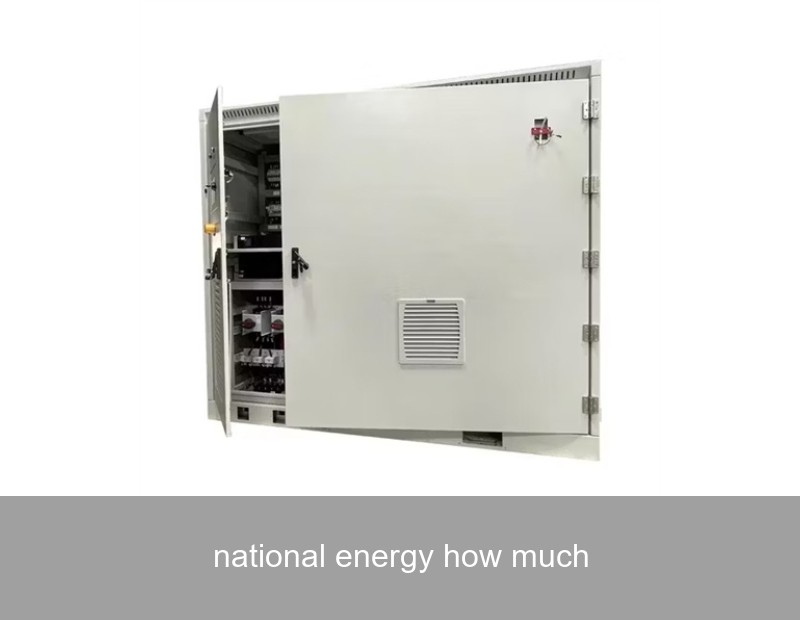
Image: Utility-scale battery storage systems are key to modernizing the grid. Source: Unsplash
Case Study: California's Lithium-Ion Battery Fleet in Action
No discussion is complete without a real-world example. California, a leader in renewable adoption, has also become a global leader in grid-scale storage. Following challenges with grid reliability, the state aggressively deployed BESS.
The Data: As of early 2024, California has over 7,000 MW of battery storage capacity online. That's more than many traditional power plants. During a critical heatwave in September 2023, these batteries played a starring role. On the evening of September 6th, when demand surged as solar generation faded, batteries discharged a record 3,500 MW to the grid—that's equivalent to powering approximately 2.6 million homes. This massive injection of stored power was crucial in preventing rolling blackouts and showcased storage as a reliable, dispatchable resource. You can read more about this in reports from the California Energy Commission.
This case proves that storage is no longer a pilot technology; it's a critical, operational asset answering the "national energy how much" question by ensuring that what we have is used optimally.
How Highjoule's Technology Supports National Energy Goals
At Highjoule, with nearly two decades of experience since 2005, we design storage solutions that directly address these national and grid-level challenges. Our systems are built for intelligence, safety, and longevity.
For large-scale commercial, industrial, and utility applications, our HJ GridStack series is a modular, containerized BESS platform. It's engineered for high cycle life and seamless integration with renewable assets, enabling clients to:
- Maximize Self-Consumption: For a factory with solar panels, our system stores midday excess to power night shifts, drastically reducing grid dependence.
- Provide Grid Services: Our advanced energy management system (EMS) allows aggregated storage fleets to participate in frequency regulation and capacity markets, creating new revenue streams while stabilizing the grid.
- Enhance Resilience: For critical infrastructure like hospitals or data centers, our BESS provides seamless backup transition, ensuring continuity during outages.
Furthermore, our HJ Microgrid solutions allow communities, campuses, and industrial parks to operate as self-sufficient "islands" from the main grid when necessary, contributing to broader national energy resilience. By providing these scalable, reliable technologies, Highjoule empowers not just individual businesses but supports the overall stability and efficiency of the national energy ecosystem.

Image: Intelligent control systems are vital for optimizing storage performance. Source: Unsplash
The Future of National Energy Management
The future grid will be a digital, decentralized, and dynamic network. With the rise of electric vehicles, smart appliances, and even more distributed solar, the flows of energy will become bidirectional and complex. The next generation of energy storage will involve longer-duration technologies (like flow batteries) and even more sophisticated AI-driven software to predict demand and optimize storage dispatch across entire regions.
Policymakers and grid operators are increasingly recognizing storage as foundational. The U.S. Inflation Reduction Act (IRA) and the European Green Deal are creating powerful incentives for storage deployment, signaling that the era of storage-first grid planning has arrived. For a deeper dive into global storage trends, the International Energy Agency (IEA) provides excellent resources.
An Open Question for You
We've explored how much energy a nation uses and how storage is key to managing it. But here's a thought: If your local community could be powered by a mix of local renewables and storage, increasing independence from the main grid, what would be your biggest priority—lower cost, absolute reliability, or environmental impact? How do you see the balance shifting in the next five years?
 Inquiry
 Online Chat