


Neuartige Energiespeicher: The Key to Unlocking a 24/7 Renewable Future
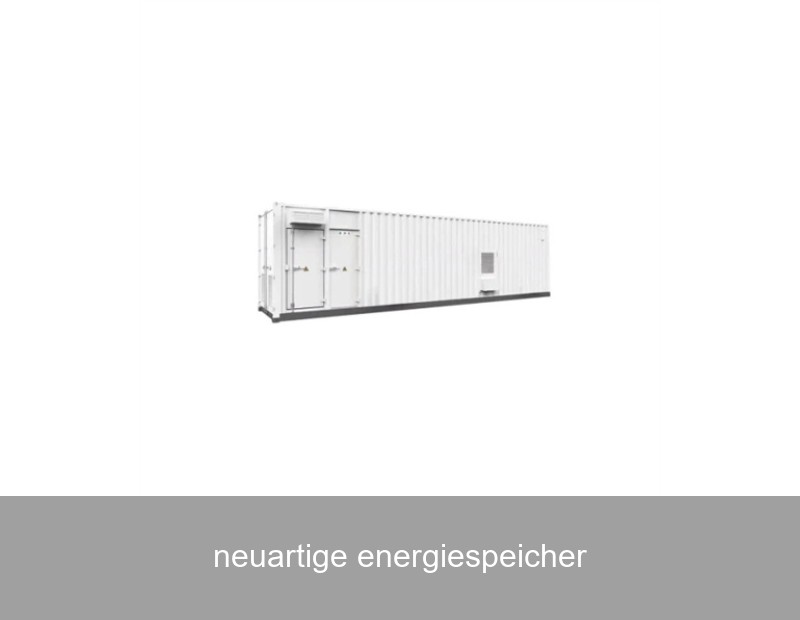
it's a calm, cloudy afternoon across Europe. Wind turbines spin slowly, and solar panels output a fraction of their capacity. Yet, factories hum, homes are warm, and the lights stay on. This isn't magic; it's the promise of neuartige energiespeicher – novel energy storage systems. As we aggressively phase out fossil fuels, the fundamental challenge of renewable energy remains: the sun doesn't always shine, and the wind doesn't always blow. The solution lies not just in generating more green energy, but in intelligently storing it. This is where cutting-edge storage technologies move from the lab to the backbone of our grids, ensuring stability, resilience, and true energy independence.
The Grid Challenge: Why We Can't Rely on Intermittent Sources Alone
Let's talk numbers. The European Union aims for 42.5% renewable energy by 2030, with some member states targeting near 100%. In the US, states like California already see days where renewables exceed 100% of demand… for a few hours. The phenomenon of "negative electricity prices" during peak solar production is becoming more common, a clear signal that our grid infrastructure isn't yet equipped to handle the intermittency. Simply put, we are generating abundant green energy at the wrong times and facing shortages at others. Traditional "peaker" plants, often gas-fired, are fired up to bridge these gaps, undermining carbon reduction goals. This costly and inefficient cycle is the primary problem that neuartige energiespeicher are designed to solve.

Image Source: Unsplash - A large-scale solar farm. The intermittency of such sources creates a pressing need for novel storage.
Beyond Lithium-Ion: A Spectrum of Novel Technologies
When most people think of batteries, they think of lithium-ion. It's the powerhouse behind EVs and home storage. But for grid-scale and specialized industrial applications, the future is diverse. Novel energy storage isn't a single technology but a toolbox, each tool suited for a specific job: long duration, massive scale, extreme safety, or use of abundant materials.
Flow Batteries: The Long-Duration Champions
Imagine a battery where power and energy are decoupled. Flow batteries store energy in liquid electrolytes held in external tanks. To increase storage capacity, you simply use larger tanks. Technologies like Vanadium Redox Flow Batteries (VRFB) are non-flammable, have exceptionally long cycle lives (20,000+ cycles), and can discharge for 10+ hours straight. They are ideal for smoothing weekly renewable output and providing backup for critical infrastructure.
Thermal Energy Storage: Storing Heat as a Battery
Why convert energy more than necessary? Thermal storage systems capture excess electricity as heat or cold, storing it in materials like molten salt, chilled water, or specialized stones. Later, this stored thermal energy can be used directly for district heating, industrial processes, or even converted back to electricity. It's a highly efficient path for decarbonizing heat, which accounts for roughly half of final energy consumption in Europe.
Mechanical Storage: Gravity and Compressed Air
Sometimes, simple physics is best. Gravity storage, like advanced rail or lifting systems, uses excess power to raise a mass, releasing kinetic energy back to electricity when lowered. Compressed Air Energy Storage (CAES) uses surplus power to compress air into underground caverns, releasing it to drive turbines when needed. These technologies offer massive, multi-gigawatt-hour scale potential with decades-long lifespans.
Solid-State Batteries: The Next Evolution in Safety & Density
Emerging from the EV revolution, solid-state batteries replace the flammable liquid electrolyte in Li-ion with a solid one. The benefits for storage are profound: higher energy density, drastically improved safety (no thermal runaway risk), and potentially longer life. While still scaling, they represent the next wave for high-performance commercial and residential storage applications.
Real-World Case Study: Stabilizing a German Industrial Park
The theory is compelling, but does it work in practice? Let's look at a real project in North Rhine-Westphalia, Germany. A mid-sized industrial park with high-precision manufacturing faced two problems: volatile energy costs and an increasingly unreliable grid prone to frequency dips. Their on-site solar PV covered 40% of their annual load but created wild intra-day power swings.
The solution was a hybrid storage system combining a 2 MWh Vanadium Flow Battery for long-duration load-shifting (storing midday solar for evening production) with a 1 MW / 1.5 MWh Lithium-Ion battery for instantaneous frequency regulation. The results over 18 months were striking:
| Metric | Before Installation | After Installation |
|---|---|---|
| Grid Energy Cost Reduction | Baseline | 31% |
| Solar Self-Consumption | 35% | 89% |
| Grid Frequency Support Events | 0 (could not participate) | Over 4,200 (automated) |
| Carbon Footprint Reduction | -- | Approx. 740 tonnes CO2e/year |
This case, documented in part by the Fraunhofer Institute for Solar Energy Systems, demonstrates the multi-faceted value of deploying tailored, novel storage: direct savings, increased renewable utilization, and becoming an active, stabilizing asset for the wider grid.
Highjoule's Role in Bringing Novel Storage to Market
At Highjoule, we don't just watch this transition; we engineer it. Since 2005, our mission has been to bridge the gap between groundbreaking storage technologies and reliable, everyday power solutions. We understand that there's no one-size-fits-all answer. That's why our portfolio and expertise span the spectrum of neuartige energiespeicher.
For our commercial and industrial clients, we design integrated systems that may combine our HJ FlowMax series of vanadium flow batteries for base-load shifting with our high-power HJ Pulse lithium-ion systems for demand charge management. Our intelligent energy management platform, Highjoule Neuron, acts as the brain, continuously analyzing weather data, energy prices, and consumption patterns to optimize which storage asset to use, and when, maximizing ROI and resilience.

Image Source: Unsplash - A modern energy control room. Platforms like Highjoule Neuron are crucial for managing complex storage assets.
For microgrids, particularly in areas with weak grid connections or high renewable penetration, we deploy containerized, turnkey storage solutions that can include flow batteries and advanced lead-carbon options, ensuring communities and facilities have 24/7 clean power. Our approach is always consultative—we start with the client's unique energy profile and goals, then engineer the optimal storage mix.
The Future Outlook for Energy Storage
The path forward is one of hybridization. The grid of the future won't rely on a single "silver bullet" storage technology but on a layered network of solutions, each playing to its strengths. Short-duration, high-power needs will be met by advanced electro-chemical batteries, while weekly or seasonal storage may come from hydrogen, advanced thermal, or gravity-based systems. The innovation cycle is accelerating, driven by both policy—like the Inflation Reduction Act in the US—and sheer market demand for grid stability.
The question is no longer *if* novel energy storage will become mainstream, but *how quickly* and *how seamlessly* it can be integrated. The businesses and communities that proactively adopt and integrate these systems today are not only future-proofing their energy costs but also positioning themselves as leaders in the new energy economy.
Is your organization ready to analyze its energy profile and discover which combination of novel storage technologies could unlock your next leap in sustainability, resilience, and cost control?
 Inquiry
 Online Chat