


Compressed Air Energy Storage: A Powerful Ally for a Renewable Grid
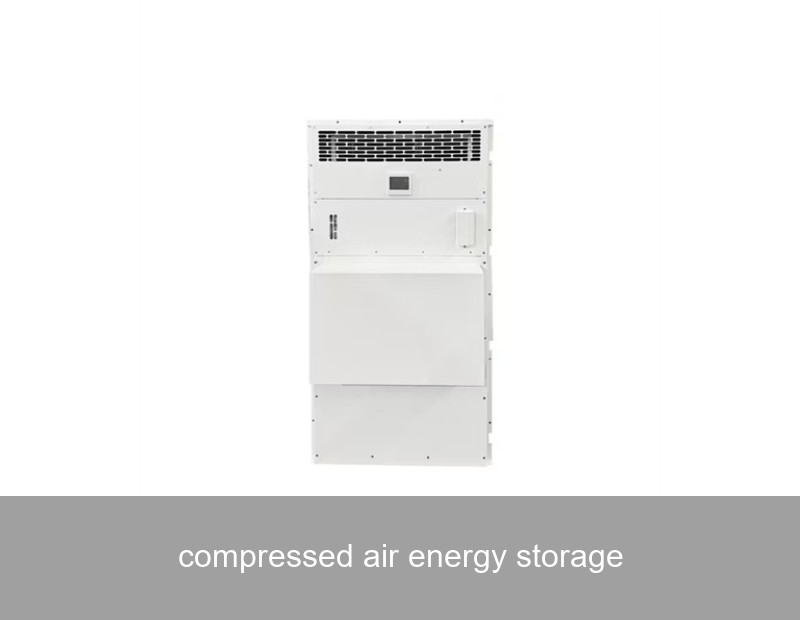
As the world accelerates its shift towards wind and solar power, a critical question emerges: how do we keep the lights on when the sun isn't shining and the wind isn't blowing? The answer lies not just in generating clean energy, but in storing it intelligently. While lithium-ion batteries often steal the spotlight, another time-tested and highly scalable technology is experiencing a renaissance: Compressed Air Energy Storage (CAES). This technology, which uses the simple principle of storing energy as compressed air, is poised to play a vital role in stabilizing our future grids and maximizing the use of renewable resources.
Table of Contents
- What is Compressed Air Energy Storage (CAES)?
- How Does CAES Work? The Simple Science
- Types, Advantages, and Considerations
- CAES vs. Battery Storage: Complementary Technologies
- A Real-World Case Study: The Huntorf Plant
- The Future Role of CAES in Energy Systems
- How Highjoule Integrates Large-Scale Storage Insights
What is Compressed Air Energy Storage (CAES)?
At its core, Compressed Air Energy Storage is a method of storing large amounts of energy by using electricity to compress air and store it under pressure in an underground reservoir, like a salt cavern, depleted gas field, or even a specially engineered hard rock cavern. When electricity is needed, the pressurized air is released, heated, and expanded through a turbine to generate power. Think of it as a giant, geological-scale battery that uses air instead of chemicals.
The concept isn't new; the first commercial CAES plant began operation in Germany back in 1978. However, with today's focus on grid-scale, long-duration storage (think 8+ hours to multiple days), CAES is gaining renewed interest for its unique ability to provide massive storage capacity at a competitive cost for the right locations.
How Does CAES Work? The Simple Science
The process follows a clear, two-step cycle:
- Charging (Storage): During periods of low electricity demand or high renewable output (e.g., a windy night), excess grid power drives a compressor. This compressor forces air into the underground storage cavern, raising the pressure and effectively "charging" the system. The compression process generates heat, which is a key factor in the system's efficiency.
- Discharging (Generation): When demand peaks or renewable generation drops, the high-pressure air is withdrawn from the cavern. It is then mixed with a small amount of natural gas or, in advanced designs, the stored heat from compression, and expanded through a high-pressure turbine. This turbine drives a generator, feeding electricity back to the grid.

Image Source: U.S. Department of Energy (public domain)
The Efficiency Challenge and Innovation
Traditional CAES plants, known as diabatic CAES (D-CAES), use natural gas to reheat the air before expansion, achieving a "round-trip efficiency" (the percentage of energy you get back versus what you put in) of around 50-55%. The latest generation, Advanced Adiabatic CAES (AA-CAES), aims to capture the heat generated during compression, store it in a thermal storage system, and reuse it to reheat the air during expansion. This eliminates the need for fossil fuel and can boost efficiency to an estimated 70% or higher, making it a truly green storage solution.
Types, Advantages, and Considerations
| Feature | Diabatic CAES (D-CAES) | Advanced Adiabatic CAES (AA-CAES) |
|---|---|---|
| Heat Management | Heat from compression is dissipated; natural gas is used for re-expansion. | Heat from compression is captured and stored in thermal media for later use. |
| Fuel Source | Requires natural gas. | No fossil fuel input; purely electrical. |
| Round-Trip Efficiency | ~50-55% | ~65-70% (projected) |
| Carbon Emissions | Lower than a gas peaker plant, but not zero. | Near-zero when powered by renewables. | Maturity | Commercial, proven technology. | Pilot and demonstration phase. |
Key Advantages of CAES:
- Long Duration & Massive Scale: Can store energy for tens of hours to days, with capacities in the hundreds of MW to GW range—ideal for balancing weekly or seasonal variability.
- Long Lifespan: The core components (cavern, turbines) can operate for 30-50 years, far exceeding many battery chemistries.
- Geographical Flexibility (with conditions): Where suitable geology exists, it offers a very low-cost storage medium (the cavern).
- Grid Services: Excellent for providing inertia, frequency regulation, and black-start capabilities, crucial for grid stability.
Key Considerations:
- Geological Dependency: Requires specific underground formations, limiting where it can be deployed.
- Capital Intensity: High upfront costs for exploration, drilling, and power machinery.
- Efficiency: Traditional D-CAES efficiency is lower than batteries, though AA-CAES promises improvement.
CAES vs. Battery Storage: Complementary Technologies
It's a common misconception to frame this as a winner-takes-all battle. In reality, CAES and battery energy storage systems (BESS) are complementary. Think of it like tools in a toolbox:
- Battery Storage (like Highjoule's solutions) excels at rapid response (milliseconds to seconds), high round-trip efficiency (90%+), and short-to-medium duration storage (up to 8 hours). They are modular, deployable almost anywhere, and perfect for daily cycling, frequency regulation, and smoothing renewable output.
- CAES is the marathon runner. It's optimized for long-duration, bulk energy shifting—storing excess wind power from a windy week to use during a calm period. Its value shines in providing energy security over longer timeframes.
A resilient, 100% renewable grid will likely need both: batteries for daily management and grid services, and CAES or other long-duration storage for weekly or seasonal balancing. At Highjoule, our commercial and industrial energy storage systems are designed to integrate seamlessly with a grid that utilizes diverse storage assets, ensuring our clients have reliable power regardless of the larger grid's storage mix.
A Real-World Case Study: The Huntorf Plant
Let's look at hard data. The world's first CAES plant in Huntorf, Germany, has been a workhorse since 1978, proving the technology's reliability and longevity.
- Capacity: 321 MW generation output (290 MW compression power).
- Storage: Two salt caverns at 450-650 meters depth, with a combined volume of ~310,000 m³.
- Operation: It charges for 8 hours overnight and can generate at full power for 2 hours, primarily providing black-start capability and peak shaving for the grid.
- Performance: With an astounding 90%+ start reliability and over 40 years of operation, Huntorf has provided critical grid services and demonstrated the unparalleled durability of well-engineered CAES. It remains a key asset for grid stability in Northern Germany. (Source: ScienceDirect)
This case underscores CAES's role not as an experimental tech, but as a proven, industrial-scale solution for specific, high-value grid needs.
The Future Role of CAES in Energy Systems
The future is leaning towards hybrid and integrated systems. Innovations like isothermal CAES, which aims to compress and expand air at near-constant temperature for higher efficiency, are in development. More importantly, CAES is being considered as a backbone for renewable energy hubs—co-located with massive offshore wind farms or solar parks, where it can store terawatt-hours of energy and act as a green power plant on demand.
For microgrids in regions with the right geology, smaller-scale CAES could provide unparalleled energy independence. The U.S. Department of Energy's Long Duration Storage Shot initiative explicitly aims to reduce the cost of systems that provide 10+ hours of duration, a target well within CAES's sweet spot.
How Highjoule Integrates Large-Scale Storage Insights
At Highjoule, our expertise in advanced battery storage gives us a deep appreciation for the entire storage spectrum. While we specialize in delivering cutting-edge, residential, commercial, and industrial battery systems, we understand that a sustainable energy future is built on a portfolio of solutions.
Our smart energy management systems are designed with this flexibility in mind. Whether your site relies on solar, wind, or the grid, our technology can optimize your power usage, integrate with on-site generation, and provide backup power—acting as the perfect complement to large-scale grid assets like CAES. We bring the precision, modularity, and daily cycling capability that, when combined with the bulk storage of technologies like CAES, creates a resilient and efficient energy ecosystem for communities and businesses.
As we witness the rebirth of compressed air energy storage alongside breakthroughs in battery technology, one thing is clear: the path to a decarbonized grid requires all hands on deck. What kind of energy storage mix do you think will be most critical for your region's transition to renewable energy?
 Inquiry
 Online Chat