


Off Grid Solar Connection: Your Complete Guide to Energy Independence
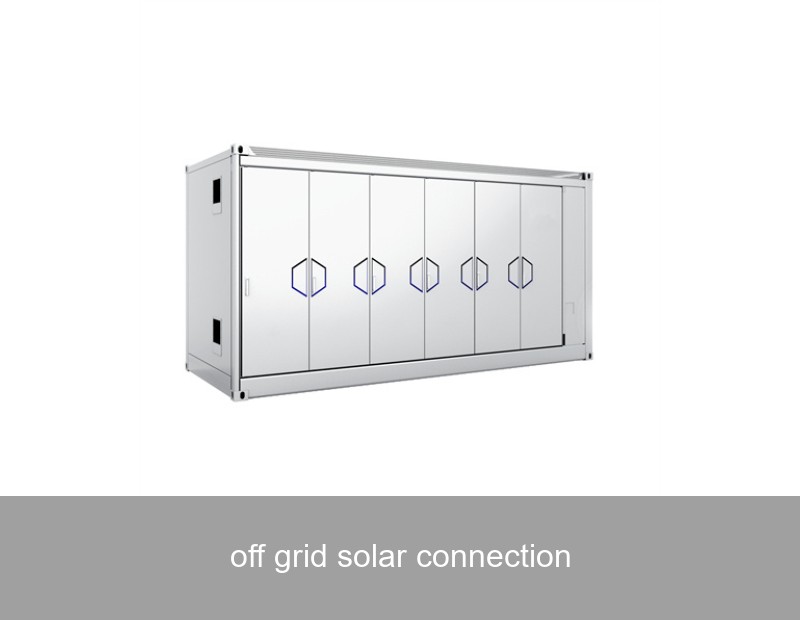
Imagine a life where your power is truly your own—unaffected by grid outages, rising utility rates, or remote locations. This is the promise of an off grid solar connection. But what does it truly take to disconnect completely and achieve energy self-sufficiency? As a leading provider of advanced energy storage solutions, Highjoule has been at the forefront of this revolution since 2005. This guide will demystify the process, explore the technology, and show you how a reliable off-grid system is more attainable than ever.
Table of Contents
- What is an Off-Grid Solar Connection?
- The 5 Key Components of a Robust System
- The Phenomenon: Why Go Off-Grid Now?
- Data & Insights: The Real Cost of Energy Independence
- Case Study: A Mountain Retreat's Success Story
- Highjoule's Intelligent Systems: The Brain of Your Off-Grid Home
- Planning Your Off-Grid Solar Connection
- The Future of Off-Grid Living
What is an Off-Grid Solar Connection?
An off-grid solar connection, also known as a standalone power system (SPS), is a complete energy generation and storage setup that operates independently of the main public electricity grid. Unlike grid-tied systems with net metering, an off-grid system must produce, store, and manage all the electricity a home or business consumes, 24/7, 365 days a year. This requires meticulous planning, robust equipment, and intelligent energy management to balance supply and demand, especially during periods of low sunlight.

Image Source: Unsplash - Representative image of a remote off-grid solar setup.
The 5 Key Components of a Robust Off-Grid System
Building a reliable off-grid solar connection is like assembling a puzzle where every piece is critical. Here’s what you need:
- Solar Panels (PV Array): Your primary fuel source. The size (in kilowatts) determines how much energy you can harvest.
- Charge Controller: Regulates the voltage and current from the panels to the batteries, preventing overcharging and damage.
- Energy Storage System (Battery Bank): The heart of off-grid living. This is your energy reservoir for nights and cloudy days.
- Inverter: Converts the direct current (DC) electricity stored in your batteries into the alternating current (AC) used by household appliances.
- Backup Generator (Optional but recommended): A fuel-based generator for extended periods of poor weather, ensuring uninterrupted power.
The Phenomenon: Why Go Off-Grid Now?
The trend towards off-grid living is accelerating beyond remote cabins. We're seeing a surge in homeowners in suburban Europe and North America seeking resilience. The driving forces? Energy security and economic sense. With increasing grid instability due to extreme weather events and the desire to lock in long-term, predictable energy costs, the off-grid solar connection has moved from a niche lifestyle choice to a serious investment in reliability.
Data & Insights: The Real Cost of Energy Independence
Let's talk numbers. A common misconception is that off-grid is prohibitively expensive. While the upfront capital is higher than a grid-tied system—primarily due to the large battery bank—the levelized cost of energy (LCOE) over 20+ years tells a different story. According to the National Renewable Energy Laboratory (NREL), the cost of solar PV has fallen by over 70% in the last decade. Coupled with rising retail electricity rates (which increased nearly 15% in the EU in 2023 alone), the payback period for a well-designed off-grid system is shrinking rapidly.
| System Component | Typical Lifespan | Key Consideration |
|---|---|---|
| Solar Panels | 25-30+ years | Degradation rate (~0.5% per year) |
| Lithium-Ion Batteries | 10-15 years | Depth of Discharge (DoD) & cycle life |
| Inverter/Charger | 10-15 years | Efficiency rating (aim for >95%) |
Case Study: A Mountain Retreat's Success Story
Consider the Larson family in the Colorado Rockies, USA. At 9,000 feet elevation, grid connection was quoted at over $120,000. They opted for a custom off-grid solar connection instead. Their system features a 12kW solar array paired with a 40kWh Highjoule H2 Series lithium iron phosphate (LiFePO4) battery system. In its first full year, the system met 100% of their energy needs, with the integrated Highjoule Energy Management System (EMS) automatically activating a small propane generator for only 18 total hours during a historic winter snowstorm. Their total energy cost? Just the minimal maintenance and fuel for the generator—a fraction of what a grid connection would have cost, with zero monthly bills.
Highjoule's Intelligent Systems: The Brain of Your Off-Grid Home
This is where modern technology transforms a basic off-grid setup into a seamless power experience. Highjoule’s integrated systems, like the H-Series for residential and MegaJoule for commercial applications, go beyond simple storage. Our battery systems come with a sophisticated EMS that acts as the brain of your off-grid solar connection. It intelligently:
- Prioritizes solar charging and manages battery health for maximum lifespan.
- Seamlessly integrates and controls backup generators, minimizing runtime and fuel use.
- Provides real-time monitoring and remote control via a user-friendly app, so you always know your system's status and consumption patterns.
This level of control and automation is what makes modern off-grid living not just possible, but comfortable and worry-free.

Image Source: Unsplash - Representative image of an energy management interface.
Planning Your Off-Grid Solar Connection: Key Questions
Ready to explore your options? Start with an energy audit. You can't manage what you don't measure. Look at past utility bills or use Energy Saver guides from the U.S. Department of Energy to calculate your daily kWh consumption. Then, ask yourself:
- What are my critical loads (refrigeration, water pump, communications) versus discretionary loads?
- What is my site's solar resource? Tools like PVGIS from the European Commission provide excellent solar irradiation data.
- How many days of "autonomy" (battery-only power) do I need for worst-case weather?
Partnering with an expert like Highjoule at this stage is invaluable. We help design systems with the right balance of solar generation and storage, ensuring you have power when you need it most.
The Future of Off-Grid Living
The technology continues to evolve. We are moving towards AI-driven energy prediction, where your system learns consumption patterns and weather forecasts to optimize every watt-hour. Hybrid inverter-chargers and batteries with higher cycle lives are making systems more compact and durable. The off-grid solar connection is no longer just about survival; it's about thriving with a smart, sustainable, and resilient energy foundation.
So, what's the first step you'll take to assess if your home or project could benefit from the ultimate energy independence of an off-grid system?
 Inquiry
 Online Chat