


Complete Off Grid Solar Systems: Your Ultimate Guide to Energy Independence
Imagine a life where your power supply is truly your own. No more worrying about grid outages, fluctuating energy prices, or the carbon footprint of your electricity. This isn't a distant dream; it's the reality offered by complete off grid solar systems. For homeowners in remote locations, eco-conscious communities, and businesses seeking operational resilience, these integrated systems are the key to unlocking genuine energy autonomy. But what does it truly take to go completely off-grid? Let's demystify the technology and explore how a properly designed system can provide reliable, clean power 24/7, 365 days a year.
Table of Contents
- The Core Components of a Complete Off-Grid System
- The Sizing Challenge: More Than Just Panels on a Roof
- Case Study: An Off-Grid Homestead in the Scottish Highlands
- The Heart of the System: Battery Evolution and Intelligence
- Highjoule's Role: Delivering Intelligent Off-Grid Solutions
- Is Making the Leap to Off-Grid Right for You?
The Core Components of a Complete Off-Grid System
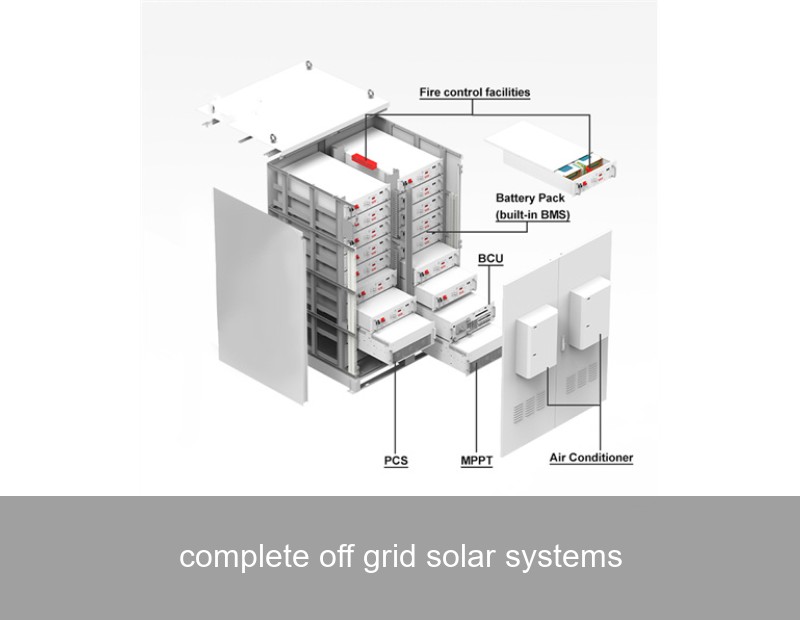
A complete off-grid solar system is a sophisticated, self-contained energy ecosystem. It's not just a collection of parts, but a carefully engineered symphony of components working in unison. The core pillars include:
- Solar Panels (PV Array): The primary energy harvesters, converting sunlight into direct current (DC) electricity.
- Solar Charge Controller: The guardian of your batteries, regulating the voltage and current from the panels to prevent overcharging and damage.
- Energy Storage System (Battery Bank): The cornerstone of off-grid living. This is your energy reservoir, storing excess solar power for use at night and during periods of low sunlight.
- Inverter: The translator. It converts the stored DC electricity from the batteries into the alternating current (AC) that powers your household appliances and devices.
- Backup Generator (Optional but Recommended): A prudent failsafe for extended periods of poor weather, ensuring uninterrupted power.
- System Monitoring & Management: The brain of the operation, providing real-time data on energy production, consumption, and battery health.
As you can see, the battery bank is the critical differentiator from a grid-tied system. Its capacity and intelligence directly determine your system's reliability.
The Sizing Challenge: More Than Just Panels on a Roof
The most common pitfall in off-grid planning is undersizing. The phenomenon is simple: energy demand often exceeds optimistic production estimates, especially in winter. The data tells a sobering story. According to the National Renewable Energy Laboratory (NREL), solar resource availability in Northern Europe or the Pacific Northwest of the US can be 60-70% lower in December compared to June. This seasonal disparity isn't just a number—it's the defining factor for your system design.
An accurate design starts with a meticulous energy audit. You must calculate your daily kilowatt-hour (kWh) consumption for all appliances, then factor in inverter efficiency losses (typically 5-10%) and the crucial "days of autonomy"—how many consecutive cloudy days you want the system to handle without generator support. This complex calculation ensures your system is built for the worst-case scenario, not just the sunny summer days.
Case Study: An Off-Grid Homestead in the Scottish Highlands
Let's look at a real-world example. A family homestead in the Scottish Highlands, far from the national grid, needed a robust year-round solution. Their challenge: high energy demand for heating (via an air-source heat pump), well water pumping, and standard household loads, coupled with notoriously short, gloomy winter days.
A well-designed system was installed featuring:
- A 15 kW solar array to capture limited daylight.
- A substantial 40 kWh lithium-ion battery storage system.
- A 10 kW inverter/charger.
- A biodiesel backup generator for winter contingency.
The results after one year of operation were telling. The system provided over 90% of their annual energy needs directly from solar. The generator automatically ran for only 12 days total during the deepest winter months, primarily to top up the batteries during a persistent low-pressure system. This case highlights that success isn't about never using a backup, but about minimizing its use through intelligent storage and sizing.
The Heart of the System: Battery Evolution and Intelligence
This is where technology has revolutionized off-grid living. The old paradigm of lead-acid batteries—with their limited depth of discharge, maintenance needs, and shorter lifespan—is being rapidly replaced by Lithium Iron Phosphate (LiFePO4) batteries. The difference is night and day:
| Feature | Traditional Lead-Acid | Modern LiFePO4 (e.g., Highjoule) |
|---|---|---|
| Usable Capacity | ~50% of rated capacity | >90% of rated capacity |
| Cycle Life | 1,000 - 1,500 cycles | 6,000+ cycles |
| Maintenance | Regular watering & equalization | Essentially maintenance-free |
| Charge Speed | Slow | Very Fast |
But the hardware is only half the story. The true magic lies in the Battery Management System (BMS) and system intelligence. A smart BMS doesn't just protect cells; it optimizes charging cycles, predicts capacity based on temperature and usage patterns, and seamlessly integrates with generators and solar controllers. This level of integration is what transforms a simple battery bank into a resilient home energy platform.
Highjoule's Role: Delivering Intelligent Off-Grid Solutions
Since 2005, Highjoule has been at the forefront of this intelligent energy storage revolution. We understand that a complete off-grid system is more than a product—it's a promise of reliability. Our approach integrates cutting-edge hardware with sophisticated software to deliver peace of mind.
For the off-grid pioneer, Highjoule offers the HES (Home Energy Stack) series. These modular, high-capacity LiFePO4 systems are built for the rigors of off-grid life. With a compact footprint, scalable capacity from 10 kWh to over 50 kWh per stack, and an industry-leading cycle life, they form the perfect storage core. Their integrated Smart BMS communicates directly with compatible inverters and our EnergyOS monitoring platform, allowing for:
- Predictive Load Management: The system can learn usage patterns and suggest or automate energy-saving measures during low-production periods.
- Generator Smart Sync: It doesn't just trigger the backup generator; it commands it to run at its most fuel-efficient load to recharge batteries rapidly, minimizing runtime and cost.
- Remote System Health Monitoring: You and your installer can view real-time performance data from anywhere, enabling proactive maintenance.

Our technical experts work with a network of certified installers to design systems that are not just powerful, but perfectly tailored to your location's solar profile and your family's unique energy rhythm. We provide the technological backbone that makes true energy independence simple and reliable.
Is Making the Leap to Off-Grid Right for You?
The journey to energy independence is incredibly rewarding, but it requires a shift in mindset. You become both the producer and manager of your power. This means being more aware of consumption—perhaps opting for more efficient appliances or shifting heavy loads to sunny periods. The initial investment is significant, but when compared to the lifelong cost of extending a power line over miles (which can exceed $50,000 per mile in rugged terrain, as noted by the U.S. Department of Energy) or decades of rising utility bills, the economics can become compelling.
So, we leave you with this question to ponder: What value do you place on ultimate energy security and the freedom to power your life, on your own terms, regardless of what happens beyond your property line? The technology to achieve it is here, mature, and more capable than ever.
 Inquiry
 Online Chat