


Off-Grid Solar with a Micro ESS: Your Complete Guide to Energy Independence
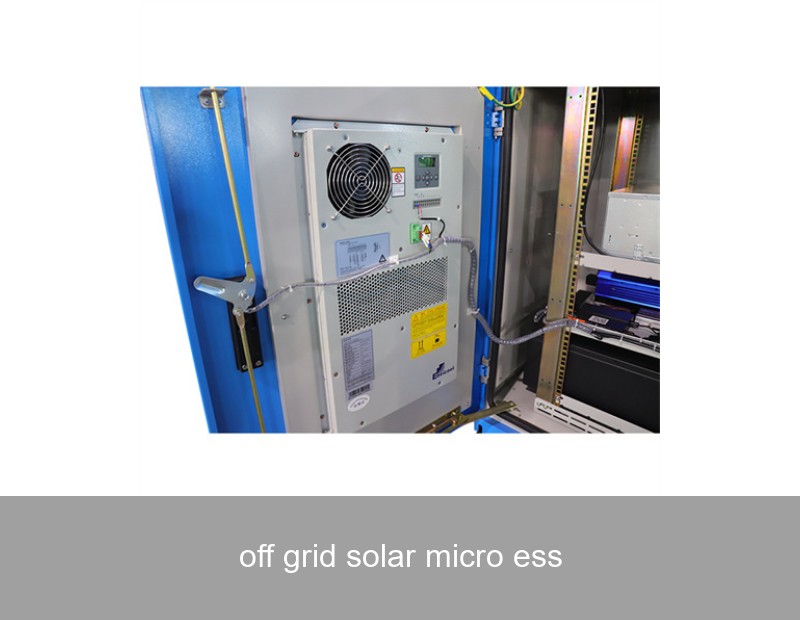
Imagine your home or business humming with power, completely disconnected from the main utility grid, yet reliably powered 24/7. This isn't a fantasy; it's the reality enabled by combining off-grid solar with a Micro ESS (Energy Storage System). For communities in remote locations, properties with unreliable grid connections, or anyone seeking true energy autonomy, this pairing is the ultimate solution. But how do you ensure it's reliable through a long winter night or a stretch of cloudy days? The answer lies in the intelligence and robustness of the Micro ESS at its heart. As a global leader in advanced energy storage since 2005, Highjoule specializes in crafting these intelligent, efficient, and sustainable power solutions for residential, commercial, and microgrid applications, making energy independence not just possible, but practical and smart.
Table of Contents
- What is a Micro ESS in an Off-Grid Solar System?
- Key Components of a Robust Off-Grid Solar + Micro ESS Setup
- The Core Challenge: Balancing Energy Supply and Demand
- The Highjoule Solution: Intelligence Beyond Storage
- Case Study: A Remote Alpine Lodge's Journey to Energy Independence
- Choosing the Right Off-Grid System for Your Needs
- Future Trends: Smarter, More Integrated Microgrids
What is a Micro ESS in an Off-Grid Solar System?
Let's break it down. An off-grid solar system operates independently from the public electricity grid. It captures sunlight via photovoltaic (PV) panels and converts it into usable electricity. However, the sun doesn't shine all the time. This is where the Micro ESS becomes non-negotiable. A Micro ESS is a compact, integrated battery storage system that stores excess solar energy generated during the day for use at night, during periods of high demand, or when solar production is low. Think of it as your personal energy bank: you make deposits (from solar) and make withdrawals (to power your appliances) whenever you need to, regardless of the time or weather.

Image Source: Unsplash - Representative image of a renewable energy setup.
Key Components of a Robust Off-Grid Solar + Micro ESS Setup
A reliable system is more than just panels and a battery. It's a symphony of components working in harmony:
- Solar PV Panels: Capture sunlight and generate direct current (DC) electricity.
- Charge Controller: Regulates the voltage and current from the panels to the batteries, preventing overcharging.
- Micro ESS (Battery Bank): The core storage unit. Modern systems typically use Lithium Iron Phosphate (LiFePO4) batteries for their long lifespan, safety, and high efficiency.
- Inverter: Converts the stored DC electricity from the batteries into alternating current (AC) used by most household and commercial appliances.
- System Controller/Energy Management System (EMS): This is the "brain." It intelligently manages energy flow, prioritizes loads, and ensures system health.
Highjoule’s HiveMind Micro ESS product line excels by integrating the battery, a high-efficiency hybrid inverter, and an advanced EMS into one sleek, user-friendly unit. This all-in-one design simplifies installation, reduces points of failure, and provides homeowners with intuitive monitoring via a smartphone app.
The Core Challenge: Balancing Energy Supply and Demand
The fundamental puzzle of off-grid living is mismatch. Your energy production (solar input) and your consumption (load) are rarely in perfect sync. According to data from the National Renewable Energy Laboratory (NREL), solar resource availability can vary by over 70% seasonally in many northern latitudes. A system sized for a sunny July may struggle in a gloomy December.
This is where basic systems fail and smart systems shine. Without intelligent management, you risk either "blackouts" (energy deficit) or wasted energy (surplus that overflows because batteries are full). The goal is resilience—ensuring power is always available for critical loads like refrigeration, lighting, and communication devices.
The Highjoule Solution: Intelligence Beyond Storage
Highjoule approaches this challenge with a focus on predictive energy intelligence. Our HiveMind EMS doesn't just react; it learns and forecasts. By analyzing your historical consumption patterns and integrating weather forecast data, it can pre-emptively manage your stored energy.
- Load Prioritization: In low-energy scenarios, the system can automatically shed non-critical loads (like a hot tub) to preserve power for essentials (like a water pump).
- Predictive Charging/Discharging: If a storm is forecasted for the next three days, the system will ensure batteries are charged to 100% ahead of time, even if it means temporarily limiting output to non-essentials.
- Seamless Generator Integration: For extended periods of low solar generation, our systems can automatically start and manage a backup generator, using it only as needed to top up the batteries efficiently, thus saving fuel and reducing noise.
This level of control transforms a simple battery into a true Micro ESS, providing not just storage, but strategic energy security.
Case Study: A Remote Alpine Lodge's Journey to Energy Independence
Let's look at a real-world example from the Swiss Alps. Bergfried Lodge, a year-round guesthouse located 2 kilometers from the nearest grid connection, faced exorbitant costs to extend power lines. They needed a completely reliable off-grid solution capable of handling peak loads from 12 guest rooms, a commercial kitchen, and a wellness area.
The Challenge: Extreme seasonal variation. Bright, long summer days contrasted with short, snow-covered winter days with limited sunlight. Diesel generator costs and noise were unsustainable.
The Highjoule Solution: A tailored 45 kW solar array coupled with a Highjoule HiveMind Grid 30 Micro ESS, featuring 60 kWh of LiFePO4 storage and integrated inverter/EMS. A legacy diesel generator was retained as a fully automated, last-resort backup.
The Results (Data after 24 months of operation):
| Metric | Result |
|---|---|
| Energy Self-Sufficiency | 94% annually |
| Generator Runtime Reduction | From ~1,500 hours/year to 89 hours/year |
| Diesel Fuel Savings | Approx. 5,400 liters annually |
| CO2 Emission Reduction | Estimated 14.3 tonnes annually |
| Return on Investment (ROI) | Projected in under 7 years |
The lodge manager noted: "The system runs itself. We barely think about power anymore. The guests appreciate the silence and our commitment to sustainability." This case exemplifies how a modern off-grid solar micro ESS is an economically and environmentally sound decision for commercial operations.

Image Source: Unsplash - Representative image of solar panels in an alpine environment.
Choosing the Right Off-Grid System for Your Needs
Sizing your off-grid solar micro ESS correctly is paramount. An undersized system leads to frustration, while an oversized one hurts your budget. Key considerations include:
- Energy Audit: Calculate your daily kWh consumption meticulously. Don't guess; measure.
- Autonomy Days: How many consecutive cloudy days do you want to weather without generator input? (e.g., 3-5 days is common).
- Peak Load: What is the maximum simultaneous power draw (in kW) you might have? This determines inverter sizing.
- Climate and Solar Insolation: Use tools like PVGIS from the European Commission to get precise solar yield data for your location.
- Future Expansion: Will you add an electric vehicle or a heat pump? Choose a scalable system like Highjoule's modular HiveMind series, which allows you to add battery capacity as your needs grow.
Future Trends: Smarter, More Integrated Microgrids
The future of off-grid solar micro ESS technology is moving towards even greater integration and community resilience. We're seeing the rise of peer-to-peer energy sharing within small, localized microgrids—where one household's excess solar can support a neighbor's needs. Furthermore, advancements in battery chemistry promise even longer lifespans and faster charging capabilities. Highjoule is at the forefront, developing systems that can seamlessly form these adaptive microgrids and integrate with a wider range of renewable sources, like small-scale wind, creating truly holistic and unbreakable energy ecosystems.

Image Source: Unsplash - Representative image of an energy monitoring interface.
Embracing an off-grid lifestyle or securing a remote business no longer means compromising on comfort or reliability. With today's intelligent Micro ESS technology, you have the tools to build a resilient, clean, and self-determined energy future. What's the first load you would secure with your own reliable, off-grid power?
 Inquiry
 Online Chat