


Your Complete Guide to a Reliable Off-Grid Solar Power Setup
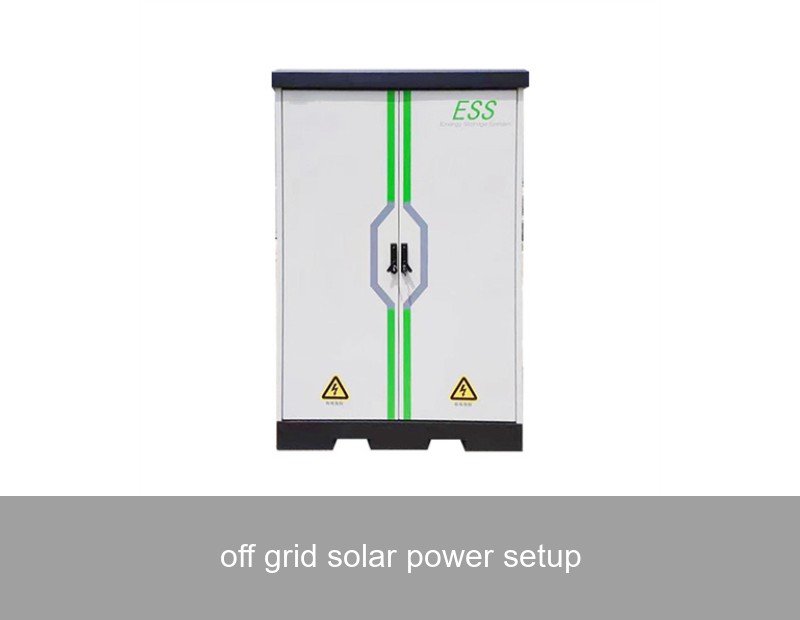
Imagine a life where your power bill is a memory, and your energy independence is as solid as the ground beneath your feet. This is the promise of a well-designed off-grid solar power setup. No longer just for remote cabins, modern off-grid systems are sophisticated, reliable, and increasingly popular for homes and businesses across Europe and North America seeking true energy autonomy and resilience. But how do you move from the dream of disconnection to a system that reliably powers your life 24/7? This guide will walk you through the essentials, from core components to real-world success, ensuring your journey to energy freedom is built on a rock-solid foundation.
Table of Contents
- Understanding the True Off-Grid Solar Power Setup
- Core Components of a Modern Off-Grid System
- Why Sizing and Design Matter Most
- A Real-World Case Study: The Alpine Retreat
- Beyond the Basics: Smart Management & Integration
- Highjoule's Intelligent Off-Grid Solutions
- What Does Your Energy Future Look Like?
Understanding the True Off-Grid Solar Power Setup
An off-grid solar power setup, also known as a stand-alone power system (SAPS), operates completely independently from the public electricity grid. This is fundamentally different from grid-tied systems with backup. The challenge? You are your own utility company. You must generate, store, and manage every kilowatt-hour you consume, through sunny days, cloudy weeks, and long nights. The key to success isn't just having solar panels; it's about the intelligent integration of generation, storage, and consumption into a resilient, self-sustaining ecosystem.
Core Components of a Modern Off-Grid System
Think of your off-grid system as a living organism. Each part plays a critical role in survival.
- Solar Panels (The Generators): Your primary energy source. High-efficiency monocrystalline panels are typically preferred for their better performance in variable light conditions, crucial for off-grid scenarios where every watt counts.
- Solar Charge Controller (The Regulator): This vital device protects your batteries by regulating the voltage and current from the panels. Maximum Power Point Tracking (MPPT) controllers are the industry standard for off-grid, offering up to 30% more efficiency than older technologies.
- Battery Storage System (The Heart): This is the cornerstone of your independence. While lead-acid was once the default, Lithium Iron Phosphate (LiFePO4) batteries are now the clear choice for serious off-grid setups. They offer longer lifespan (often over 6000 cycles), deeper safe discharge, higher efficiency, and require virtually no maintenance.
- Inverter (The Translator): It converts the direct current (DC) electricity stored in your batteries into the alternating current (AC) that powers your household appliances. For off-grid, a pure sine wave inverter is non-negotiable for sensitive electronics, and an inverter-charger is essential for systems with a backup generator.
- Backup Generator (The Safety Net): A critical component for extended periods of poor weather. A modern, fuel-efficient automatic standby generator can seamlessly kick in to recharge batteries when solar input is insufficient, ensuring uninterrupted power.

Image Source: Unsplash - A modern, integrated solar and storage installation.
Why Sizing and Design Matter Most
The most common pitfall in off-grid living is an undersized system. It's not just about counting appliances; it's about energy auditing and understanding your consumption patterns. A professional design considers:
| Design Factor | Why It's Critical |
|---|---|
| Peak Sun Hours (Location) | Determines daily solar yield. Alaska and Arizona have vastly different requirements. |
| Winter vs. Summer Load | Heating and lighting needs can double your winter consumption. |
| Battery Autonomy Days | How many days should your system run without sun? 3-5 days is a common standard. |
| Future Expansion | Will you add an electric vehicle or a workshop? Design with headroom. |
As the U.S. Department of Energy notes, a detailed load analysis is the indispensable first step for any successful off-grid project.
A Real-World Case Study: The Alpine Retreat
Let's look at a concrete example. A family in the Swiss Alps wanted to power a 150 sqm year-round home, completely off-grid. Their key loads included a heat pump for underfloor heating, a water pump, and standard household appliances. The initial challenge was the high winter load combined with shorter, snow-covered days.
The Solution & Data: A system was designed with a 22 kWp solar array (using bifacial panels to capture reflected snow light), coupled with a 48 kWh LiFePO4 battery bank. A 15 kW inverter/charger and a propane backup generator completed the setup. In its first year, the system delivered:
- Annual Self-Sufficiency: 94% (generator used only during two prolonged winter storms).
- Battery Cycle Efficiency: 98% recorded, crucial for maximizing scarce winter sun.
- Cost Savings: Avoided over €15,000 in grid connection fees and an estimated €3,200 in annual electricity bills.
This case highlights that with precise engineering, even energy-intensive homes in challenging climates can achieve near-total energy independence.
Beyond the Basics: Smart Management & Integration
The true evolution of the modern off-grid solar power setup lies in smart energy management. It's no longer just about having enough power; it's about using it with supreme intelligence. Advanced systems now integrate:
- Load Management: Automatically defer non-essential loads (like water heating) to times of high solar production or pause them during battery-only operation.
- Generator Optimisation: Smart inverters can run the generator at its most efficient load to recharge batteries quickly, minimizing runtime and fuel cost.
- Remote Monitoring & Control: View your system's performance, state of charge, and even control loads from your smartphone, a feature once reserved for utility-scale operations.
Highjoule's Intelligent Off-Grid Solutions
At Highjoule, we've been engineering resilience into power systems since 2005. We understand that an off-grid system is more than a product—it's a promise of reliability. Our integrated Highjoule Hive Off-Grid Series is built around this philosophy.
The system features our high-density, rack-mountable LiFePO4 batteries, known for their safety and long cycle life, seamlessly paired with our Hybrid Inverter-Chargers. The brain of the operation is the Highjoule Energy Operating System (EOS), a proprietary platform that performs real-time energy balancing, predictive weather-based charging, and intelligent generator dispatch. For larger commercial or microgrid applications, our Highjoule Matrix scalable containerized solutions provide utility-grade power management in a plug-and-play format. We don't just sell components; we deliver a guaranteed performance package, from initial site assessment and digital twin simulation to ongoing performance monitoring, ensuring your off-grid setup performs as designed for decades.

Image Source: Unsplash - A comfortable, fully powered modern off-grid home interior.
According to a National Renewable Energy Laboratory (NREL) report, advanced controls and system integration are the key drivers for improving the reliability and cost-effectiveness of standalone solar-plus-storage systems, a principle central to our product development at Highjoule.
What Does Your Energy Future Look Like?
The technology for robust, comfortable off-grid living is here and proven. Whether you're building a remote homestead, securing a critical industrial operation, or creating a resilient community microgrid, the question has shifted from "Is it possible?" to "How do I build the right system for my unique needs?"
What is the one load in your home or business that, if secured against any grid outage, would give you the greatest peace of mind?
 Inquiry
 Online Chat