


Finding the Right Supplier of BESS Energy: Your Guide to a Smarter, More Resilient Power Future
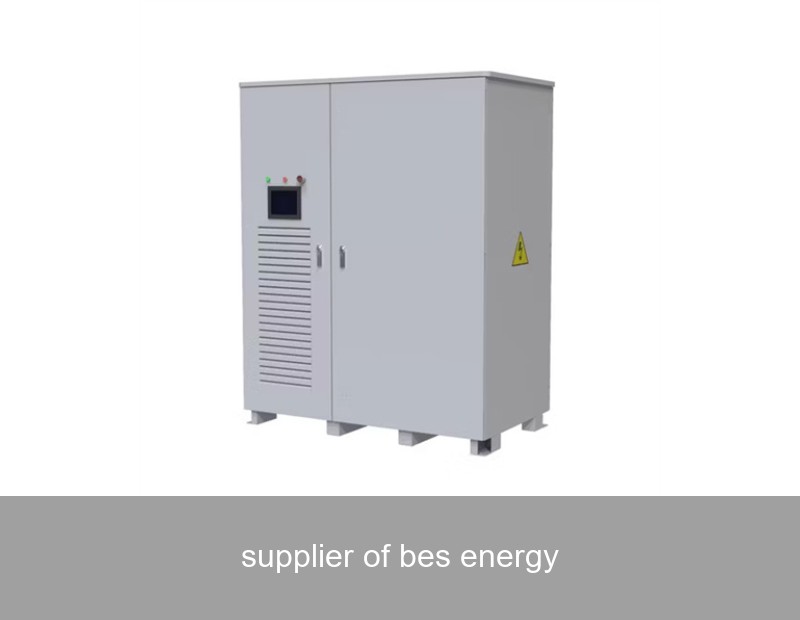
Have you ever wondered how businesses manage sudden power price spikes, or how communities keep the lights on during severe storms? The answer increasingly lies in a powerful, intelligent box: the Battery Energy Storage System (BESS). As the world pivots towards renewable energy and grid resilience becomes paramount, choosing the right supplier of BESS energy is no longer a technical afterthought—it's a critical business decision. This guide will walk you through why BESS is essential, what to look for in a partner, and how the right solution can transform your energy profile from a cost center into a strategic asset.
Table of Contents
- The BESS Imperative: More Than Just Backup Power
- Key Considerations When Choosing a Supplier of BESS Energy
- Case Study: A California Winery's Strategic Storage Success
- The Highjoule Approach: Intelligent Storage for Demanding Applications
- Navigating the Future Energy Landscape
The BESS Imperative: More Than Just Backup Power
Let's clear up a common misconception first. A modern BESS is not just a giant, silent battery. It's an integrated ecosystem of hardware and sophisticated software designed to do multiple jobs simultaneously. The core phenomenon driving adoption is the dual challenge of energy volatility and decarbonization goals. Renewable sources like solar and wind are intermittent—the sun doesn't always shine, and the wind doesn't always blow. This creates gaps and surges on the electrical grid.
Here's where the data gets compelling. According to the U.S. Energy Information Administration (EIA), electricity generation from solar and wind is projected to grow significantly, but this variability needs to be managed (source: EIA Annual Energy Outlook). A BESS acts as a buffer, storing excess energy when production is high and discharging it when needed. For a commercial or industrial user, this translates directly to financial benefits: reducing demand charges (peak usage fees), participating in grid services, and ensuring uninterrupted power for critical operations.

Image: A modern, containerized BESS installation, showcasing a clean and modular design. Source: Unsplash
The Multifaceted Value of a BESS
- Cost Savings: Peak shaving to avoid high utility demand charges.
- Revenue Generation: Providing frequency regulation or capacity services to the grid.
- Resilience: Backup power during outages, often integrated with solar for an "islandable" microgrid.
- Sustainability: Enabling higher consumption of on-site renewable energy, reducing carbon footprint.
Key Considerations When Choosing a Supplier of BESS Energy
Not all suppliers are created equal. Selecting a partner is about more than just the price per kilowatt-hour. You need a provider with proven expertise across the entire project lifecycle. Think of it as a ladder, where each rung represents a critical capability you must climb for success.
| Consideration | Why It Matters | Key Questions to Ask |
|---|---|---|
| Technology & Safety | Battery chemistry (e.g., LFP), thermal management, and system design dictate lifespan, safety, and performance. | What battery chemistry do you use? What certifications (UL, IEC) does your system hold? |
| Software & Intelligence | The "brain" of the BESS. It optimizes dispatch for maximum financial return and safe operation. | Is your software proprietary? How does it forecast energy prices and optimize cycles? |
| Integration Expertise | Seamless connection with solar PV, existing generators, and the local utility grid is complex. | Can you provide a fully AC-coupled system? What is your experience with microgrid controllers? |
| Services & Support | Long-term performance hinges on proper installation, commissioning, and ongoing maintenance. | Do you offer long-term service agreements (LTSA)? What is your remote monitoring capability? |
Case Study: A California Winery's Strategic Storage Success
Let's move from theory to a tangible example. A prestigious winery in Napa Valley, California, faced a classic trifecta of challenges: high and unpredictable energy costs, a desire to expand its on-site solar, and an urgent need for resilience against Public Safety Power Shutoffs (PSPS) to protect its delicate fermentation processes.
Their chosen supplier of BESS energy designed a solution centered on a 2 MWh / 1 MW battery storage system integrated with their existing and expanded solar array. The intelligent energy management system was programmed with multiple objectives: first, to maximize self-consumption of solar power; second, to aggressively shave peak demand; and third, to provide seamless backup power to critical loads during grid outages.
- Financial: The system reduced the winery's annual electricity bill by over 35%, with a projected payback period of under 6 years.
- Resilience: During a 36-hour grid outage, the BESS and solar microgrid kept critical operations running, preventing a potential product loss valued at over $500,000.
- Sustainability: The winery increased its renewable energy consumption from ~40% to over 85% annually.
This case underscores that the right BESS isn't just an expense; it's an investment that pays dividends in financial savings, risk mitigation, and sustainability leadership. Data from the Solar Energy Industries Association (SEIA) shows that storage paired with solar increases value and adoption (source: SEIA Solar+Storage 101).
The Highjoule Approach: Intelligent Storage for Demanding Applications
At Highjoule, with nearly two decades of experience since 2005, we've built our reputation as a trusted supplier of BESS energy by focusing precisely on these layers of complexity. We understand that a one-size-fits-all solution doesn't work for a large manufacturing plant, a hospital campus, or a residential community.
Our H-Series commercial and industrial storage systems are built with lithium iron phosphate (LFP) battery cells, renowned for their long cycle life and superior safety profile. The true differentiator, however, is the Highjoule Energy Operating System (EOS). This proprietary platform uses AI-driven algorithms to constantly analyze weather patterns, utility rate structures, and on-site load profiles. It doesn't just react; it predicts and optimizes, deciding the most economical moment to charge or discharge the battery.

Image: An engineer interacts with a sophisticated energy management system interface. Source: Unsplash
For larger-scale needs, our Microgrid Controller acts as the central command, seamlessly orchestrating solar arrays, multiple BESS units, backup generators, and the grid connection to form a resilient, self-sufficient energy island when needed. Our services extend from initial feasibility studies and financial modeling to turnkey installation, grid interconnection support, and 24/7 monitored operations and maintenance.
Where Highjoule Makes a Difference
- Complex Commercial & Industrial Sites: We manage multi-faceted loads and high-demand charges.
- Solar+Storage Maximization: We ensure you get the most value from your renewable investment.
- Mission-Critical Resilience: We design systems that guarantee uptime for data centers, hospitals, and water treatment facilities.
Navigating the Future Energy Landscape
The energy transition is accelerating. Policies like the Inflation Reduction Act (IRA) in the U.S. are creating powerful incentives for storage adoption (source: U.S. Department of Energy). In Europe, the push for energy independence and climate targets is equally strong. This means the role of a BESS will evolve from a nice-to-have to a standard component of any robust energy strategy.
The question for business leaders, facility managers, and community planners is no longer "if" but "how and with whom." The partnership you choose today will determine your energy cost predictability, operational resilience, and sustainability credentials for the next 15-20 years.
So, what's the first energy challenge you would tackle if you had an intelligent buffer sitting between your facility and the grid?
We invite you to explore what a bespoke energy storage strategy could look like for your specific needs. The path to a smarter, more resilient, and cost-effective energy future starts with a conversation with a partner who understands both the technology and your unique goals.
 Inquiry
 Online Chat