


Off Grid Solar Power System Battery Bank: Your Ultimate Guide to Energy Independence
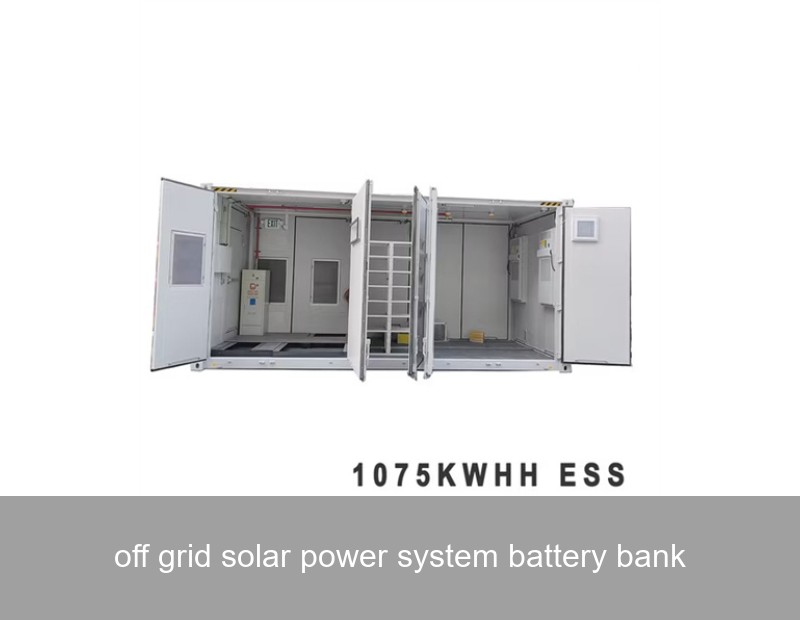
Imagine a life where your power is truly your own—unaffected by grid outages, rising utility rates, or remote locations. This is the promise of a robust off grid solar power system battery bank. But moving from reliance to true energy independence requires more than just panels and batteries; it demands intelligent design and reliable technology. Whether you're a homeowner in the sunny Southwest US, a farmer in rural Europe, or an eco-conscious entrepreneur, understanding the heart of your off-grid system—the battery bank—is the first critical step.
Table of Contents
The Core Challenge: Sun Doesn't Shine at Night
Here’s the fundamental issue every off-grid system must solve: solar panels only generate electricity during daylight hours. Your energy needs, however, are a 24/7 demand. This mismatch creates a critical need for storage—a reservoir of power to draw from when the skies are dark or cloudy. This is where your off grid solar power system battery bank becomes the undisputed hero of the setup. Without a properly sized and managed battery bank, your system is essentially a daytime-only appliance.
Consider this data: The average US household uses about 30 kWh of electricity per day. An off-grid home with efficient appliances might reduce that to 15-20 kWh. Your battery bank must store enough to cover multiple days of autonomy, accounting for periods of low sunlight. This isn't just about capacity; it's about depth of discharge, cycle life, and how efficiently you can access that stored energy.

An off-grid setup requires careful integration of solar generation and battery storage. (Image: Unsplash)
Battery Bank Breakdown: More Than Just Storage
Let's demystify the battery bank. Think of it not as a simple battery but as the integrated "heart and brain" of your power system. It comprises several key components:
- Battery Cells & Chemistry: This is the core storage medium. While lead-acid was once standard, Lithium Iron Phosphate (LiFePO4) is now the dominant choice for new installations due to its longer lifespan, higher depth of discharge, and greater safety.
- Battery Management System (BMS): The intelligent guardian. A quality BMS monitors cell voltage, temperature, and state of charge, ensuring balanced operation and preventing conditions that lead to premature failure or safety hazards.
- System Controller/Inverter: The command center. This device manages energy flow—converting DC power from the batteries to AC for your home, prioritizing solar charging, and regulating output.
| Technology | Typical Lifespan (Cycles) | Depth of Discharge (DoD) | Key Consideration |
|---|---|---|---|
| Flooded Lead-Acid | 1,000 - 1,500 | ~50% | Requires regular maintenance & ventilation |
| Lithium Iron Phosphate (LiFePO4) | 3,500 - 6,000+ | 80-90% | Higher upfront cost, minimal maintenance, compact size |
Case Study: A Swedish Off-Grid Homestead
Let's look at a real-world example from Värmland, Sweden. A family homestead, located 5 kilometers from the nearest grid connection, faced a quote of over €80,000 to connect to the utility grid. Instead, they invested in a custom off-grid solar system in 2021.
- System Size: 24 kW solar array, 40 kWh off grid solar power system battery bank.
- Challenge: Extremely low winter sunlight (only 4-5 hours of daylight) and temperatures dropping to -25°C.
- Solution & Outcome: The system featured a lithium battery bank with an advanced thermal management system, allowing it to operate efficiently in the cold. In its first two years, the system achieved 99.7% energy autonomy, relying on a backup propane generator for only about 20 hours total during the darkest winter weeks. The total project cost was 60% of the grid connection quote, guaranteeing them free electricity for decades.
Engineered for Independence: Highjoule's Off-Grid Solutions
At Highjoule, we've been engineering resilience into energy storage since 2005. We understand that an off grid solar power system battery bank isn't a commodity—it's the foundation of your daily life and operations. Our solutions are built from the ground up for the unique demands of complete energy independence.
Our Fortis Lithium Series is specifically designed for harsh off-grid environments. With a robust LiFePO4 chemistry and an integrated, adaptive BMS, it ensures maximum cycle life and reliable performance from the deserts of Arizona to the alpine climates of the Alps. What sets Highjoule apart is our system-level intelligence. Our inverters and controllers communicate seamlessly with the battery bank, creating a unified system that optimizes every watt-hour of solar production, manages generator auto-start seamlessly, and provides you with clear, actionable insights into your energy health via a user-friendly app.
For larger-scale needs, such as commercial, industrial, and microgrid applications, Highjoule's modular H-Series battery cabinets can be scaled from 100 kWh to multiple megawatt-hours. These systems are the backbone for remote telecom sites, agricultural operations, and entire eco-villages, providing grid-like reliability where no grid exists.

Scalable battery storage solutions power everything from homes to entire communities. (Image: Unsplash)
The Future of Off-Grid Battery Banks
The technology is advancing rapidly. We're moving towards even higher energy densities, meaning more storage in a smaller footprint. Second-life EV batteries are beginning to enter the market for large-scale off-grid storage, offering a sustainable and potentially cost-effective alternative. Furthermore, artificial intelligence is starting to play a role in predictive energy management, forecasting weather and usage patterns to optimize battery cycling and extend its life even further.
The journey to energy independence is both empowering and complex. It requires a partner that understands the science, the engineering, and the real-world challenges of living and operating off the grid. Your choice in a battery bank will define your experience for the next 15 to 20 years.
What's the first question you would ask an engineer when designing your own off grid solar power system battery bank for your specific location and dreams?
 Inquiry
 Online Chat