


On Off Grid Hybrid Solar Inverter: Your Ultimate Guide to Energy Freedom
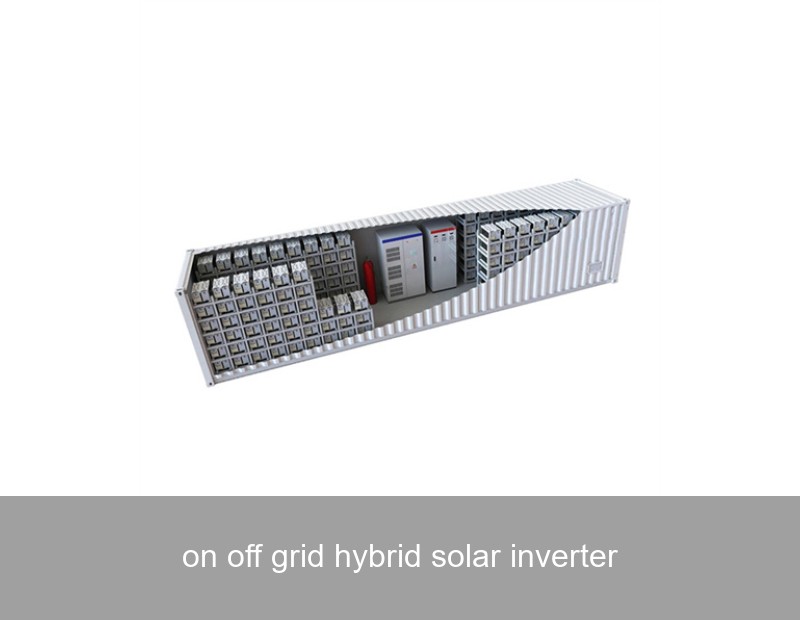
Have you ever wondered what happens to your solar panels when the grid goes down? Or wished you could use more of the sunshine you generate, even after the sun sets? The answer to modern energy independence lies in a single, intelligent device: the on off grid hybrid solar inverter. This isn't just another piece of hardware; it's the brain of a resilient power system, seamlessly managing solar panels, battery storage, and the utility grid to give you control, savings, and peace of mind. In this guide, we'll demystify this technology and explore how it's revolutionizing energy use for homes and businesses across Europe and the US.
Table of Contents
What is an On/Off Grid Hybrid Solar Inverter?
Let's break down the name. An inverter's job is to convert the direct current (DC) electricity from your solar panels or batteries into the alternating current (AC) that powers your appliances. A hybrid inverter does this but also has a built-in battery charger and sophisticated logic. The "on/off grid" capability is the game-changer. It means the system can operate connected to the main utility grid (on-grid) and independently as a self-powered "island" during an outage (off-grid). It constantly monitors grid conditions and automatically switches between modes without you ever noticing a flicker in your lights.
Think of it as a highly skilled energy conductor. It decides, in real-time, whether to power your home with solar energy, store excess in a battery, draw from the battery during peak rates, or pull from the grid—all while ensuring seamless backup power. This flexibility is why hybrid systems are rapidly becoming the standard for new solar installations in markets with volatile energy prices or unreliable grids.
How It Works: The Three Operating Modes
The genius of a hybrid inverter is its dynamic operation. Here are the three primary modes it toggles between:
- Grid-Tied Mode (Normal Operation): Solar power is the first priority, covering your immediate consumption. Any surplus can either be sent to the grid (for credits, where available) or used to charge your battery. The inverter synchronizes perfectly with the grid's frequency and voltage.
- Backup/Off-Grid Mode (Grid Failure): When a blackout occurs, the hybrid inverter instantly disconnects from the grid (a safety feature called "anti-islanding") and continues powering critical loads from the solar panels and battery. Your home becomes a self-sufficient microgrid.
- Battery Optimization Mode (Cost Savings): In regions with time-of-use (TOU) electricity rates, you can program the system to use stored battery power during expensive peak hours (e.g., 4-9 PM), even if the grid is available, dramatically reducing your bills.

A modern hybrid inverter and battery system, neatly integrated into a home's electrical setup.
Key Benefits of a Hybrid System
Why are homeowners and businesses making the switch? The advantages are compelling:
| Benefit | Explanation | Impact |
|---|---|---|
| Energy Independence | Reduces reliance on the utility grid, providing backup power during outages. | Peace of mind and continuity for homes and businesses. |
| Maximized Self-Consumption | Uses more of your self-generated solar energy by storing excess instead of selling it cheaply. | Higher return on solar investment, less energy waste. |
| Intelligent Energy Management | Automatically shifts energy sources based on cost, solar production, and consumption patterns. | Significant reduction in electricity bills, optimized system performance. |
| Future-Proofing | Easily integrates with battery storage if not installed initially. Ready for smart grid services. | Protects your investment as energy technology evolves. |
A Real-World Case Study: Resilience in California
The theoretical benefits are proven in practice. Consider the situation in California, USA, where Public Safety Power Shutoffs (PSPS) and extreme weather events have made grid reliability a major concern. A 2023 study by the National Renewable Energy Laboratory (NREL) highlighted that pairing solar with storage (enabled by a hybrid inverter) can keep critical loads powered for days during an outage.
Case in Point: A medium-sized winery in Napa Valley installed a 50 kW solar array with a 120 kWh battery bank, all managed by advanced on off grid hybrid solar inverters. Their goals were clear: ensure uninterrupted refrigeration for their valuable vintages during rolling blackouts and avoid punitive demand charges from the utility.
- Outage Resilience: During a 36-hour PSPS event, the system powered the entire critical cooling and facility load with zero interruption, preventing potential product loss estimated at over $200,000.
- Financial Savings: By using stored energy during peak grid periods, they reduced their monthly demand charges by 40%, leading to an annual saving of approximately $18,000.
- Self-Consumption: The system increased their direct use of solar power from 60% to over 90%, drastically reducing their carbon footprint and grid purchases.
This case demonstrates that a hybrid system is not just an expense; it's a strategic asset providing both financial and operational resilience.
Choosing the Right Hybrid Inverter for Your Needs
Not all hybrid inverters are created equal. Key factors to consider include:
- Power Rating: Match the inverter's continuous output (e.g., 5kW, 10kW) to your home's or business's peak load.
- Battery Compatibility: Ensure it works with your preferred battery chemistry (Lithium Iron Phosphate/LFP is the current industry standard for safety and longevity).
- Efficiency: Look for peak efficiency ratings above 97%. Higher efficiency means less energy lost as heat.
- Scalability: Can you easily add more batteries or solar panels later? A modular design is a huge plus.
- Software & Monitoring: Intuitive apps and monitoring platforms are essential for tracking performance, savings, and system health.
Highjoule's Intelligent Hybrid Solutions
At Highjoule, with nearly two decades of experience since 2005, we've engineered our HPS Series Hybrid Power Systems to meet these exact demands. Our systems are built on the core principle of intelligent, efficient, and sustainable power management.
The Highjoule HPS inverter is the centerpiece, a true on off grid hybrid solar inverter designed for the European and North American markets. It features:
- Seamless Transition: Sub-20 millisecond switch to backup power, ensuring your devices never lose power.
- High Efficiency: Up to 98.6% peak efficiency, maximizing every kilowatt-hour of solar energy you produce.
- Advanced Battery Management: Native support for leading LFP batteries with optimized charging algorithms to extend battery life.
- Smart Grid Ready: Capabilities for future grid services like virtual power plant (VPP) participation, allowing you to contribute to grid stability.
- Comprehensive Monitoring: The Highjoule Energy Hub app provides real-time insights, cost tracking, and system diagnostics at your fingertips.

Visualizing integrated energy: A modern hybrid system like Highjoule's HPS, managed via an intuitive app.
We provide complete solutions—from design and engineering to installation support and long-term service—for residential, commercial, and microgrid applications. Our systems are designed not just for today's needs but to adapt to the energy landscape of tomorrow.
The Future of Energy Management
The role of the hybrid inverter is evolving from a simple power converter to the central node of a home's or business's energy ecosystem. With the rise of electric vehicles (EVs), smart appliances, and dynamic electricity tariffs, the next generation of inverters will act as true energy managers. They will schedule EV charging during solar surplus, pre-heat or cool homes using battery power before peak rates, and even trade energy with neighbors in peer-to-peer networks. The foundation for this smart energy future is a robust, software-upgradable hybrid inverter installed today.
As you consider taking control of your energy costs and resilience, what is the first load you would want to secure during a power outage, and how could intelligent energy management change your monthly budget?
 Inquiry
 Online Chat