


Online Rechargeable Battery Systems: The Intelligent Heart of Modern Energy Resilience
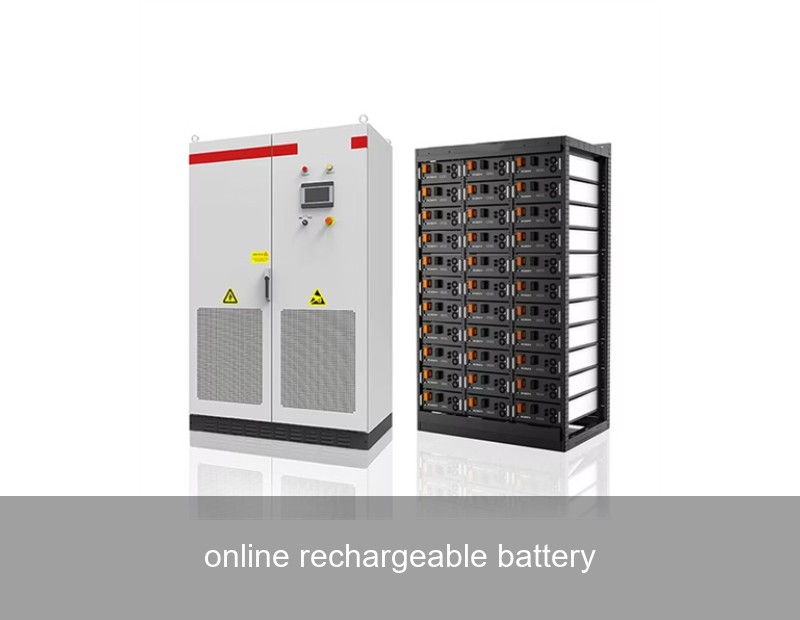
Imagine a battery that does more than just store energy. It communicates, adapts, and makes decisions in real-time to optimize your energy costs, protect your operations, and support a cleaner grid. This isn't science fiction; it's the reality of today's online rechargeable battery systems. For businesses and homeowners in Europe and the US facing volatile energy prices and an increasing frequency of grid disturbances, these intelligent systems are transforming from a niche backup solution into a critical component of financial and operational planning. In this article, we'll demystify what makes an online rechargeable battery system different, explore the tangible benefits, and look at real-world applications that are already delivering impressive results.
The Modern Grid Challenge: Why Online Capability is No Longer Optional
The energy landscape is undergoing a seismic shift. The rapid integration of intermittent renewable sources like solar and wind, coupled with rising peak demand, is putting unprecedented stress on traditional power grids. The result? More frequent voltage fluctuations, occasional brownouts, and a heightened risk of outages. For a factory, a data center, or even a modern home, a milliseconds-long power glitch can mean ruined products, corrupted data, or disrupted comfort.
This is where the traditional "offline" or standby battery system shows its limitations. It sits idle, waiting for a complete grid failure before springing into action. But what about the 99% of the time when the grid is "on" but unstable or expensive? This passive approach misses a massive opportunity. An online rechargeable battery system, in contrast, is always active, always connected, and always managing the flow of power. It acts as a dynamic buffer between your facility and the grid, providing what experts call "ancillary services" – smoothing out irregularities and injecting or absorbing power as needed.

Image Source: Unsplash. A modern facility integrating solar and battery storage for resilience.
The Data Behind the Demand
Consider this: according to the U.S. Department of Energy, power outages cost the American economy an estimated $150 billion annually. In Europe, the push for decarbonization is accelerating grid volatility. An online rechargeable battery system directly addresses these costs by providing uninterrupted power quality protection (UPS functionality) and enabling lucrative energy arbitrage—buying and storing energy when it's cheap (often during high renewable output) and using it when prices peak.
How Does an Online Rechargeable Battery System Work? The Anatomy of Intelligence
At its core, an online system consists of three intelligently integrated components:
- The Battery Bank: Typically using advanced lithium-ion chemistry (like Lithium Iron Phosphate or LFP) for its long lifespan, safety, and high cycle capability.
- The Bi-Directional Inverter: The true brain of the operation. This sophisticated piece of power electronics constantly converts AC power from the grid to DC to charge the batteries, and DC from the batteries back to pristine AC to power your loads. It does this seamlessly, without any switching delay.
- The Energy Management System (EMS): This is the strategic commander. Connected to the internet, it receives real-time data on electricity prices, grid frequency, weather forecasts for your solar panels, and your own energy consumption patterns. It uses this data to make autonomous decisions on when to charge, discharge, or hold.
This constant, active connection is what defines "online." Your critical loads are always powered through the inverter, which provides a continuous, clean, and stable sine wave, isolating them from grid-born sags, surges, and harmonics.
Key Benefits Unlocked by Online Rechargeable Batteries
Moving to an intelligent online system delivers a multi-layered return on investment:
| Benefit Category | How It Works | Direct Outcome |
|---|---|---|
| Ultimate Power Resilience | Zero-transfer-time UPS functionality protects against all grid disturbances, from micro-dips to full outages. | Prevents downtime, data loss, and equipment damage for sensitive operations. |
| Significant Cost Savings | Automated energy arbitrage: charge during low-rate periods, discharge during expensive peak hours. | Reduces demand charges and lowers overall electricity bills, often with a ROI period of 4-7 years. |
| Renewable Energy Optimization | Stores excess solar/wind generation for use at night or during low production, maximizing self-consumption. | Reduces reliance on the grid and increases energy independence, accelerating sustainability goals. |
| Grid Support & Potential Revenue | In some markets, systems can provide frequency regulation services to the grid operator for compensation. | Transforms the battery from a cost center into a potential revenue-generating asset. |
Where Highjoule Fits In
As a global leader in advanced energy storage since 2005, Highjoule designs and manufactures online rechargeable battery systems that embody these exact principles. Our H-Series Commercial & Industrial ESS and Nexus Home Energy Hub are built from the ground up with always-on, grid-interactive intelligence. They feature our proprietary Adaptive Core BMS for unparalleled battery safety and longevity, and are managed by the Highjoule Synergy OS, a cloud-based EMS that can be configured for simple cost savings or complex, multi-revenue stream applications. We don't just sell hardware; we provide a complete, intelligent power solution tailored for commercial, industrial, and residential applications.
Real-World Case Study: A German Manufacturing Plant
Let's move from theory to practice. A mid-sized automotive parts manufacturer near Stuttgart, Germany, was struggling with two main issues: high strompreis (electricity prices) during afternoon peak windows and occasional voltage dips affecting their precision machinery.
The Solution: In 2023, they installed a Highjoule H-500 online rechargeable battery system, integrated with their existing rooftop solar array. The system has a capacity of 500 kWh and an output of 250 kW.
The Data-Driven Results (After 12 Months):
- Peak Shaving: Reduced peak grid demand by over 40%, slashing their capacity-based grid fees.
- Energy Arbitrage: By charging from solar and overnight grid power (when renewable energy on the German grid is plentiful and cheap, as tracked by platforms like energy-charts.info), and discharging during the 5-8 PM peak, they achieved a direct energy cost reduction of €28,000 annually.
- Power Quality: Eliminated all production stoppages due to minor grid fluctuations, protecting sensitive CNC equipment.
- Sustainability: Increased their on-site solar consumption from 55% to over 90%, significantly reducing their carbon footprint.
This case exemplifies the compound value of an intelligent, online system—it's not just backup; it's an active financial and operational asset.

Image Source: Unsplash. An engineer monitoring a large-scale battery energy storage system.
Choosing the Right Online Rechargeable Battery System for Your Needs
Not all systems are created equal. When evaluating providers, consider these critical factors:
- True "Online" Topology: Ensure the system uses a double-conversion online topology for zero transfer time and full power conditioning.
- Battery Chemistry & Warranty: Prioritize safe, long-life chemistries like LFP. Look for a performance warranty that guarantees a high percentage of original capacity after 10 years.
- Software Intelligence: The EMS software is as important as the hardware. It should be user-configurable, receive automatic updates, and offer transparent performance analytics.
- Scalability & Integration: Can the system scale by adding more battery modules? Does it have open protocols for easy integration with solar inverters, building management systems, or future grid service programs?
Highjoule's systems are engineered with these very considerations at the forefront. Our modular design allows for easy expansion, and our Synergy OS platform is designed for future grid service markets, ensuring your investment is protected for the long term.
The Future Outlook for Intelligent Energy Storage
The evolution of the online rechargeable battery is tightly linked to the rise of the virtual power plant (VPP). In the near future, thousands of distributed systems—like those in homes and businesses—will be aggregated via cloud software to act as a single, flexible power plant. This will provide critical stability to national grids dominated by renewables. Your battery won't just save you money; it will actively participate in balancing the continent's energy needs.
So, the question is no longer if you need energy storage, but how intelligent your storage needs to be. Is your organization ready to transition from a passive energy consumer to an active, resilient, and cost-smart energy manager? What would the impact be on your bottom line if you could turn your energy bill from a fixed cost into a manageable, optimized variable?
 Inquiry
 Online Chat