


Finding the Right Supplier of CCS Energy: Your Guide to a Stable and Sustainable Power Future
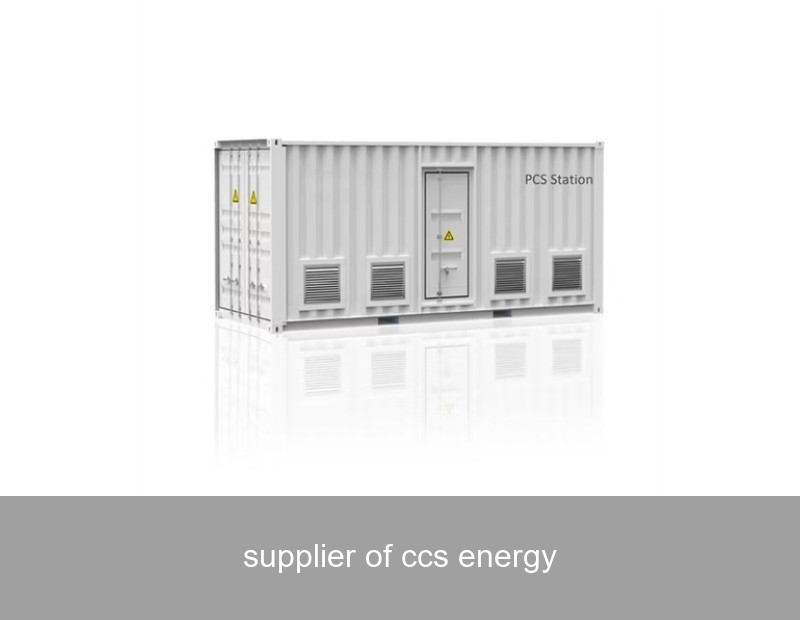
Imagine this: your factory is humming, your data servers are cool, and your business operations are smooth. Suddenly, the grid voltage dips, or worse, a local outage brings everything to a halt. The cost? Lost productivity, compromised safety, and a significant financial hit. This isn't a hypothetical scenario; it's a daily reality for businesses worldwide. The solution lies in a stable, on-site power reserve, and that's where choosing the right supplier of CCS energy becomes critical. CCS, or Containerized Energy Storage Systems, are the backbone of modern energy resilience, offering a plug-and-play solution for reliable, clean power. But not all suppliers are created equal. This guide will walk you through the key considerations, blending industry insights with practical advice to help you make an informed decision for your energy future.
Table of Contents
- What is a CCS (Containerized Energy Storage System)?
- Why CCS Energy Matters: The Data Behind the Demand
- Key Considerations When Choosing a Supplier of CCS Energy
- Case Study: A German Manufacturing Plant's Journey to Resilience
- The Highjoule Approach: Beyond the Box, Delivering Intelligence
- The Future of CCS and Integrated Energy Management
What is a CCS (Containerized Energy Storage System)?
Let's break it down. A Containerized Energy Storage System is essentially a large-scale battery, along with all its necessary management and safety components, pre-assembled inside a standardized shipping container. Think of it as a "power plant in a box." This modular approach offers incredible advantages: rapid deployment, scalability, and flexibility in siting. Whether you need to shore up your facility's backup power, integrate a new solar farm, or participate in grid services, a CCS provides a turnkey solution. The core components inside typically include:
- Battery Racks: Using lithium-ion (like LFP for safety and longevity) or other advanced chemistries.
- Battery Management System (BMS): The brain that monitors cell health, voltage, and temperature.
- Power Conversion System (PCS): The heart that converts DC battery power to AC power for your facility and vice-versa.
- Thermal Management: A dedicated cooling/heating system to keep batteries at optimal temperature.
- Fire Suppression & Safety Systems: Integrated, multi-layer protection for ultimate safety.
- Energy Management System (EMS): The master controller that dictates when to charge, discharge, or hold, often leveraging AI for optimization.

Image Source: Unsplash - A representative CCS installation at an industrial facility.
Why CCS Energy Matters: The Data Behind the Demand
The shift towards CCS isn't just a trend; it's a data-driven response to global energy challenges. According to the International Energy Agency (IEA), global grid-scale battery storage capacity is set to multiply 15-fold by 2030, with a significant portion being deployed as containerized solutions. What's fueling this growth?
- Grid Volatility: In the U.S., weather-related power outages have increased by approximately 67% since 2000. In Europe, the energy crisis highlighted the fragility of over-reliance on single sources.
- Renewable Integration: Solar and wind are intermittent. A CCS acts as a buffer, storing excess energy when the sun shines or wind blows and releasing it when needed, smoothing out the "duck curve."
- Economic Incentives: Beyond backup, CCS can generate revenue through demand charge management, energy arbitrage (buying low, using high), and providing grid stability services like frequency regulation.
In short, a reliable supplier of CCS energy doesn't just sell you a battery box; they provide a key tool for financial stability, operational continuity, and sustainability goals.
Key Considerations When Choosing a Supplier of CCS Energy
Selecting a partner is more than comparing price-per-kilowatt-hour. It's about long-term performance, safety, and support. Here’s your checklist:
| Consideration | Key Questions to Ask | Why It Matters |
|---|---|---|
| Technology & Safety | What battery chemistry do you use? What safety certifications (UL, IEC) does the system hold? Is the fire suppression system passive or active? | LFP chemistry is renowned for thermal stability. Certifications are non-negotiable for insurance and compliance. A multi-stage safety system is crucial for risk mitigation. |
| Intelligence & Software | How smart is the Energy Management System (EMS)? Can it integrate with my existing renewables and building management? Does it offer remote monitoring and control? | A smart EMS maximizes ROI by automating decisions based on weather, tariffs, and load patterns. Seamless integration protects past investments. |
| Total Cost of Ownership (TCO) | What is the expected cycle life and degradation rate? What are the maintenance requirements and costs? What warranty and performance guarantees are offered? | Upfront cost is just one piece. A system with a 10-year, 70% capacity retention warranty offers far better TCO than a cheaper, unproven alternative. |
| Supplier Expertise & Support | Can you provide references from similar projects in my region? What is your delivery, installation, and commissioning process? What is the structure of your after-sales service and technical support? | Proven local experience ensures they understand grid codes and logistical hurdles. A clear support plan is essential for a 15-20 year asset. |
Case Study: A German Manufacturing Plant's Journey to Resilience
Let's look at a real-world example. A mid-sized automotive parts manufacturer in Bavaria, Germany, faced two major challenges: skyrocketing energy costs and an unreliable local grid that caused costly micro-interruptions. Their goals were clear: reduce energy bills, ensure production continuity, and lower their carbon footprint.
They partnered with a seasoned supplier of CCS energy, Highjoule, to deploy a 1.2 MWh containerized storage system integrated with their existing rooftop solar PV. The Highjoule solution included their AI-driven HELIOS EMS platform. Here are the results after the first year of operation:
- Energy Cost Savings: By strategically discharging the battery during peak price hours (energy arbitrage) and shaving peak demand charges, the plant achieved a 28% reduction in its electricity costs.
- Self-Consumption Boost: Solar self-consumption increased from 35% to over 80%, drastically reducing grid dependence and maximizing their renewable investment.
- Reliability: The system provided seamless backup during four grid disturbances, preventing an estimated €120,000 in production losses.
- ROI: The projected payback period for the entire system is under 5 years, thanks to the combined value streams.
This case, documented in a Fraunhofer ISE study on storage value, illustrates the multifaceted benefits of a well-designed CCS project with an intelligent partner.
The Highjoule Approach: Beyond the Box, Delivering Intelligence
At Highjoule, we understand that being a leading supplier of CCS energy means delivering more than hardware. Since 2005, we've evolved from a component provider to a full-system integrator and long-term partner. Our philosophy is built on three pillars:
- Safe-by-Design Technology: Our flagship VoltaStack CCS utilizes UL-certified LFP battery modules and features a proprietary, multi-zone safety system that includes early gas detection, passive venting, and an aerosol-based fire suppression system, all housed in a robust, weatherproof container.
- Proven AI-Driven Software: The HELIOS Energy Management Platform is the true differentiator. It doesn't just react; it predicts. By analyzing local weather forecasts, real-time electricity market prices (crucial in Europe and US markets), and your facility's load profile, it autonomously optimizes the CCS for maximum economic and operational benefit.
- Lifecycle Partnership: From initial site assessment and financial modeling to commissioning, remote monitoring, and preventive maintenance, our team supports you for the entire lifecycle of the system. We offer performance-based service agreements to ensure your storage asset delivers on its promise, year after year.

Image Source: Unsplash - Representative of advanced energy management software monitoring.
The Future of CCS and Integrated Energy Management
The role of the CCS is expanding. We're moving from single-application systems (like just backup) to multi-service, grid-interactive assets. The future supplier of CCS energy will need to provide systems that can seamlessly participate in virtual power plants (VPPs), provide black start capabilities, and adapt to evolving grid signals. Interoperability with other distributed energy resources (EV chargers, hydrogen electrolyzers) will be key. The container itself may become a standardized platform for flexible, multi-technology energy hubs.
As you contemplate your next step towards energy independence, ask yourself: Is your current energy strategy reactive or predictive? What untapped value could a smart, containerized energy asset unlock for your business, community, or microgrid today?
 Inquiry
 Online Chat