


Finding a Reliable OPzS Battery Supplier: Your Guide to Durable Stationary Energy Storage
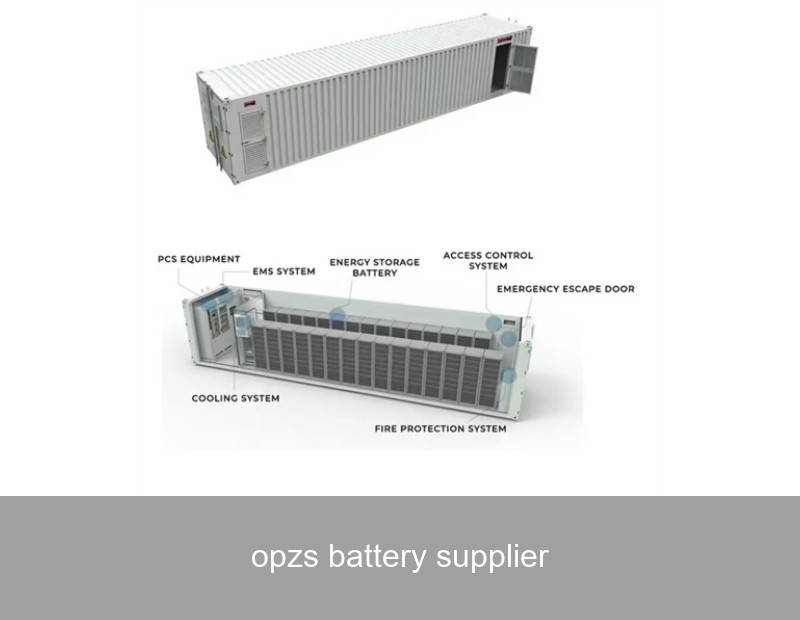
In the quest for reliable, off-grid power or robust backup systems, you’ve likely encountered a crucial component: the stationary battery. Among the various technologies, one name stands out for its proven track record in demanding applications – the OPzS battery. But finding the right OPzS battery supplier is about more than just purchasing a product; it's about securing a long-term partnership for your energy resilience. Whether you're managing a remote telecom site, designing a microgrid, or ensuring uninterrupted power for industrial processes, the choice of your battery and supplier directly impacts your system's performance, lifespan, and total cost of ownership. This guide will walk you through what makes OPzS batteries unique and how to identify a supplier that delivers both quality products and peace of mind.
What is an OPzS Battery?
Let's break down the acronym. OPzS stands for Ortsfest (stationary) PanZerplatte (tubular plate) Verschlossen (sealed). In simpler terms, it's a flooded lead-acid battery with a tubular plate construction and a vent cap, designed for fixed locations. The key differentiator is its positive plate: instead of a flat grid, it consists of a series of tubes (gauntlets) holding the active material. This design provides exceptional mechanical strength and dramatically reduces active material shedding, the primary cause of failure in many batteries.

Image Source: Wikimedia Commons, showing the internal tubular plate structure of an OPzS battery.
This makes OPzS batteries the workhorses of deep-cycle, long-duration energy storage. They are built for applications where the battery is regularly discharged and recharged over many years, prioritizing longevity and cycle life over compact size or weight.
Why Choose OPzS Batteries for Stationary Energy Storage?
The modern energy landscape is defined by intermittency—solar doesn't shine at night, and wind speeds fluctuate. This creates a pressing need for storage solutions that can bridge these gaps reliably. While lithium-ion batteries dominate headlines for their energy density and fast response, OPzS batteries offer a compelling, time-tested alternative for specific use cases.
Consider the data: A well-maintained OPzS battery bank can deliver a service life of 15-20 years in float applications (like backup power) and withstand 1500-2000 deep discharge cycles at 80% depth of discharge (DoD). Their key advantages include:
- Exceptional Longevity & Cycle Life: The tubular plate design is the cornerstone of its durability, offering far more cycles than flat-plate lead-acid batteries.
- Deep Discharge Recovery: OPzS batteries can be routinely discharged to 20% state of charge (80% DoD) without significant damage, a must for renewable energy systems.
- Cost-Effectiveness Over Time: The lower upfront cost per Ah and extended lifespan often result in a lower total cost of ownership (TCO) for long-duration, daily-cycling applications compared to other technologies.
- Robustness & Wide Temperature Range: They perform reliably in varied climatic conditions, from cold storage facilities to hot industrial environments.
- Recyclability: Lead-acid batteries boast a recycling rate of over 99% in regions like the US and EU, supporting a circular economy.
The Ultimate OPzS Battery Supplier Checklist
Choosing the right OPzS battery supplier is critical. A subpar product or lack of support can turn a promised 20-year asset into a costly, premature failure. Here’s what to look for:
| Criteria | Why It Matters | Key Questions to Ask |
|---|---|---|
| Technical Expertise & Support | Proper sizing, installation, and commissioning are non-negotiable for performance. | Do they provide detailed sizing support and system schematics? Is after-sales technical support readily available? |
| Product Quality & Certifications | Certifications (e.g., IEC, UL) are proxies for manufacturing rigor and safety standards. | Can they provide full technical datasheets and independent test reports? Are batteries certified for your target market (EU/UKCA, UL)? |
| Logistics & Warranty | Handling heavy, acid-filled batteries requires expertise. A clear warranty protects your investment. | How are batteries shipped and handled? What are the exact warranty terms (pro-rated, conditions, claim process)? |
| System Integration Capability | The best battery underperforms if poorly integrated with charge controllers, inverters, and monitoring. | Can they supply or recommend compatible balance-of-system components? Do they offer integrated monitoring solutions? |
The Highjoule Approach: Beyond the OPzS Battery Supplier
At Highjoule, with nearly two decades of experience since 2005, we view our role as more than just an OPzS battery supplier. We are a provider of complete, intelligent power solutions. We understand that a battery is the heart of a storage system, but the brain—the intelligent management—is what unlocks true reliability and value.
For clients whose applications demand the unparalleled deep-cycle endurance of OPzS technology, we offer premium-tier batteries sourced from manufacturers with impeccable quality records. But we go further by integrating them into our Highjoule Energy Management System (HEMS). This software layer provides real-time monitoring, precise charge control tailored to lead-acid chemistry, and predictive maintenance alerts. This means you can optimize watering intervals, equalization charges, and overall battery health, directly extending the bank's operational life and preventing unexpected downtime.

Image Source: Unsplash, depicting professional maintenance of an industrial battery bank.
Our services encompass everything from initial consultancy and custom system design to installation supervision, commissioning, and lifecycle support. Whether for a resilient industrial backup system, a remote microgrid powered by solar, or a critical telecommunications infrastructure project across Europe or the US, we deliver a solution, not just a component.
Case Study: A Real-World Application
Let's look at a concrete example from the agricultural sector in Southern Spain. A large olive oil co-operative faced two challenges: rising energy costs for irrigation and processing, and unreliable grid power in their rural location.
- Phenomenon: High operational costs and production vulnerability due to grid outages.
- Data & Solution: Highjoule designed a 250 kW solar PV array coupled with a 1 MWh OPzS battery storage system. The battery bank was sized to provide 8 hours of full operational power for critical loads, allowing the co-operative to run entirely on solar during the day and shift to stored energy in the evening.
- Outcome: The system achieved:
- ~75% reduction in grid electricity consumption.
- Full immunity from short-term grid outages, ensuring continuous processing during harvest.
- Projected payback period of under 7 years, thanks in part to the OPzS batteries' long lifespan and low TCO.
The choice of OPzS was pivotal here. The daily, deep-cycling demand of the application required a battery technology with proven cycle life. Our integrated HEMS ensures the batteries are maintained at peak condition, maximizing their longevity in this demanding cycle.
The Future of Stationary Storage: Is OPzS Still Relevant?
With the rapid advancement of lithium-ion and emerging technologies, one might question the future of flooded lead-acid. The answer lies in application-specific suitability. OPzS batteries are not for every scenario—they require maintenance and space. However, for long-duration, daily-cycling applications where upfront cost, lifetime cost, and operational temperature are key factors, they remain a supremely rational and sustainable choice. The evolution lies in how they are managed. Intelligent monitoring and predictive analytics, like those in Highjoule's HEMS, are transforming traditional OPzS banks into smart, data-driven assets.
So, as you evaluate your stationary storage needs, ask yourself: Is your priority simply the lowest upfront cost per kilowatt-hour, or is it the most reliable and cost-effective power over the next two decades? Your answer will guide you to the right technology—and the right partner.
What's the most critical factor for your energy storage project—initial investment, lifetime cost, or absolute reliability in the most extreme conditions?
 Inquiry
 Online Chat