


Panasonic Anchor Solar Panels: The Cornerstone of Modern Energy Independence
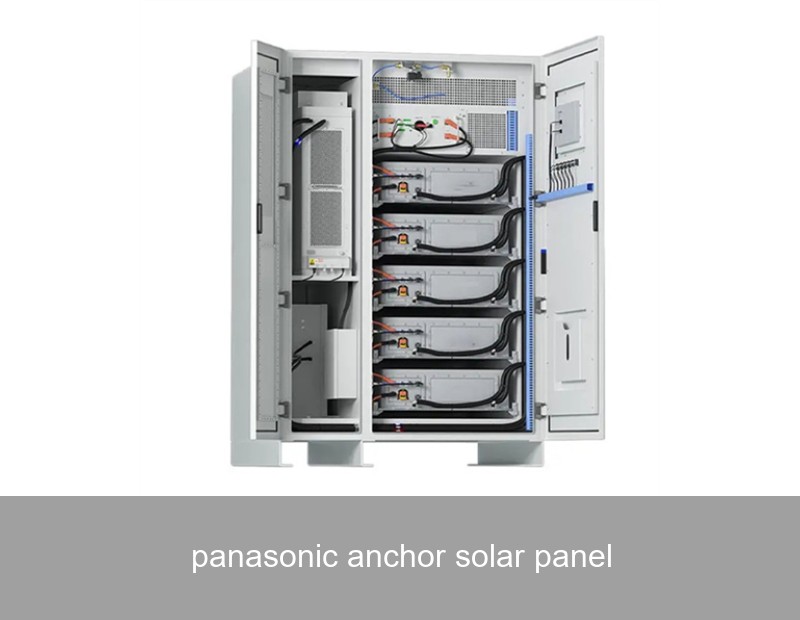
You've likely seen more solar panels on rooftops in your neighborhood. But have you ever wondered what makes one solar installation truly stand out for decades? It often comes down to the foundation—the anchor. In the world of renewable energy, Panasonic anchor solar panels have emerged as a benchmark for reliability and performance. These panels are designed not just to capture sunlight, but to serve as a durable, long-term anchor for your home or business's energy strategy, especially when paired with intelligent storage solutions. Let's explore how this technology is reshaping power generation and storage across Europe and the U.S.
Table of Contents
- The Phenomenon: Why Anchoring Your Solar Investment Matters
- The Data: Performance That Justifies the Anchor
- The Case Study: A German Industrial Park's Success Story
- The Insight: Beyond the Panel - The System is Key
- The Highjoule Advantage: Intelligent Storage Meets Premium Generation
- The Future: What Does True Energy Resilience Look Like?
The Phenomenon: Why Anchoring Your Solar Investment Matters
For years, the solar conversation focused on price per watt. Today, savvy homeowners and businesses are asking a different question: "How do I ensure my system delivers maximum value for 25 years or more?" This shift highlights a critical need for an anchor—a component or design principle that guarantees stability, longevity, and predictable returns. Panasonic has addressed this need head-on with their anchor solar panel technology, which emphasizes robust construction, superior temperature coefficient, and impressive low-light performance. It's about building an energy asset, not just installing panels.
The Data: Performance That Justifies the Anchor
What sets an anchor panel apart? The numbers tell a compelling story. Panasonic's modules, particularly those utilizing their HIT® (Heterojunction with Intrinsic Thin layer) cell technology, consistently demonstrate:
- Higher Energy Density: Generating more power in the same roof space compared to conventional panels, a crucial factor for space-constrained installations.
- Superior Degradation Rate: Many Panasonic panels carry a warranty guaranteeing 92% output after 25 years, significantly higher than the industry average of 85-88% (NREL, 2023).
- Better Temperature Performance: Their lower temperature coefficient means they lose less efficiency on scorching summer days, a key consideration in markets like Southern Europe and the American Southwest.
| Performance Metric | Typical Conventional Panel | Panasonic HIT® Anchor Panel |
|---|---|---|
| Annual Power Degradation | ~0.7% | ~0.25% |
| Temperature Coefficient | -0.4% / °C | -0.26% / °C |
| Efficiency Range | 17-20% | 20-22%+ |
This data isn't just technical jargon; it translates directly into more kilowatt-hours generated over the system's lifetime, faster payback, and greater overall savings.
The Case Study: A German Industrial Park's Success Story
Let's look at a real-world application. A medium-sized industrial park in Bavaria, Germany, faced volatile energy costs and needed to stabilize operational expenses while reducing its carbon footprint. In 2021, they installed a 550 kW rooftop solar array using Panasonic anchor solar panels.
The project's goal was twofold: maximize self-consumption of solar energy and create a buffer against grid instability. The panels' high efficiency was crucial due to limited roof area. However, the real masterstroke was integrating the system with a Highjoule H3 Commercial Battery Energy Storage System (BESS). The Highjoule system's advanced algorithms don't just store excess solar energy; they intelligently decide when to store, when to discharge to power the facility, and when to provide grid services, all based on real-time electricity prices and consumption patterns.

Image: Modern industrial solar installations require both premium panels and smart storage to maximize ROI. (Photo: American Public Power Association / Unsplash)
- 86% Self-Consumption Rate: The facility directly uses 86% of the solar energy it produces, a remarkably high figure thanks to intelligent storage.
- 32% Reduction in Grid Energy Costs: Even after accounting for seasonal variation, the annual energy bill dropped by nearly one-third.
- 9.5-Year Estimated Payback Period: The combination of high-yield panels and revenue-stacking from the BESS accelerated the financial return.
This case illustrates that the Panasonic anchor solar panel is a premier energy generator, but its value is fully unlocked when it's part of a cohesive, intelligent system.
The Insight: Beyond the Panel - The System is Key
The German case study leads us to a vital insight: the most advanced solar panel is only as good as the ecosystem it operates within. An anchor panel provides a reliable flow of energy, but without a sophisticated method to manage that flow—especially when the sun isn't shining—you're leaving significant value and resilience on the table. This is where the partnership between premium generation and smart storage becomes non-negotiable for achieving true energy independence.
Think of it this way: the solar panels are your diligent earners, producing wealth (energy) during the day. The battery storage system is your savvy financial manager, deciding when to save that wealth, when to spend it, and even when to invest it back to the grid for a return. One cannot optimally function without the other in a modern energy setup.
The Highjoule Advantage: Intelligent Storage Meets Premium Generation
At Highjoule, we've specialized in this very synergy since 2005. We understand that a Panasonic anchor solar panel installation deserves an energy storage partner of equal caliber. Our solutions are designed to be the perfect complement:
- Highjoule H-Series Residential Units: Seamlessly integrate with premium solar arrays. Our AI-driven energy management platform learns your home's consumption habits, ensuring you use every possible watt of your solar production before drawing from the grid.
- Highjoule H3 Commercial & Industrial BESS: As seen in the German case, this scalable system turns a solar investment into a comprehensive energy asset. It provides backup power, demand charge reduction, and can participate in grid-balancing programs for additional revenue.
- Highjoule Microgrid Controllers: For campuses or remote facilities, we can design a system where Panasonic solar, Highjoule storage, and existing generators work in perfect harmony, creating a self-sufficient energy island.
Our role is to provide the brain and the battery to your solar brawn. By choosing Highjoule storage for your Panasonic-based system, you're not just installing technology; you're adopting a future-proof energy resilience strategy.

Image: A modern home battery storage unit, like those from Highjoule, is the essential partner to premium solar panels. (Photo: Kindel Media / Pexels)
The Future: What Does True Energy Resilience Look Like?
The journey towards energy independence is evolving. It's no longer just about offsetting your electricity bill. It's about creating a responsive, adaptive, and financially intelligent energy profile for your home or business. With climate patterns becoming more unpredictable and energy markets more volatile, the combination of top-tier generation from Panasonic anchor solar panels and the intelligent storage & control from Highjoule represents a robust solution.
So, as you consider anchoring your property to a sustainable future, ask yourself this: Is my goal merely to have solar panels, or is it to own a sophisticated, autonomous energy system that protects me from uncertainty and maximizes my financial and environmental return for decades to come?
 Inquiry
 Online Chat