


Panel Solar Ute: How Much Does a Mobile Power Setup Really Cost?
If you’ve spent any time on job sites, farms, or remote camps lately, you’ve likely seen them: utility vehicles (utes, trucks, vans) topped with gleaming solar panels. This isn't just a trend; it's a practical revolution in mobile power. For tradespeople, adventurers, and rural landowners, the question is shifting from "Why would I?" to "Panel solar ute how much?" The initial price tag is a crucial starting point, but the real answer involves understanding the value of true energy independence. Let's break down the investment, from the panels on your roof rack to the power in your tools.
The Ute Solar Panel Phenomenon: From Niche to Necessity
The rise of the solar-equipped ute is a direct response to a common pain point: reliable power where the grid ends. Whether it's a contractor needing to run cordless tool chargers and a work light, a farmer operating electric fencing, or a weekend explorer keeping the fridge cold, traditional solutions like loud, fume-spewing petrol generators are increasingly seen as outdated. Solar offers silent, zero-emission, and free-fuel operation once the system is installed. The market has noticed. Industry analysts point to significant growth in the mobile solar power segment, driven by falling solar panel costs and more efficient, durable batteries. It's no longer just about a panel; it's about creating a robust, off-grid power station on wheels.

Image Source: Unsplash - A typical setup for a work ute using solar for auxiliary power.
Understanding the Cost Components: It's More Than Just a Panel
Asking "how much for solar panels on my ute?" is like asking "how much for a house?" – the range is vast. A simple, low-wattage kit for trickle-charging a battery is worlds apart from a system designed to power heavy-duty equipment. Here’s the essential breakdown:
- The Solar Panels: Typically between 100W and 400W for a ute setup. Flexible, lightweight panels are popular for curved roofs but cost more per watt than rigid ones. Expect $150 to $800+ here, depending on wattage and technology.
- The Charge Controller: This vital device regulates power from the panel to the battery, preventing damage. A basic PWM controller is affordable ($20-$80), but a more efficient MPPT controller, which can harvest 30% more energy, costs $80-$300.
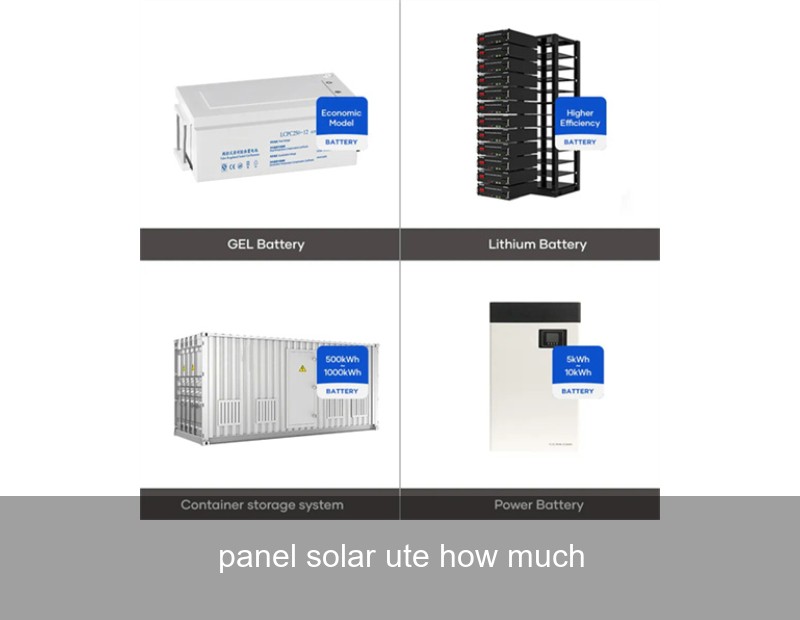
- The Battery (The Heart of the System): This is where your "fuel" is stored. A standard lead-acid deep-cycle battery is cheaper ($200-$600) but heavier and has a shorter lifespan. A Lithium Iron Phosphate (LiFePO4) battery, like those used in advanced home energy storage, is lighter, lasts 5-10x longer, and can be discharged more deeply. This is a premium choice, starting around $500 and going well over $2,000 for high capacity.
- Inverter (If You Need AC Power): To run standard 110V/230V appliances, you need an inverter. A pure sine wave inverter (safe for sensitive electronics) from 1000W to 3000W can cost $200 to $1,000.
- Mounting Hardware, Cabling, and Fuses: Often overlooked, quality components here ensure safety and longevity. Budget $100-$300.
- Professional Installation vs. DIY: A professional install guarantees optimal performance and safety, adding $300-$1,000 to the total.
| System Component | Basic System (Trickle Charge) | Mid-Range System (Tool Charging & Lighting) | Professional/High-Capacity System |
|---|---|---|---|
| Solar Panel(s) | 100W Flexible Panel ($150-$250) | 2x 200W Rigid Panels ($400-$600) | 400W+ High-Efficiency Array ($700-$1,200) |
| Battery | 100Ah Lead-Acid ($250) | 100Ah LiFePO4 ($600-$900) | 200Ah+ LiFePO4 with BMS ($1,500+) |
| Charge Controller | PWM ($30) | MPPT ($150) | Smart MPPT with Bluetooth ($300) |
| Estimated Total (Parts Only) | $430 - $530 | $1,150 - $1,650 | $2,500+ |
Case Study: A Texas Landscaping Business's Calculated Upgrade
Let's look at real numbers. "Lone Star Landscapes," based in Austin, Texas, operated three utes for their crews. Each truck had a dual-battery system to run LED light bars, radio, and charge blowers and line trimmers. They were cycling through a standard deep-cycle battery every 18 months and still needed to idle the engine occasionally. In 2022, they invested in an upgrade for one truck as a pilot: a 400W panel system with a 2.4kWh Highjoule CubeCell LiFePO4 battery and a 2000W inverter, professionally installed for a total of $3,200.
The results after one year were telling. The crew reported zero instances of dead tools. They eliminated 1.5 hours of daily engine idling, saving an estimated 220 gallons of fuel per year (at ~$3.50/gal, that's $770). The battery showed no degradation. Projecting the fuel and maintenance savings from reduced idling, they calculated a payback period of just under 4 years on the hardware—not counting the productivity gains from reliable power. The system proved so effective that they rolled it out to their entire fleet.
Beyond the Panels: The Complete Power System is Key
The Lone Star case highlights a critical insight: the panel is just the harvester. The battery storage system is the true workhorse. For demanding commercial and industrial use, not all batteries are created equal. This is where expertise in stationary energy storage translates directly to mobile applications. A quality system needs a Battery Management System (BMS) for safety, durability to withstand vehicle vibration, and a high cycle life to make the investment worthwhile. It's the difference between a power source that fades in two years and one that delivers for a decade.
Highjoule's Integrated Ute Power Solution
At Highjoule, with nearly two decades of experience in advanced battery technology for homes and microgrids, we've applied our core principles to mobile applications. We don't just sell components; we engineer integrated systems. Our Highjoule PowerTray is a modular solution designed for utility vehicles. It combines our UL-certified, vehicle-rated LiFePO4 battery modules, an integrated smart MPPT charge controller, and inverter options into a single, secure enclosure that bolts into your ute's tub or chassis.
The advantage? It's a plug-and-play power bank. You connect your solar panels, and the system manages everything: optimal solar harvesting, safe charging/discharging, and even remote monitoring via an app. For businesses, this reliability and data transparency turn a cost center (fuel and downtime) into a predictable, efficient asset. It answers the "panel solar ute how much" question not with the cheapest price, but with the highest long-term value and lowest total cost of ownership.

Image Source: Unsplash - Representing modular, professional-grade battery technology.
Making the Investment: Is It Worth It for You?
So, how do you decide? Start by auditing your power needs. List every device you need to run, its wattage, and how many hours per day you'll use it. This will give you your daily watt-hour requirement—the key to sizing your battery. Then, consider your solar input: how many hours of good sun will your parked ute typically get? A reputable supplier or installer can help you crunch these numbers. Remember to factor in the continued global decline in solar PV costs, which makes the initial investment more accessible than ever.
The final cost is more than a sum of parts. It's an investment in productivity, sustainability, and resilience. For a weekend warrior, a modest DIY kit might suffice. But for a professional whose livelihood depends on their tools, a robust, commercial-grade system like Highjoule's PowerTray is the equivalent of investing in premium, reliable equipment—it pays for itself by keeping you working.
What's the first tool or appliance you'd power with your own ute's solar system, and how would it change your day?
 Inquiry
 Online Chat