


On-Grid Solar Panels: Your Gateway to Clean Energy and Smart Savings
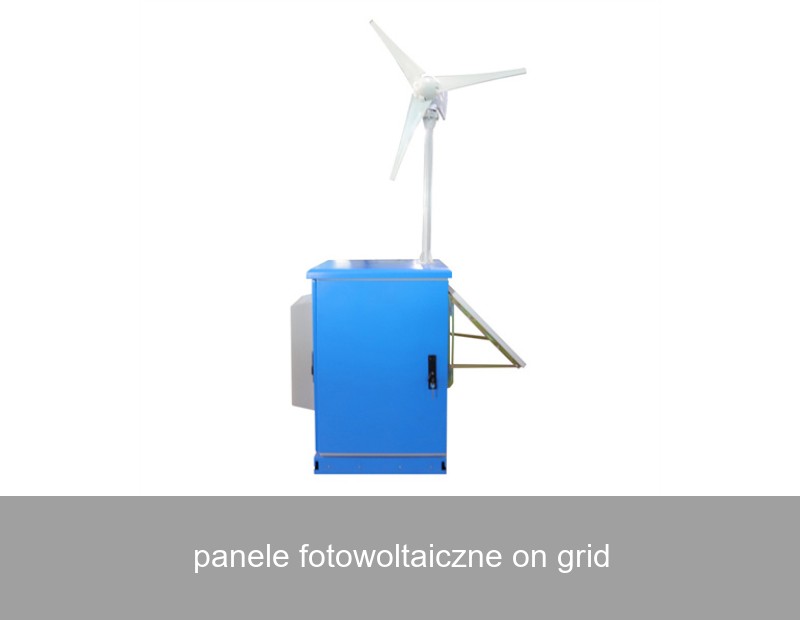
Have you ever looked at your rising electricity bill and wondered if there's a smarter, more sustainable way to power your home or business? You're not alone. Across Europe and the United States, a quiet revolution is taking place on rooftops and in fields, driven by the widespread adoption of panele fotowoltaiczne on grid, or on-grid solar panel systems. These systems are not just about going green; they represent a practical, financially savvy partnership with the existing power grid. For over 18 years, at Highjoule, we've seen how this technology transforms energy from a mere utility into a strategic asset. Let's demystify how connecting your solar panels to the grid can be the most intelligent energy decision you make.
How On-Grid Systems Work: A Seamless Partnership with the Grid
Think of an on-grid solar system as a dynamic, two-way relationship with your local utility company. Unlike off-grid systems that require bulky batteries for independence, on-grid systems are elegantly simple. Here's the step-by-step flow:
- Generation: Your solar panels (panele fotowoltaiczne) convert sunlight into direct current (DC) electricity.
- Conversion: A crucial device called an inverter transforms that DC power into the alternating current (AC) that powers your appliances and feeds into the grid.
- Consumption: Your home or business uses the solar electricity first, in real-time.
- Export & Import: This is the key. When you produce more than you use (on a sunny afternoon), the excess is fed back to the grid. When your demand exceeds production (at night or on cloudy days), you seamlessly draw power from the grid.
This dance is managed by your utility meter, often replaced with a "net meter" that spins both ways, crediting you for the energy you export. The result? Maximum efficiency and minimal waste.
Key Components of a Modern, High-Performance On-Grid System
A reliable system is more than just panels on a roof. It's an integrated ecosystem:
- High-Efficiency Solar Panels: The workhorses. Modern monocrystalline panels can exceed 22% efficiency, generating more power in limited space.
- Smart Inverter: The brain. Today's inverters do more than just convert current; they provide grid-support functions, monitor system performance, and optimize output. Highjoule's systems integrate advanced inverters that ensure stable grid compliance and real-time energy data visibility.
- Mounting System & Wiring: The backbone. A robust, weatherproof structure ensures your investment lasts for decades.
- Monitoring Platform: Your dashboard. This allows you to track production, consumption, and export earnings from your phone or computer, turning abstract savings into visible data.

Image Source: Unsplash - Professional solar installation
The Tangible Financial Benefits: More Than Just Savings
The economic argument for on-grid solar panels is compelling. Let's break it down with some real numbers, particularly relevant for the European and US markets.
| Benefit | How It Works | Typical Impact (EU/US Examples) |
|---|---|---|
| Reduced Utility Bills | Displacing grid-purchased electricity with your own solar power. | Can reduce electricity bills by 50-90%, depending on system size and local rates. |
| Net Metering Credits | Excess energy sent to the grid earns credits that offset later consumption. | In Germany (EEG) or California (NEM 2.0), credits can zero out monthly "delivery" charges. |
| Increased Property Value | Studies show homes with solar sell faster and at a premium. | A U.S. Department of Energy study found an average increase of $15,000 in home value. |
| Protection Against Rate Hikes | Your solar power cost is fixed once installed, while grid rates tend to rise. | Provides a long-term hedge against volatile energy markets. |
Furthermore, government incentives significantly accelerate payback. In the US, the federal Investment Tax Credit (ITC) allows for a 30% tax deduction. In countries like Poland, programs like "Mój Prąd" offer substantial grants. These incentives, combined with high energy prices, have made the return on investment for on-grid solar exceptionally attractive, often within 6-10 years.
Real-World Case Study: A German Mittelstand Manufacturing Success
Let's move from theory to practice. Consider the case of a mid-sized automotive parts manufacturer in Bavaria, Germany. Facing energy costs of over €250,000 annually and ambitious corporate sustainability targets, they turned to a Highjoule-engineered on-grid solution.
- Challenge: Reduce operational costs, achieve energy independence during peak daytime operations, and lower carbon footprint.
- Solution: A 450 kWp on-grid solar system installed on factory roof space and adjacent carport structures. The system was integrated with the existing factory electrical infrastructure without disrupting production.
- Highjoule's Role: We provided not just the high-efficiency panels and inverters, but also the comprehensive system design, grid connection management, and a proprietary energy monitoring platform for precise oversight.
- Results (Annual):
- Energy Production: 420,000 kWh
- Direct Cost Savings: €68,000 (covering ~40% of daytime load)
- CO2 Emissions Avoided: ~190 metric tons (equivalent to planting over 4,500 trees)
- System Payback Period: Projected at 7.2 years, thanks to Germany's renewable energy framework and high self-consumption.
This case exemplifies how panele fotowoltaiczne on grid are a strategic industrial investment, not just a residential one.

Image Source: Unsplash - Industrial solar installation
Choosing the Right Partner for Your On-Grid System
The success of your solar journey hinges on the quality of the components and the expertise of the installer. A subpar installation can lead to underperformance, grid connection issues, and safety risks. Here’s what to look for:
- Proven System Design: The layout should be optimized for your specific roof orientation, shading, and local climate, not a one-size-fits-all template.
- Grid Compliance Expertise: Navigating utility interconnection requirements is complex. Your provider must have a deep understanding of local grid codes in the EU or US to ensure a smooth and approved connection.
- Technology Integration: The best systems are "smart" from the start. At Highjoule, our H-Energy Hub platform is a prime example. It doesn't just monitor; it provides actionable insights, forecasts production, and can even be future-upgraded to integrate battery storage, making your on-grid system a foundation for an even more resilient energy setup.
- Long-Term Warranty & Support: Look for comprehensive product and performance warranties (often 25 years on panels, 10+ on inverters) backed by a company with a track record of being there for the long haul.
The Evolving Future of On-Grid Solar
The story of on-grid solar is still being written. We are moving towards "smart grids" where millions of distributed systems like yours help stabilize the network. Imagine a future where, during peak demand, the grid can safely coordinate with your system to balance loads. Furthermore, adding a compact battery like Highjoule's H-Cell to an existing on-grid system creates a hybrid solution. This allows you to store excess daytime energy for use in the evening, maximizing self-consumption and providing backup power during brief grid outages—a best-of-both-worlds scenario.
So, as you contemplate the potential of panele fotowoltaiczne on grid for your property, we leave you with this question: What could you achieve if your biggest energy cost became a predictable, controllable, and even profitable part of your operations or household budget?
 Inquiry
 Online Chat