


Solar Térmica y Fotovoltaica: A Complete Guide to Harnessing the Sun's Dual Power
Have you ever watched the sunrise and felt its warmth on your skin, then later seen solar panels on a rooftop and wondered about the difference? That warmth and that electricity represent the two powerful ways we can capture solar energy: solar térmica y fotovoltaica. While both are crucial for a sustainable future, they serve distinctly different purposes. This guide will demystify these technologies, explore their combined potential, and show how modern energy management is unlocking unprecedented value for homes and businesses across Europe and the US.
Table of Contents
- Understanding the Fundamental Difference
- The Synergy Effect: Why Combining Thermal and PV is a Game-Changer
- Real-World Case Study: A Spanish Agro-Industrial Plant
- The Missing Link: Intelligent Energy Storage and Management
- Highjoule's Integrated Solutions for Maximum Solar ROI
- The Future of Solar is Hybrid and Intelligent
Understanding the Fundamental Difference: Heat vs. Electricity
Let's break down the core distinction. Solar térmica (thermal solar) systems capture the sun's heat. They use collectors, often seen as dark panels or tubes on roofs, to heat a fluid (usually a water-glycol mix). This heated fluid is then used directly for domestic hot water, swimming pool heating, or even to support space heating and industrial processes. It's all about harnessing thermal energy.
On the other hand, solar fotovoltaica (photovoltaic solar) converts sunlight directly into electricity using semiconductor materials in PV panels. This electricity (DC power) is converted (by an inverter) to AC power and can run your appliances, charge your car, or be fed back into the grid.
| Feature | Solar Térmica (Thermal) | Solar Fotovoltaica (PV) |
|---|---|---|
| Primary Output | Heat | Electricity |
| Common Applications | Domestic hot water, space heating, industrial process heat | Powering homes, businesses, electric vehicles, grid supply |
| Key Component | Thermal collectors, heat exchanger, storage tank | PV panels, inverter, mounting system |
The Efficiency Paradox
Here's an interesting point often missed: thermal solar is incredibly efficient at converting sunlight into usable heat (often 60-70%), while typical PV panels convert about 15-22% of sunlight into electricity. So why is PV so dominant? The answer lies in versatility. Electricity is the ultimate energy currency; it can power almost anything and can be easily stored in batteries. Heat is more challenging to transport and store long-term. But what if you didn't have to choose?

Image: A combined solar thermal and photovoltaic installation. Source: Unsplash
The Synergy Effect: Why Combining Thermal and PV is a Game-Changer
For commercial and industrial (C&I) entities with significant thermal and electrical loads—think food processing, breweries, textile manufacturing, or large residential complexes—using both technologies in tandem is where the magic happens. This hybrid approach maximizes the use of available roof or land space and delivers a higher total energy yield per square meter.
Consider a dairy farm. It needs:
1. Electricity for cooling, lighting, and milking machines.
2. Significant heat for pasteurization, cleaning, and water heating.
A standalone PV system addresses only point 1. A standalone thermal system addresses only point 2. A combined system tackles both, dramatically reducing reliance on fossil fuels (like gas boilers) and the grid.
Real-World Case Study: A Spanish Agro-Industrial Plant
Let's look at real data. A large tomato processing plant in Andalucía, Spain, faced soaring energy costs. Their operation required vast amounts of hot water for cleaning and blanching tomatoes, alongside substantial electricity for refrigeration, packaging, and ventilation.
- Challenge: Reduce natural gas and grid electricity consumption, stabilize energy costs, and lower carbon footprint.
- Solution: A hybrid solar field was installed:
- 1,200 m² of advanced vacuum tube thermal collectors.
- A 500 kWp rooftop photovoltaic array.
- A Highjoule HJ-3000 Industrial Battery Energy Storage System (BESS) with integrated energy management software.
- Results (Annual):
- Thermal System: Generated 580 MWh of heat, covering 65% of process heat demand.
- PV System: Generated 720 MWh of electricity.
- BESS Utilization: Stored excess PV generation for use during peak evening hours, enabling further peak shaving and reducing demand charges.
- Overall Outcome: A 40% reduction in purchased energy costs and a carbon emission reduction of over 280 tonnes CO2e per year. The investment payback period was calculated at under 7 years.
This case highlights a critical insight: the true potential of solar térmica y fotovoltaica is fully unlocked when paired with intelligent storage and control. The sun isn't always shining when you need the energy, and that's where companies like Highjoule become essential partners.
The Missing Link: Intelligent Energy Storage and Management
Both solar thermal and PV have an intermittency challenge. The thermal system might produce more heat than needed at noon, while the PV system's peak production may not align with the facility's peak electricity tariff periods. This is where advanced Battery Energy Storage Systems (BESS) and smart energy management platforms transform a good solar investment into a great one.
Think of it as a symphony. The thermal system, PV array, battery storage, and the existing grid connection are all instruments. Without a skilled conductor, the music is chaotic. An intelligent energy management system (EMS) is that conductor. It decides in real-time:
- Whether to use PV electricity immediately or store it.
- When to dispatch battery power to avoid peak grid charges.
- How to optimize the thermal storage usage against forecasted weather and production schedules.
This level of control maximizes self-consumption and financial returns.
Highjoule's Integrated Solutions for Maximum Solar ROI
At Highjoule, we've been at the forefront of advanced energy storage since 2005. We understand that the future isn't about isolated technologies, but about integrated, intelligent systems. Our role is to be the unifying force that makes your combined solar térmica y fotovoltaica investment smarter and more resilient.
For businesses exploring hybrid solar solutions, Highjoule offers:
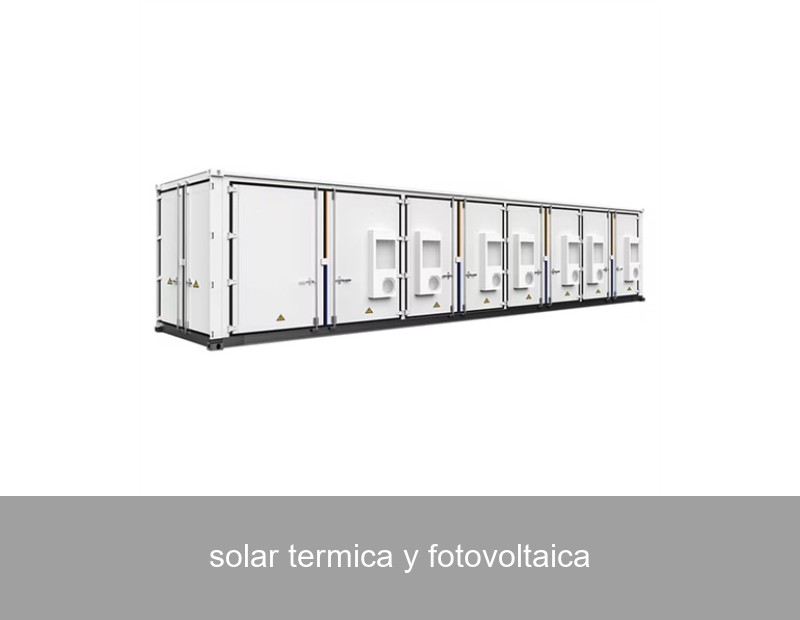
- Highjoule HJ-Series Commercial BESS: Scalable, containerized or modular battery systems with industry-leading safety (UL 9540 certified) and longevity. These systems store excess photovoltaic generation for use on-demand.
- Orion Energy Management Platform: Our proprietary AI-driven software is the brain of the operation. It doesn't just monitor; it predicts, optimizes, and automates your energy flows across thermal, electrical, storage, and grid assets. It ensures every kilowatt-hour of solar energy, whether thermal or electric, is used at the most economically advantageous moment.
- Custom Engineering & Integration: Our team of experts works with your solar thermal and PV installers to design a seamless integration plan. We ensure our BESS and Orion platform communicate flawlessly with all components, creating a single, high-performance ecosystem.

Image: Advanced control and monitoring of an integrated energy storage system. Source: Unsplash
This integrated approach is particularly valuable in markets like Germany and California, where time-of-use tariffs and demand charges are significant. By strategically dispatching stored solar electricity, our systems can turn energy cost savings into a major competitive advantage. For deeper insights into grid dynamics, resources from the International Renewable Energy Agency (IRENA) are invaluable.
The Future of Solar is Hybrid and Intelligent
The evolution is clear. The next generation of solar projects, especially for C&I and microgrid applications, will no longer ask, "Should I install thermal or PV?" Instead, the question becomes, "What is the optimal mix of thermal, PV, and storage for my specific energy profile, and how do I manage it all intelligently?"
Emerging technologies like PV-T (photovoltaic-thermal) collectors, which generate electricity and heat from a single module, further blur the lines and promise even greater efficiency per square meter. The constant, however, will be the need for sophisticated control and storage to mitigate intermittency and maximize value.
Is your business or community ready to move beyond a simple solar installation and explore the full potential of an intelligent, hybrid energy system that masters both solar térmica y fotovoltaica?
 Inquiry
 Online Chat