


Understanding Solar Panel Types and Differences: A Guide to Choosing the Right Technology
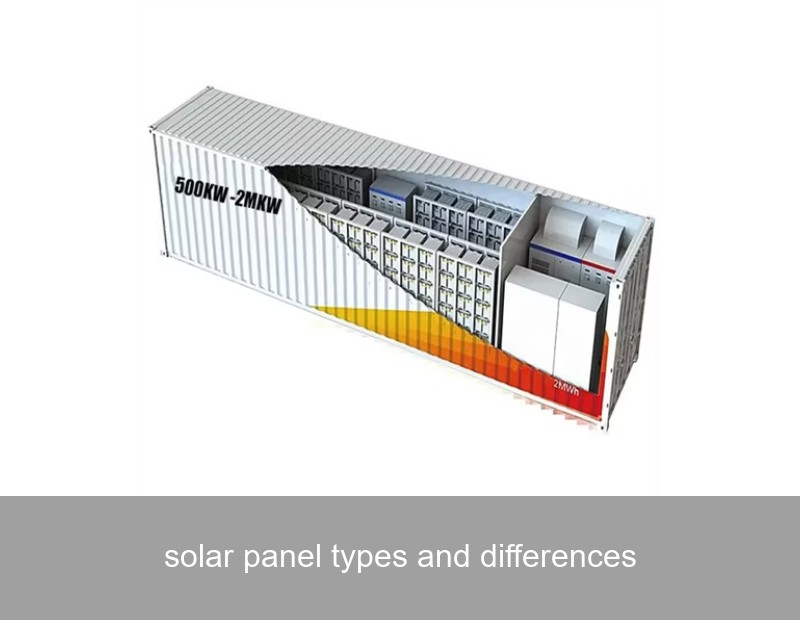
Have you ever looked at the solar arrays on rooftops or in fields and wondered if they're all the same? The answer is a resounding no. The world of solar energy is powered by a variety of technologies, each with its own strengths and ideal applications. Understanding the key solar panel types and differences is the first critical step for any homeowner or business looking to invest in a clean energy future. This knowledge directly impacts your system's efficiency, cost, space requirements, and long-term return on investment. As a global leader in advanced energy storage since 2005, Highjoule has integrated with countless solar installations worldwide. We know that pairing the right solar technology with a smart battery storage system, like our Highjoule HomePower series, is the true secret to unlocking energy independence and maximizing your renewable investment.
Table of Contents
- The Three Main Solar Panel Types: A Quick Overview
- Monocrystalline Silicon Panels: The Premium Performer
- Polycrystalline Silicon Panels: The Classic Value Option
- Thin-Film Solar Panels: The Flexible Alternative
- Side-by-Side Comparison: Efficiency, Cost & Lifespan
- Beyond the Panel: Why Your Storage System Matters Just as Much
- Case Study: A German Business Maximizing Solar ROI
- Which Solar Panel Type is Right for Your Project?
The Three Main Solar Panel Types: A Quick Overview
At the heart of the photovoltaic (PV) market, three primary technologies dominate: monocrystalline, polycrystalline, and thin-film. Each is manufactured through distinct processes, resulting in different appearances, performance characteristics, and price points. Think of it like choosing an engine for your car—you have different options for power, efficiency, and cost, and the best choice depends on how and where you plan to drive.
- Monocrystalline: Made from single-crystal silicon, known for high efficiency and a sleek, dark appearance.
- Polycrystalline: Composed of multiple silicon fragments melted together, recognizable by its blue, speckled look and budget-friendly price.
- Thin-Film: Created by depositing photovoltaic material on a substrate like glass or metal. It's lightweight and flexible but generally less efficient.

Image source: Unsplash. A visual comparison of different solar cell textures.
Monocrystalline Silicon Panels: The Premium Performer
Monocrystalline panels are the veterans of high-efficiency solar. They are produced using the Czochralski method, where a single crystal silicon seed is grown into a pure, cylindrical ingot. This uniform crystal structure allows electrons to flow more freely, which translates to better performance.
- Efficiency: Typically range from 18% to 22%, with premium models exceeding 22%. This means they convert a higher percentage of sunlight into electricity.
- Appearance: Uniform black color with rounded cell edges (a result of the cylindrical ingot being sliced).
- Space Efficiency: Their higher efficiency means you need fewer panels to generate the same power output, making them ideal for roofs with limited space.
- Lifespan & Warranty: They often come with the longest warranties, commonly 25 years or more, and are known for long-term durability.
- Cost: The manufacturing process is energy and silicon-intensive, making them the most expensive option per panel.
Polycrystalline Silicon Panels: The Classic Value Option
Polycrystalline panels emerged as a cost-effective alternative. Here, raw silicon is melted and poured into a square mold. As it cools, it forms multiple crystals, giving the panel its distinctive blue, fragmented look.
- Efficiency: Generally range from 15% to 17%. The crystal boundaries impede electron movement slightly, resulting in lower efficiency compared to monocrystalline.
- Appearance: Blue hue with a visible, speckled texture due to the multiple crystals.
- Space Requirement: You'll need a larger surface area to match the power output of a monocrystalline system.
- Lifespan & Warranty: Also very durable with warranties often around 25 years, though performance degradation might be slightly higher over time.
- Cost: The simpler manufacturing process leads to a lower price point, offering great value for money.
Thin-Film Solar Panels: The Flexible Alternative
Thin-film technology represents a different approach altogether. Instead of using rigid silicon wafers, one or more thin layers of photovoltaic material (like Cadmium Telluride - CdTe, Amorphous Silicon - a-Si, or Copper Indium Gallium Selenide - CIGS) are deposited onto a substrate.
- Efficiency: Varies widely by material but is generally lower, ranging from 10% to 13% for commercial modules. However, they perform better than crystalline silicon in low-light and high-temperature conditions.
- Appearance & Form: Can be made flexible, lightweight, and even semi-transparent. This opens unique applications for building-integrated photovoltaics (BIPV), like solar facades or carports.
- Manufacturing & Cost: Potentially less expensive to manufacture at scale and has a smaller carbon footprint in production. However, they require significantly more space.
- Lifespan: Traditionally had shorter lifespans, but modern thin-film panels have improved dramatically, with warranties now comparable to silicon panels.
Side-by-Side Comparison: Efficiency, Cost & Lifespan
| Feature | Monocrystalline | Polycrystalline | Thin-Film (CdTe example) |
|---|---|---|---|
| Typical Efficiency | 18% - 22%+ | 15% - 17% | 10% - 13% |
| Cost (Relative) | Highest | Medium | Lowest (per panel, not per watt) |
| Space Requirement | Lowest | Medium | Highest |
| Temperature Coefficient | Better | Good | Best (performance drops less in heat) |
| Best For | Limited roof space, maximizing output, long-term ROI | Budget-conscious projects with ample space | Large commercial roofs, unique structures, high-heat environments |
Data synthesized from the National Renewable Energy Laboratory (NREL) efficiency charts and industry benchmarks.
Beyond the Panel: Why Your Storage System Matters Just as Much
Choosing the right panel is only half the energy equation. Solar panels generate power when the sun shines, but energy demand peaks often occur in the early morning and evening. Without storage, excess solar energy is exported to the grid, often at a low rate, and you're forced to buy expensive power back at night.
This is where a sophisticated battery energy storage system (BESS) becomes non-negotiable. A high-quality BESS, like Highjoule's solutions, doesn't just store energy; it intelligently manages it. Our IntelliGridTM platform for commercial and industrial applications uses AI to optimize when to store solar energy, when to use it, and when to participate in grid services—maximizing financial returns. For homeowners, the Highjoule HomePower system seamlessly integrates with any solar panel type, ensuring you use your self-generated clean energy first, protecting you from outages, and reducing your reliance on the volatile grid.

Image source: Unsplash. A modern home equipped with rooftop solar and a wall-mounted battery storage unit.
Case Study: A German Business Maximizing Solar ROI
Let's look at a real-world example from Bavaria, Germany. A mid-sized dairy processing plant with a large, flat roof faced high energy costs and wanted to meet sustainability goals. They installed a 500 kW polycrystalline solar array—a cost-effective choice given their ample roof space. However, their energy consumption spiked during early morning operations before sunrise and in the late afternoon for refrigeration.
By pairing their solar farm with a Highjoule C&I Battery Storage System (1 MWh capacity), they achieved remarkable results:
- Self-Consumption Rate: Increased from 35% to over 80%, meaning they use most of the solar energy they produce.
- Grid Cost Savings: Reduced peak demand charges by 40% by discharging the battery during high-tariff periods.
- Additional Revenue: The system participates in Germany's primary control reserve market, generating income by providing grid stability services, a feature managed automatically by IntelliGridTM software.
This case, documented in a broader industry report by IRENA, highlights that the financial success of a solar project is increasingly defined by the intelligence of its storage partner, not just the panels on the roof.
Which Solar Panel Type is Right for Your Project?
So, how do you decide? Ask yourself these questions:
- What is my available space? Limited roof = monocrystalline. Vast field = poly or thin-film.
- What is my primary goal? Maximum lifetime output = monocrystalline. Lowest upfront cost = polycrystalline. Unique architectural integration = thin-film.
- What is my local climate? Extremely hot climates might see relative benefits from thin-film's better temperature coefficient.
Ultimately, the most future-proof solar investment is one designed as a holistic system. The panel generates the energy, but the storage and energy management platform defines its value.
Ready to See How Your Solar Choice Integrates with Intelligent Storage?
Whether you're leaning towards high-efficiency monocrystalline for your home or considering a large-scale polycrystalline array for your factory, the next critical step is planning the storage component. How will you ensure the clean energy you generate today powers your needs tonight and tomorrow? Highjoule's team of experts can help you model the optimal combination of solar technology and battery storage to meet your specific energy and financial goals.
 Inquiry
 Online Chat