


Plug-in Storage Systems: The Smart Gateway to Energy Independence
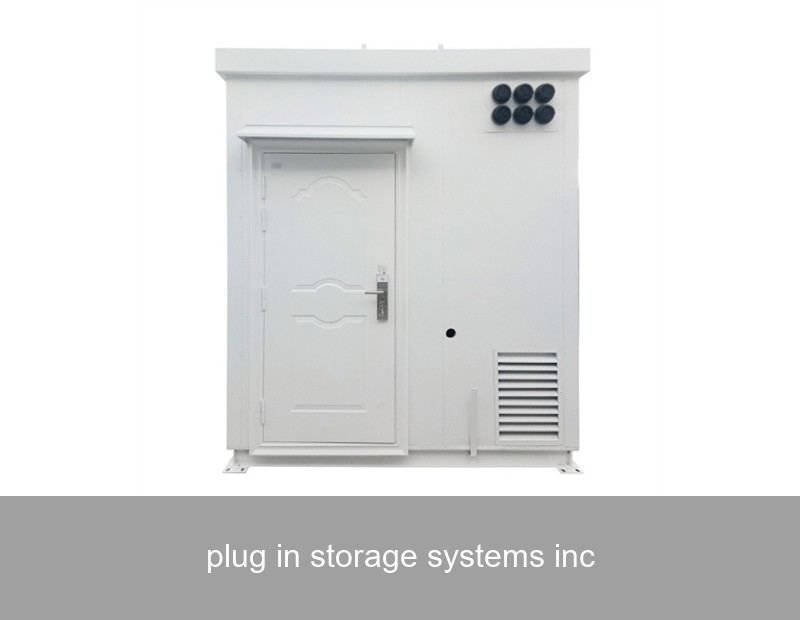
Imagine this: your electricity bill arrives, and instead of the usual dread, you feel a sense of control. You know that a significant portion of the power you used was generated and stored right at your property, shielded from the volatile prices of the grid. This isn't a distant future scenario; it's the reality enabled by modern plug-in storage systems. For businesses and homeowners across Europe and the US, these innovative systems are transforming energy from a mere utility into a strategic asset. As a global leader in advanced energy storage, Highjoule has been at the forefront of this revolution since 2005, designing intelligent systems that make energy independence accessible, reliable, and remarkably straightforward.
Table of Contents
- The Rise of Plug-and-Play Power
- Beyond the Battery: The Intelligence Inside
- Case Study: A California Winery Saves Thousands
- Highjoule Solutions for Every Scale
- The Future is Modular and Connected
The Rise of Plug-and-Play Power
So, what exactly is a plug-in storage system? At its core, it's an integrated battery storage solution designed for relatively simple installation—often connecting to existing solar inverters or electrical panels—much like a major appliance. The "plug-in" concept signifies a move away from overly complex, custom-built installations towards standardized, scalable units. The driving forces behind their surge are impossible to ignore:
- Skyrocketing Energy Costs: In Europe, gas price shocks have sent electricity tariffs soaring. In the US, regions like California and Texas face both high rates and grid reliability issues.
- Solar Maximization: Without storage, excess solar energy often gets sold back to the grid at low rates. A storage system captures that surplus for use at night, dramatically increasing self-consumption.
- Grid Resilience: From heatwaves straining grids to unexpected winter storms, power outages are a growing concern. A plug-in storage system with backup functionality keeps essential loads running.
The data underscores this trend. According to the International Energy Agency (IEA), global energy storage capacity is set to multiply exponentially this decade, with behind-the-meter systems (those at homes and businesses) being a major contributor. This isn't just about technology; it's about a fundamental shift in how we view and manage power.

Image: Modern, modular battery units enable cleaner and simpler installations. Source: Unsplash
Beyond the Battery: The Intelligence Inside
Calling it just a "battery" is like calling a smartphone just a "phone." The true value of a modern plug-in storage system lies in its brain: the energy management system (EMS). This software is what transforms stored electrons into savings and security.
Think of it this way: a simple battery charges when there's excess solar and discharges when the sun goes down. An intelligent system, like those built into every Highjoule unit, does much more. It can forecast weather and your energy usage patterns, decide the most economical times to charge (even from the grid when rates are low), and discharge during peak price periods—a process known as peak shaving. For commercial users, this can mean avoiding crippling demand charges. It can also seamlessly island your property from the grid during an outage, all within milliseconds. This intelligence is what delivers the return on investment.
Key Components of a Smart Storage System
| Component | Function | Highjoule's Approach |
|---|---|---|
| Battery Modules | Store electrical energy, typically using lithium-ion chemistry for density and longevity. | High-density, UL-certified LiFePO4 modules with passive safety design and modular scalability. |
| Power Conversion System (PCS) | Manages the flow of electricity between DC battery and AC building loads/grid. | Bi-directional, high-efficiency inverters with seamless grid-forming capability for backup. |
| Energy Management System (EMS) | The "brain" that controls charging/discharging based on algorithms, tariffs, and user preferences. | Highjoule's proprietary Horizon OS, featuring AI-driven optimization and user-friendly cloud monitoring. |
| Thermal Management | Keeps batteries within optimal temperature range for safety, performance, and lifespan. | Integrated, low-power liquid cooling system ensuring consistent performance from -20°C to 50°C. |
Case Study: A California Winery Saves Thousands
Let's look at a real-world application. A mid-sized winery in Sonoma County, California, was facing two major challenges: frequent brief grid interruptions that risked spoiling temperature-sensitive fermentation tanks, and extremely high "demand charges" from their utility—fees based on their highest 15-minute power draw each month.
In 2023, they installed a Highjoule C&I Stack 150 system, a containerized plug-and-play storage solution with 150 kWh of capacity. The results were quantified within the first year:
- Demand Charge Reduction: By discharging the battery during predictable peaks (like cooling loads on hot afternoons), the winery reduced its peak grid draw by 40%. This translated to an average monthly savings of $2,800 on demand charges alone.
- Backup Power: The system provided seamless backup for critical refrigeration and control systems during three grid outages, preventing potential product loss valued at over $15,000.
- Solar Optimization: Paired with their existing solar array, self-consumption of solar power increased from 35% to over 80%, further reducing their energy bills.
This case exemplifies how a plug-in storage system moves beyond being an eco-friendly choice to become a core financial and operational asset for a business. The system paid for itself in under 4 years, a timeline accelerated by state incentives like California's SGIP (Self-Generation Incentive Program).
Highjoule Solutions for Every Scale
At Highjoule, we understand that a one-size-fits-all approach doesn't work for energy. Our portfolio of plug-in storage systems is designed to meet specific needs across sectors, all built with our core principles of intelligence, efficiency, and sustainability.
- For Homes & Residential Communities: The Highjoule Home Vault series offers sleek, quiet units from 10 to 30 kWh. With our intuitive app, homeowners can monitor production, consumption, and savings in real-time, set backup preferences, and even participate in virtual power plant (VPP) programs where available, earning revenue by supporting the grid.
- For Commercial & Industrial (C&I): Our C&I Stack modular systems (from 50 kWh to multi-MWh configurations) are the workhorses for businesses. They are engineered for peak shaving, demand charge management, and providing critical backup for operations like data servers, manufacturing lines, or cold storage.
- For Microgrids & Utilities: Highjoule's GridMax utility-scale solutions provide grid services like frequency regulation and renewable firming. These large-scale, plug-and-play systems help stabilize the broader grid, enabling higher penetration of wind and solar power.
Every Highjoule system is supported by our global network of certified installers and our 24/7 performance monitoring platform, ensuring you get not just a product, but a long-term energy partnership.

Image: A residential solar-plus-storage installation, maximizing self-consumption. Source: Unsplash
Making the Switch: Key Considerations
If you're considering a plug-in storage system, asking the right questions is crucial. Here’s a practical framework:
- What are your primary goals? (Bill savings, backup power, sustainability, all of the above?)
- What is your current energy profile? Analyze your utility bills—note your consumption (kWh), peak demand (kW), and rate structure (time-of-use, demand charges).
- Do you have or plan to have solar PV? Storage synergizes perfectly with solar, but can also operate independently for grid-charging strategies.
- What incentives are available? In the US, the federal Investment Tax Credit (ITC) now applies to standalone storage. In Europe, programs vary by country; for instance, Germany offers VAT exemptions for residential storage paired with solar. A reputable provider like Highjoule can help navigate this landscape.
- What about installation and warranty? Seek out certified installers and look for robust warranties that cover both performance (e.g., guaranteed capacity after 10 years) and parts/labor.
The Future is Modular and Connected
The evolution of plug-in storage is heading towards even greater simplicity and interconnection. We're seeing the rise of modular "storage blocks" that can be stacked to increase capacity as needs grow. Furthermore, the aggregation of thousands of distributed systems into Virtual Power Plants (VPPs) is creating a resilient, decentralized energy network. As noted by research from the National Renewable Energy Laboratory (NREL), VPPs can provide substantial grid reliability benefits at a lower cost than traditional infrastructure.
This future isn't about isolated units; it's about ecosystems. Your home or business storage system becomes an active participant in a smarter, cleaner grid. The question is no longer if energy storage will become a standard feature of our built environment, but when.
Is your organization ready to audit its energy resilience and uncover the potential savings lying dormant in your daily load profile? What would energy certainty be worth to your home or business in the coming year?
 Inquiry
 Online Chat