


Paneles Solares El Salvador: Unlocking Energy Independence and Economic Growth
Have you ever looked at the abundant sunshine in El Salvador and wondered how much potential power is literally shining down every day? For Salvadoran homeowners and businesses, this isn't just a philosophical question—it's the key to tackling rising electricity costs and building a more resilient future. The conversation around paneles solares El Salvador is rapidly shifting from a niche interest to a mainstream solution. This article will explore the solar energy landscape in El Salvador, the tangible benefits, the real-world challenges, and how advanced technology is making energy independence more accessible than ever.
Table of Contents
- The Solar Phenomenon in El Salvador
- Beyond the Basics: The Critical Role of Energy Storage
- Case Study: A Salvadoran Agro-Industrial Plant's Transformation
- Choosing the Right System: Key Considerations for Salvadoran Clients
- Highjoule's Tailored Solutions for the Salvadoran Market
- The Future of Energy in El Salvador
The Solar Phenomenon in El Salvador: More Than Just Panels
El Salvador enjoys a significant solar advantage. With an average solar irradiance of about 5.5 kWh/m²/day, the country has a natural resource ripe for harvesting. The initial driver for adopting paneles solares en El Salvador is often economic. Grid electricity prices, coupled with the desire for predictable long-term costs, make the return on investment for solar increasingly attractive. However, there's a common misconception: that installing solar panels alone solves all energy challenges. The reality is more nuanced.
Solar panels only produce energy when the sun is shining. This creates a mismatch—your home or factory might have peak energy demand in the early evening when solar production drops. Without a way to store the excess energy generated at midday, you remain dependent on the grid during non-sunny hours, missing out on the full potential of your investment. This is where the conversation must evolve from just solar panels to complete solar-plus-storage systems.

Image: A solar installation in a sunny climate. To maximize such an investment, energy storage is key. Credit: Unsplash.
Beyond the Basics: The Critical Role of Energy Storage
Think of your solar panel system as a fantastic water collector during a rainstorm. Without a tank to store the water, you can only use it while it's raining. An energy storage system (ESS) is that tank for your solar electricity. It allows you to capture surplus solar energy and use it on demand, whether at night, during a grid outage, or during peak tariff periods when electricity from the utility is most expensive.
For the Salvadoran market, the benefits are profound:
- Energy Resilience: Grid instability or weather-related outages can halt business operations and disrupt daily life. A battery backup system provides seamless, instantaneous power.
- Maximized Self-Consumption: Increase the percentage of your own solar energy you use from ~30-40% (with panels only) to 80% or more, dramatically slashing your energy bill.
- Load Management: For businesses, storage can help manage demand charges—a significant portion of commercial electricity bills based on your highest power draw.
A study by the National Renewable Energy Laboratory (NREL) highlights that combining solar with storage consistently delivers higher value and reliability than either technology alone.
Case Study: Transforming an Agro-Industrial Plant in San Miguel
Consider the real example of a mid-sized coffee processing plant in the San Miguel department. The plant operated 18 hours a day, with high-energy drying machinery causing severe demand spikes. Their monthly electricity bill averaged $12,000, with nearly 40% attributed to demand charges. They installed a 250 kW solar array, which helped but didn't address evening operations or peak spikes.
The transformative step was integrating a 500 kWh battery energy storage system (BESS). The system was programmed to:
- Store excess solar energy produced during lower-processing hours.
- Discharge during the evening shift, avoiding grid use.
- Provide a "peak shaving" function, automatically supplying power during short periods of maximum machinery use to keep grid demand below a set threshold.
| Metric | Before Solar+Storage | After Solar+Storage |
|---|---|---|
| Monthly Electricity Bill | $12,000 | $3,200 |
| Grid Demand Peak | 350 kW | 220 kW |
| Energy Self-Sufficiency | 0% | 92% |
| ROI Period | N/A | Estimated 4.2 years |
This tangible outcome showcases that for commercial and industrial users in El Salvador, paneles solares are just the beginning. The true financial and operational control comes from intelligent storage.
Choosing the Right System: Key Considerations for Salvadoran Clients
Not all energy storage solutions are created equal. The tropical climate, grid characteristics, and specific use cases in El Salvador demand a tailored approach. Here are critical factors to evaluate:
- Battery Chemistry: Lithium Iron Phosphate (LFP) batteries, like those used by Highjoule, are superior for stationary storage. They offer enhanced safety, longer lifespan (10,000+ cycles), and better performance in warmer climates compared to older NMC chemistries.
- System Intelligence: Can the system learn your consumption patterns and optimize charging/discharging schedules automatically? Smart energy management software is crucial for maximizing ROI.
- Scalability & Modularity: Your energy needs will evolve. A modular system allows you to start with what you need and expand capacity seamlessly as your business grows or your goals change.
- Local Support & Warranty: Ensure your provider has a robust local partner network for installation, maintenance, and honoring long-term performance warranties. Global companies with local presence offer the best of both worlds.
Highjoule's Tailored Solutions for the Salvadoran Market
At Highjoule, with nearly two decades of experience as a global leader in advanced energy storage, we understand that a one-size-fits-all approach doesn't work. Our solutions for the Salvadoran market are designed to address the specific challenges and opportunities we've discussed.
For residential clients looking to pair with their paneles solares en El Salvador, our H-Joule Home series provides a sleek, safe, and intelligent storage solution. Its integrated energy management system automatically prioritizes solar self-consumption and ensures backup power for essential loads, giving families peace of mind and control over their energy bills.
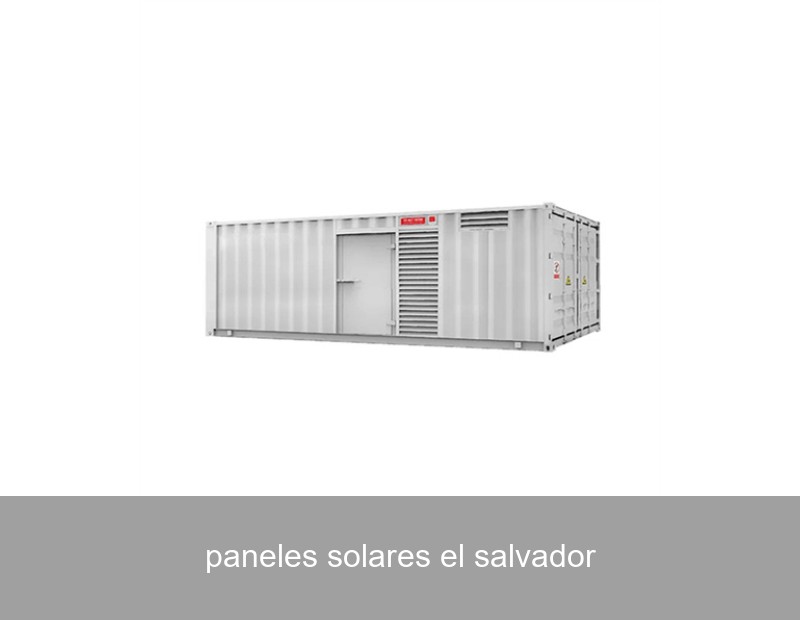
For commercial and industrial (C&I) enterprises, like the coffee processor in our case study, our H-Joule C&I Modular Platform is the ideal fit. Its containerized or rack-mounted design offers unparalleled flexibility and power. Key features include:
- LFP battery cells for maximum safety and longevity.
- An AI-driven energy management platform that performs peak shaving, time-of-use optimization, and can even enable participation in future grid services.
- Scalability from 100 kWh to multi-MWh projects, all supported by a comprehensive 10-year warranty and our global network of technical support.

Image: A modern, industrial battery energy storage system. Credit: Unsplash.
Furthermore, for larger-scale or microgrid applications, Highjoule provides end-to-end project development support, from feasibility studies leveraging data from sources like Global Solar Atlas, to system design, financing models, and long-term performance monitoring.
The Future of Energy in El Salvador: A Community Endeavor
The transition to renewable energy in El Salvador is not just an individual decision; it's a collective movement towards national energy security and sustainability. As more homes and businesses adopt solar-plus-storage systems, they contribute to a more stable and decentralized grid. This reduces strain on national infrastructure and can lower costs for everyone over time.
Innovations in virtual power plants (VPPs), where networks of distributed home batteries can be aggregated to support the grid during times of peak demand, are on the horizon. With intelligent systems like Highjoule's, Salvadoran energy consumers could potentially generate revenue from their storage assets in the future, turning an expense center into a revenue-generating asset.
The journey with paneles solares El Salvador is an exciting one. It starts with capturing the sun's power but reaches its full potential when you can control that power on your own terms, 24 hours a day.
What would you do with a completely predictable, resilient, and low-cost energy supply for your home or business in El Salvador? What project have you been putting off due to uncertain energy costs or reliability concerns?
 Inquiry
 Online Chat