


Paneles Solares en Planta: Unlocking the Full Potential of Industrial Solar Power
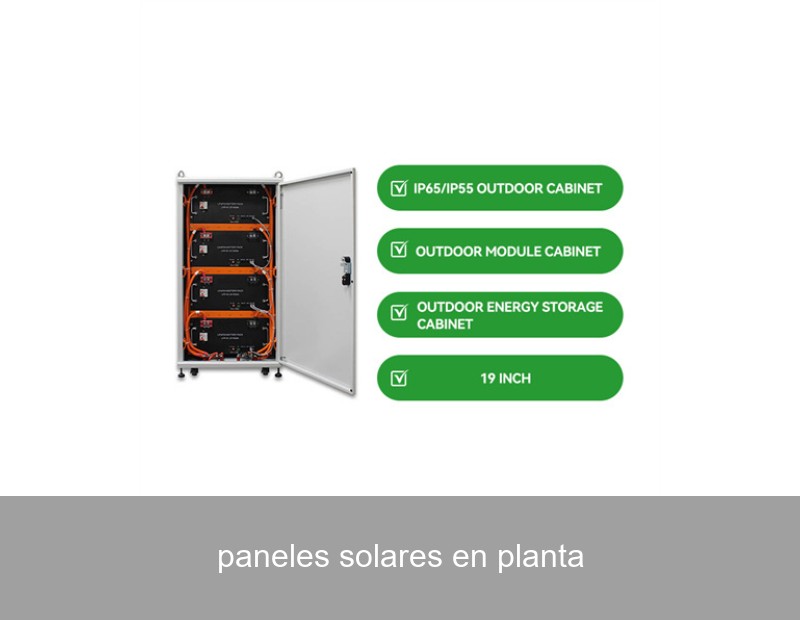
Imagine a sprawling industrial facility, its vast rooftops and unused land areas bathed in sunlight. Now, imagine harnessing that free, abundant energy not just to reduce electricity bills, but to create a resilient, self-sufficient power plant. This is the promise and power of paneles solares en planta – large-scale solar installations at industrial sites. For facility managers and energy decision-makers across Europe and the US, this transition is moving from a "nice-to-have" to a critical strategy for energy security and cost predictability. But the journey from installing panels to creating a truly optimized, reliable solar power plant requires intelligent integration and, most importantly, advanced energy storage.
Table of Contents
- The Phenomenon: From Rooftop Arrays to Power Plants
- The Data: Why Storage is the Missing Link
- The Case Study: A Spanish Industrial Giant's Blueprint
- The Insight: Intelligent Management is Key
- The Highjoule Solution: Beyond the Inverter
The Phenomenon: From Rooftop Arrays to Power Plants
Gone are the days when solar panels were a simple add-on. Today, paneles solares en planta represent a fundamental rethinking of industrial energy infrastructure. We're seeing a shift from basic net metering setups—where excess solar is sent back to the grid for a credit—to sophisticated on-site "power plants." The driver? Volatility. Energy prices, especially in European markets, have shown unprecedented spikes, while grid reliability concerns persist in many regions. Industries can no longer afford to be passive consumers. They must become proactive producers and managers of their own energy destiny. The solar array is the generator, but the true brain and backbone of this new power plant is the Battery Energy Storage System (BESS).

Source: Unsplash - An industrial-scale solar installation on a factory roof.
The Data: Why Storage is the Missing Link
Let's talk numbers. A solar array without storage typically achieves a self-consumption rate of 30-40% for an industrial facility. This means 60-70% of the solar energy you produce is exported to the grid when you don't need it, often at low rates, only for you to buy back expensive power in the evening. This mismatch is a critical financial drain. According to the International Renewable Energy Agency (IRENA), coupling solar PV with storage can increase the share of self-consumed solar electricity to over 80%, dramatically improving the return on investment. Furthermore, a study by the U.S. National Renewable Energy Laboratory (NREL) highlights that storage can provide essential grid services, adding another revenue stream for facility owners. The equation is simple: Paneles solares + BESS = Higher self-consumption + Energy arbitrage + Backup power + Grid services.
The Financial & Operational Impact
| Scenario | Self-Consumption Rate | Grid Dependence | ROI Timeline |
|---|---|---|---|
| Solar Only (No Storage) | ~35% | High (Especially at peak times) | Longer (5-8 years) |
| Solar + Advanced BESS (e.g., Highjoule) | >80% | Low (Managed, strategic import/export) | Optimized (Often 3-6 years) |
The Case Study: A Spanish Industrial Giant's Blueprint
Consider the real-world example of a major automotive parts manufacturer in Valencia, Spain. Facing energy costs exceeding €1.2 million annually and seeking to meet corporate sustainability targets, they embarked on a paneles solares en planta project. The initial design included a 2.1 MWp rooftop solar array. However, our team at Highjoule conducted a detailed energy audit and proposed an integrated solution:
- Solar PV: 2.1 MWp rooftop system.
- Storage: A 1.2 MWh Highjoule H2.IntelliBESS unit.
- Software: Our proprietary Apex.OS energy management platform.
The results, after 18 months of operation, are telling:
- Energy Self-Sufficiency: Increased from 31% to 89% during operational hours.
- Cost Savings: Annual electricity bill reduced by 68%.
- Peak Shaving: Completely eliminated demand charges from the grid during peak tariff periods.
- Backup Power: Critical manufacturing lines can now operate for 4+ hours during a grid outage, preventing millions in potential production losses.
This case isn't just about savings; it's about transforming an energy cost center into a strategic, resilient asset. The paneles solares generate the fuel, and the Highjoule BESS ensures every kilowatt-hour is used intelligently.
The Insight: Intelligent Management is Key
Installing panels and batteries is only half the battle. The true value is extracted through sophisticated, AI-driven energy management. Think of it this way: your solar array is the heart, pumping energy. The battery is the liver, storing and regulating supply. But the energy management system (EMS) is the brain, making split-second decisions based on weather forecasts, production schedules, real-time electricity prices, and grid conditions.
A basic system might just store excess solar for later use. An intelligent system, like Highjoule's Apex.OS, does much more:
- Predictive Optimization: Uses AI to forecast solar production and facility load, pre-charging or discharging the battery for maximum financial gain.
- Market Participation: In certain markets, it can automatically sell stored power back to the grid during periods of high prices or grid stress.
- Health Monitoring: Continuously monitors battery cell health to ensure safety, longevity, and performance warranty compliance.
This level of control is what separates a simple installation from a future-proof industrial power plant.

Source: Unsplash - A modern Battery Energy Storage System (BESS) container.
The Highjoule Solution: Beyond the Inverter
At Highjoule, with nearly two decades of experience since 2005, we understand that a successful paneles solares en planta project is defined by its performance over 20+ years, not just its day-one installation. We provide end-to-end solutions tailored for commercial and industrial applications:
- H-Series IntelliBESS: Our flagship battery systems, built with lithium iron phosphate (LFP) chemistry for unparalleled safety and cycle life. They are modular, scalable from 100 kWh to multi-megawatt hours, and designed for harsh industrial environments.
- Apex.OS Energy Management Platform: The cloud-based intelligence hub that turns raw energy into strategic asset. It provides real-time dashboards, automated control, and detailed reporting for sustainability and financial tracking.
- Professional Services: From initial feasibility studies and system design to commissioning, long-term maintenance, and performance guarantees. We partner with leading solar EPCs to deliver a seamless, integrated experience.
Our systems are deployed across Europe and North America, helping factories, logistics centers, and agribusinesses not just install solar, but master their energy usage. We don't just sell hardware; we deliver a guaranteed energy outcome.
Your Energy Future: A Question of Integration
The potential of your facility's rooftops and land is immense. The sun provides the energy for free. The technology to capture and control it is proven and more affordable than ever. The question for your operation is no longer "Should we install paneles solares en planta?" but rather "How do we design a system that maximizes our independence, resilience, and return on investment for the next quarter-century?"
What is the single biggest energy vulnerability in your production process that a smart, solar-plus-storage power plant could solve?
 Inquiry
 Online Chat