


Understanding Paneles Solares Térmicos y Fotovoltaicos: A Guide to Solar Energy
You've likely seen the sleek, dark arrays on rooftops and wondered, "What's the difference between those panels?" The world of solar energy primarily uses two key technologies: paneles solares térmicos y fotovoltaicos. While they might look similar to the untrained eye, they harness the sun's power in fundamentally different ways. One directly creates the electricity that powers your home and business, while the other provides a powerful solution for heating needs. As energy prices remain volatile and the push for sustainability grows stronger across Europe and North America, understanding this distinction is the first step toward making an informed, cost-saving, and eco-friendly energy decision for your property.
Table of Contents
- Thermal vs. Photovoltaic: Core Differences
- How Do Solar Thermal Panels Work?
- How Do Photovoltaic (PV) Solar Panels Work?
- Side-by-Side Comparison
- The Storage Imperative: Maximizing Your Solar Investment
- Real-World Impact: A Case Study from Valencia
- Making the Right Choice for Your Needs
Thermal vs. Photovoltaic: Two Paths from the Sun
Let's break it down simply. Paneles solares térmicos (solar thermal collectors) capture heat. Think of them as a sophisticated, sun-powered water heater. They use a fluid (often a water-glycol mix) that circulates through tubes within the panel, gets heated by the sun, and then transfers that heat to your domestic hot water tank or even your home heating system.
On the other hand, paneles solares fotovoltaicos (photovoltaic or PV panels) capture light. These are the panels most people envision. They contain semiconductor cells (usually silicon) that generate direct current (DC) electricity when exposed to sunlight through the photovoltaic effect. This DC electricity is then converted by an inverter into the alternating current (AC) that powers everything from your lights to your refrigerator.

Image Source: Unsplash - Visual comparison of solar technologies.
How Do Solar Thermal Panels Work? The Heat Harvesters
The process for thermal panels is elegantly straightforward:
- Absorption: Sunlight hits the collector, which is designed to absorb maximum solar radiation and minimize heat loss.
- Heat Transfer: The absorbed heat warms a transfer fluid circulating in sealed tubes.
- Exchange: This hot fluid travels to a heat exchanger, transferring its thermal energy to your water supply.
- Distribution: The now-heated water is stored in an insulated cylinder, ready for use in showers, sinks, or radiators.
Their efficiency in converting sunlight to heat is remarkably high, often exceeding 70%. This makes them exceptionally cost-effective for meeting specific hot water demands, especially in regions with good sun exposure like Southern Europe or the Sun Belt in the U.S.
How Do Photovoltaic (PV) Solar Panels Work? The Power Generators
PV technology is a direct conversion process. Each panel is composed of many solar cells. When photons from sunlight strike these cells, they knock electrons loose from their atoms. An electrical circuit built into the cell channels these electrons, creating a flow of DC electricity. Multiple panels are connected to form an array, and the combined output is managed by a critical component: the inverter. The inverter's job is to convert that DC power into usable AC power for your property.
But here's a crucial point many new to solar overlook: generation and consumption are rarely in sync. You often produce the most power in the middle of the day when you might not be home, and you need power in the evening when the sun is setting. This is where the true modern energy solution begins.
Side-by-Side: Paneles Solares Térmicos y Fotovoltaicos
| Feature | Solar Thermal Panels | Photovoltaic (PV) Panels |
|---|---|---|
| Primary Function | Heats water or air | Generates electricity |
| Key Output | Thermal Energy (Heat) | Electrical Energy (AC Power) |
| Typical Efficiency | High (70-80%) | Moderate (15-22% for standard modules) |
| Main Applications | Domestic hot water, space heating, pool heating | Powering all electrical devices, lighting, appliances, EV charging |
| Energy Storage Need | Insulated hot water cylinder | Battery Energy Storage System (BESS) |
The Storage Imperative: Unlocking the Full Potential of PV
This is the critical evolution in solar energy. Installing paneles solares fotovoltaicos is a brilliant first step, but pairing them with an intelligent battery storage system transforms your property into a resilient, self-optimizing energy hub. Without storage, excess solar energy is often fed back to the grid for minimal compensation. With storage, you save that valuable energy for when you need it most.
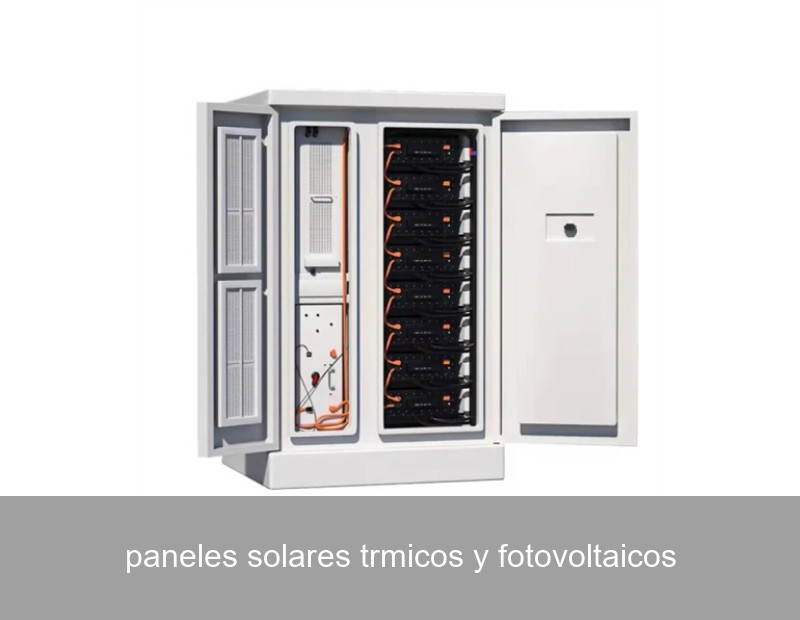
This is where Highjoule's expertise becomes pivotal. As a leader in advanced energy storage since 2005, we don't just provide batteries; we provide integrated, intelligent systems. Our Highjoule HPS Series for residential and commercial applications seamlessly integrates with your new or existing PV array. Our smart energy management system learns your consumption patterns, automatically deciding when to store solar energy, power your home, or even draw from the grid during off-peak hours to maximize savings.
For larger-scale needs, such as industrial facilities or microgrids, our Highjoule GridStack solutions offer utility-grade storage that can manage demand charges, provide backup power, and stabilize local grids. Think of it this way: thermal panels store heat in a tank; Highjoule systems store your solar electricity in a high-efficiency, long-lifecycle battery, giving you control and independence.
Real-World Impact: A Hotel's Sustainable Transformation in Valencia
Let's look at a concrete example. A 120-room coastal hotel in Valencia, Spain, was facing cripplingly high energy costs, particularly for hot water (for guest use and laundry) and general electricity. Their old gas boiler was inefficient and expensive.
The Solution: A hybrid system was installed in 2022:
- Paneles Solares Térmicos: A 40-panel array was installed to shoulder 75% of the hotel's annual domestic hot water load.
- Paneles Solares Fotovoltaicos: A 100 kW rooftop PV array was installed to offset base-load electricity consumption.
- Highjoule Integration: A 120 kWh Highjoule HPS-C commercial battery storage system was added to store excess PV generation.
The Data-Driven Results (after 12 months):
- Overall energy costs reduced by 58%.
- Gas consumption for water heating cut by 70%.
- The battery system enabled 85% self-consumption of solar PV electricity, drastically reducing grid reliance during peak tariff periods.
- Estimated carbon footprint reduction of 42 tonnes CO2e annually.
This case, documented in part with data from the International Renewable Energy Agency (IRENA), shows the synergistic power of combining both thermal and photovoltaic technologies, intelligently managed by storage. The hotel now enjoys predictable energy costs, enhanced sustainability credentials, and reliable backup power.

Image Source: Unsplash - Example of a commercial solar installation.
Making the Right Choice for Your Home or Business
So, which is right for you? The answer often is: both, in a complementary system.
Consider Solar Thermal If:
- Your primary goal is to reduce bills for hot water heating.
- You have a high, consistent demand for hot water (large family, hospitality business).
- You have space for a hot water storage cylinder.
Consider Photovoltaic (with Storage) If:
- You want to reduce your overall electricity bill and power all your appliances.
- You seek energy independence and backup power resilience.
- You plan to add an electric vehicle charger.
- You want a scalable system that can adapt to future needs.
For most modern households and businesses, the versatility of PV paired with a Highjoule storage system offers the broadest benefits. However, a detailed energy audit can reveal if adding thermal for specific loads is optimal. The U.S. Department of Energy's Solar Energy Technologies Office provides excellent resources for understanding your local potential.
The Highjoule Advantage: Your Partner in Complete Energy Solutions
At Highjoule, we move beyond simply selling panels. We analyze your energy profile, location, and goals to design a holistic system. Whether you need a robust residential HPS system to maximize your rooftop PV, a commercial GridStack to manage demand charges, or expert consultation on integrating thermal and PV technologies, our global team provides the intelligent, efficient, and sustainable power solution you need. We ensure every component, from the panels to the battery to the inverter, works in perfect harmony.
Ready to explore how the combination of paneles solares térmicos y fotovoltaicos, augmented by intelligent storage, can redefine your energy independence? What's the first energy challenge you'd like to solve for your property?
 Inquiry
 Online Chat