


Off-Grid Solar Power Generator: Your Complete Guide to Energy Independence
Imagine a home or business humming with activity, powered entirely by the sun, completely free from the grid. This isn't a distant dream—it's the reality made possible by modern off-grid solar power generators. For property owners in remote locations, areas with unreliable utility service, or anyone seeking true energy autonomy, these systems represent a powerful solution. But what does it take to build a reliable, efficient, and sustainable off-grid power system? Let's explore the technology, the essential components, and how companies like Highjoule are pioneering intelligent solutions for a self-sufficient energy future.
Table of Contents
- What is an Off-Grid Solar Power Generator System?
- Key Components of a Robust Off-Grid System
- Case Study: Off-Grid Farming in Southern Spain
- Highjoule's Role in Advanced Off-Grid Solutions
- The Future of Off-Grid Living and Operations
What is an Off-Grid Solar Power Generator System?
An off-grid solar power generator is a self-contained energy system. Unlike grid-tied systems that send excess power back to the utility, an off-grid system operates in complete isolation. It must capture, store, and manage all the electricity needed for the connected loads, 24/7, regardless of weather. This independence is its greatest strength but also its most significant engineering challenge, requiring meticulous design and high-quality components.
Key Components of a Robust Off-Grid System
Building a reliable off-grid system is like assembling a high-performance team, where each member has a critical role.
- Solar Panels: The primary fuel source, converting sunlight into DC electricity.
- Charge Controller: The regulator. It protects the batteries by managing the voltage and current from the solar panels.
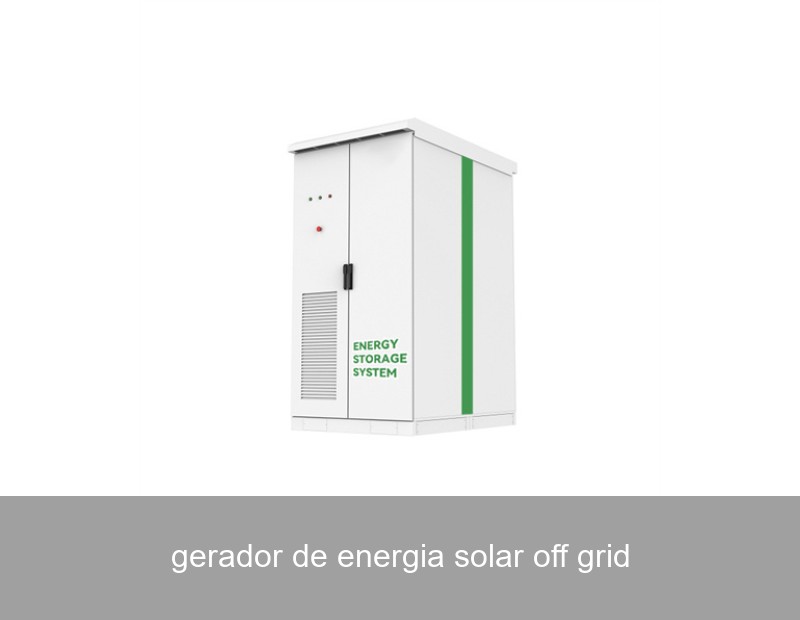
- Energy Storage System (Battery Bank): The heart of the system. This is where your solar energy is stored for use at night or during cloudy days. Modern systems are moving from traditional lead-acid to Lithium Iron Phosphate (LiFePO4) batteries for longer lifespan, deeper discharge capability, and greater safety.
- Inverter/Charger: The brain and the translator. It converts stored DC battery power into AC power for your appliances. A high-quality hybrid inverter also integrates a charger to replenish batteries from a backup source (like a generator) when needed.
- Backup Generator (Optional but Recommended): A weather-proofing asset. During prolonged periods of low sunlight, a backup generator (often diesel, propane, or biodiesel) can kick in to recharge the batteries, ensuring uninterrupted power.

Image Source: Unsplash - A typical off-grid solar installation.
The Core Challenge: Balancing Energy Supply and Demand
The fundamental equation for off-grid design is simple yet unforgiving: Energy Generation + Storage Capacity MUST meet or exceed Energy Consumption. Get this wrong, and you face blackouts. This requires an accurate energy audit of all appliances and an understanding of local solar irradiance patterns. According to the National Renewable Energy Laboratory (NREL), proper sizing is the single most important factor in off-grid system reliability, often needing to account for 3-5 days of "autonomy" with minimal solar input.
Case Study: Off-Grid Farming in Southern Spain
Let's look at a real-world example. A 50-hectare organic almond farm in Andalucía, Spain, was plagued by high costs and the logistical nightmare of connecting to the distant grid. Their energy needs included water pumping for irrigation (a 5kW pump), cold storage for produce, and basic residential power for on-site staff.
The Problem: Intermittent grid power threatened irrigation cycles and crop yield. Diesel generators were noisy, polluting, and expensive to run.
The Solution: A tailored off-grid solar power generator system was installed in 2022.
| Component | Specification |
|---|---|
| Solar PV Array | 45 kWp |
| Battery Storage | 60 kWh Lithium-Ion (LiFePO4) |
| Inverter/Charger | 3-phase, 15 kW hybrid system |
| Backup | Existing diesel generator integrated as backup |
The Results: The system now provides over 95% of the farm's annual energy needs. The generator runs less than 50 hours per year, solely during rare, consecutive poor-weather weeks in winter. The farm has reduced its energy costs by an estimated 80% and secured its irrigation schedule, leading to a projected 15% increase in crop yield due to reliable watering. This case highlights how a well-designed system isn't just about power—it's about operational resilience and economic sustainability.
Highjoule's Role in Advanced Off-Grid Solutions
This is where expertise and advanced technology make all the difference. As a global leader founded in 2005, Highjoule specializes in the intelligent core of these systems: the Battery Energy Storage System (BESS) and the energy management intelligence. For an off-grid application, we don't just provide a battery; we provide the brains of the operation.
Our Highjoule HPS Series all-in-one energy storage systems are engineered for off-grid and microgrid resilience. They integrate a LiFePO4 battery, a high-efficiency hybrid inverter, and a sophisticated Battery Management System (BMS) into a single, pre-assembled unit. What sets our systems apart for off-grid use is the advanced energy dispatch algorithm. It doesn't just react—it predicts. By learning consumption patterns and considering weather forecasts, it proactively manages energy flow, deciding when to store, when to discharge, and when to signal the backup generator for the most efficient top-up, thereby minimizing fuel use and wear.

Image Source: Unsplash - Example of a modern battery storage system.
For larger commercial or microgrid applications, our Highjoule GridMaster controllers act as the central command, seamlessly orchestrating multiple power sources—solar arrays, large-scale battery banks, and backup generators—to maintain perfect grid stability and frequency, even in an isolated network. This level of control, backed by nearly two decades of field experience, is what transforms a collection of components into a reliable, independent power plant.
The Future of Off-Grid Living and Operations
The technology for off-grid solar is rapidly evolving. We're seeing increased battery energy density, smarter AI-driven management, and more durable panel designs. The International Energy Agency (IEA) notes that declining costs are making decentralized renewable systems increasingly competitive, even in grid-connected areas, for those prioritizing resilience.
The journey to energy independence starts with the right questions: Have you calculated your true energy load, including seasonal variations? Is your goal 100% independence, or is a resilient backup for an unreliable grid more appropriate? How do you value quiet, emission-free operation versus the occasional need for a generator backup?
We invite you to consider: What could true energy independence unlock for your remote home, business, or community project?
 Inquiry
 Online Chat