


Solar Products in Cambodia: A Bright Future Powered by Smart Energy Storage
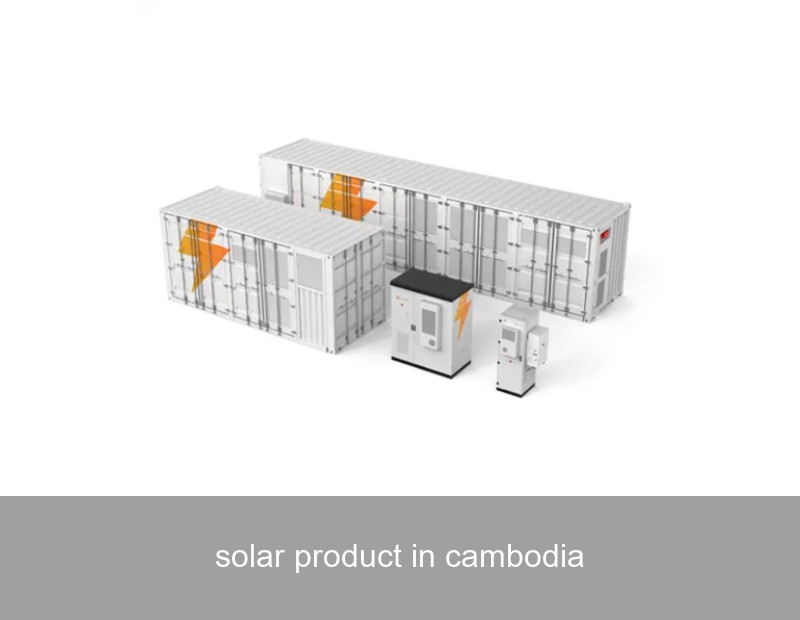
Imagine a country blessed with abundant sunshine, where solar potential is among the highest in Southeast Asia, yet where reliable, 24/7 electricity remains a challenge for many. This is the paradox and the opportunity in Cambodia today. The conversation around solar products in Cambodia is rapidly evolving from simple rooftop panels to integrated, resilient power systems. As the nation strides towards economic growth, the demand for stable, clean energy is surging. This is where the true game-changer enters the scene: advanced battery energy storage systems (BESS). These systems don't just capture the sun's energy; they intelligently manage it, ensuring power is available precisely when and where it's needed. For businesses, communities, and industries in Cambodia, this technological synergy is transforming solar from an intermittent supplement into a dependable primary power source.
Table of Contents
- The Cambodian Energy Phenomenon: Sun-Rich but Grid-Constrained
- Beyond the Panel: The Storage Imperative
- Case Study: Powering a Siem Reap Industrial Estate
- Highjoule's Tailored Solutions for the Cambodian Market
- The Future is Integrated and Intelligent
The Cambodian Energy Phenomenon: Sun-Rich but Grid-Constrained
Cambodia's average solar irradiance is impressive, ranging from 5.0 to 5.5 kWh/m²/day. To put that in perspective, that's comparable to some of the sunniest parts of Southern Europe. This natural bounty has fueled a rapid increase in solar PV installations. However, the national grid is still being strengthened, and many rural areas lack connection entirely. Even in urban and industrial zones, power fluctuations and outages can disrupt operations, leading to financial losses. The traditional approach—oversizing a solar array—only solves part of the problem. Excess energy generated at midday is often wasted without a way to store it for the evening peak or during cloudy periods. This mismatch between generation and consumption is the core challenge that modern solar products in Cambodia must address.

Image: Solar potential in Cambodia is vast, but maximizing its value requires smart storage. (Photo by Michael Fousert on Unsplash)
Beyond the Panel: The Storage Imperative
So, what separates a basic solar setup from a true energy solution? The answer lies in integration and intelligence. A complete system comprises three key components:
- Generation: High-efficiency solar panels.
- Conversion: Inverters that convert DC solar power to usable AC power.
- The Brain & Battery: The energy storage system and its control software.
This third component is critical. A top-tier Battery Energy Storage System (BESS) does far more than just hold a charge. It performs "energy time-shifting," stores surplus solar energy, and releases it during peak tariff hours or grid outages. Advanced systems, like those developed by Highjoule, feature sophisticated energy management systems (EMS) that autonomously optimize for cost, efficiency, and reliability. For a Cambodian factory, this could mean seamlessly switching to stored solar power during an unexpected grid failure, preventing production line stoppages. For a commercial building in Phnom Penh, it could mean strategically using stored energy to avoid expensive peak-demand utility charges.
Case Study: Stability for a Siem Reap Industrial Estate
Let's look at a real-world application. A growing industrial estate on the outskirts of Siem Reap, housing several garment and light manufacturing units, faced frequent voltage sags and short outages. These disruptions, sometimes lasting just minutes, were causing significant quality control issues and equipment resets. They had a 500 kW rooftop solar installation, but it was grid-tied and would shut down during outages for safety reasons—leaving them in the dark precisely when they needed power.
The solution was a turnkey solar-plus-storage microgrid. Highjoule engineers designed and deployed a 500 kW / 1 MWh containerized BESS alongside their existing solar array. The system was configured with advanced grid-forming inverters, allowing it to create a stable, localized "microgrid" independent of the main utility.
| Metric | Before Highjoule BESS | After Highjoule BESS Deployment |
|---|---|---|
| Grid Outage Impact | Full production stoppage (~15 events/month) | Zero impact; seamless transition to storage |
| Solar Self-Consumption | ~65% (excess solar exported, low credit) | ~95% (excess stored for evening use) |
| Diesel Generator Use | Frequent, for backup | Eliminated |
| Estimated Annual Cost Savings | N/A (Baseline) | ~$85,000 (from fuel, demand charges, lost productivity) |
This project exemplifies how the right solar product in Cambodia isn't just a panel—it's a holistic power resilience solution. The estate now operates more predictably, has slashed its energy costs, and significantly reduced its carbon footprint. You can read more about Cambodia's energy landscape and goals from authoritative sources like the International Energy Agency (IEA).
Highjoule's Tailored Solutions for the Cambodian Market
With nearly two decades of experience since 2005, Highjoule understands that markets like Cambodia require robust, adaptable, and simple-to-manage technology. Our products are engineered for high-temperature, humid environments and are built with a focus on longevity and safety. For Cambodian businesses and communities, we offer specific solutions that go beyond mere equipment supply:
Highjoule Hive Commercial & Industrial (C&I) ESS
Our modular, containerized Hive system is perfect for factories, hotels, shopping malls, and large agricultural facilities. It's scalable from 100 kWh to multi-megawatt hours and can be configured for both grid-tied and off-grid applications. Its liquid-cooling technology ensures optimal performance even under Cambodia's hot climate, extending battery life.
Highjoule Nexus Residential & Small Business ESS
For smaller enterprises, clinics, schools, and large homes, the Nexus series provides an all-in-one wall-mounted solution. It integrates seamlessly with new or existing solar installations, offering backup power and daily bill management through an intuitive user app.
Comprehensive Services: From Audit to Ongoing Support
Highjoule's value lies in full project lifecycle support:
- Energy Audits & Feasibility Studies: We analyze your load profiles, solar generation, and utility bills to design the most economical system.
- Turnkey Engineering, Procurement, and Construction (EPC): We manage the entire installation and integration process.
- Remote Monitoring & Proactive Maintenance: Our cloud-based platform allows us and our clients to monitor system health and performance in real-time, often diagnosing issues before they cause downtime.
This service-oriented approach ensures that our solar and storage products in Cambodia deliver their promised value for years to come. For technical insights into battery safety and standards, resources like Battery Power Online offer valuable information.
Image: Modern, containerized battery storage systems like Highjoule's Hive series provide robust power solutions. (Photo by American Public Power Association on Unsplash)
The Future is Integrated and Intelligent
The trajectory for Cambodia's energy sector is clear: distributed, renewable, and smart. As battery costs continue to decline and software intelligence grows, solar-plus-storage will become the default choice for new commercial and industrial developments. We are moving towards ecosystems where clusters of buildings with solar and storage can form community microgrids, enhancing regional resilience. The integration of electric vehicle charging infrastructure will further intertwine transportation and building energy systems, creating new layers of complexity and opportunity for optimization.
For a business leader or property developer in Cambodia today, the question is no longer if to invest in solar, but how to design the most intelligent and resilient system from the start. The inclusion of a scalable, high-performance BESS is no longer a luxury; it's a strategic investment in operational continuity and cost control.
What does your current energy reliability cost your business in lost productivity, damaged equipment, or missed opportunities? How could you redesign your power infrastructure if you knew you could have 99.9% uptime, powered by the Cambodian sun?
 Inquiry
 Online Chat