


Vertical Solar Panels: A Smart Innovation for Modern Energy Challenges
When we picture solar energy, vast rooftop arrays or sprawling desert farms come to mind. But what if the future of photovoltaics isn't just about facing the sky, but also about standing tall? Enter vertical solar panels – an ingenious approach that is turning walls, fences, and unused vertical spaces into clean power generators. This isn't just a niche idea; it's a practical response to land constraints, seasonal sun angles, and the growing demand for integrated renewable solutions. For businesses, communities, and homeowners in Europe and the US, this innovation opens new doors for sustainability. And at Highjoule, a global leader in advanced energy storage since 2005, we see vertical solar as a perfect partner for creating resilient, intelligent power systems that work 24/7.
Table of Contents
- What Are Vertical Solar Panels?
- The Data Advantage: Beyond Traditional R rooftops
- A Real-World Case Study: Germany's Agrivoltaic Revolution
- Highjoule Intelligent Storage: The Perfect Companion
- Practical Applications: Where Vertical Solar Shines
- Are Vertical Solar Panels Right for Your Energy Goals?
What Are Vertical Solar Panels?
Simply put, vertical solar panels are photovoltaic modules installed in an upright position, like a fence or a facade, rather than tilted on a roof or ground mount. They typically face east and west, capturing the morning and afternoon sun rather than the midday peak. This might seem less efficient at first glance, but the real magic lies in their unique production curve and spatial benefits.
Think of it this way: a traditional south-facing array produces a sharp "peak" of energy around noon. A vertical bifacial system (using panels that capture light on both sides) creates a broader, more consistent "hill" of generation throughout the day. This profile can be incredibly valuable, especially when paired with the right technology.

Image: Vertical solar panels in an agrivoltaic setup. Source: Wikimedia Commons (CC)
The Data Advantage: Beyond Traditional R rooftops
Why consider going vertical? Let's look at the compelling data. According to a study by the National Renewable Energy Laboratory (NREL), vertically mounted bifacial panels in high-latitude regions can significantly reduce the variance in seasonal output. They produce more energy in winter months compared to standard tilted systems because they better capture the low-hanging sun.
Here’s a simplified comparison of annual energy yield per kW installed:
| System Type | Key Advantage | Ideal For |
|---|---|---|
| Traditional Tilted Rooftop | High peak summer production | Homes with large, unshaded south-facing roofs |
| Vertical Bifacial (East-West) | Dual-peak, consistent daily & winter production | Land-constrained sites, agricultural co-use, noise/visual barriers |
This consistent generation is a game-changer. It aligns better with typical energy demand patterns in commercial buildings—high in the morning and late afternoon—reducing the need to draw expensive power from the grid during those times.
A Real-World Case Study: Germany's Agrivoltaic Revolution
Let's move from theory to a tangible success story. In Heggelbach, Germany, a pioneering agrivoltaic project called "APV-Resola" has been operating since 2016. Researchers installed vertical rows of solar panels directly in a field, with crops growing in between. The results, published by the Fraunhofer Institute for Solar Energy Systems, are impressive:
- Land Use Efficiency: The system achieves a land-use ratio of 186% — meaning it produces food and renewable energy on the same plot, effectively doubling its utility.
- Energy Output: The vertical configuration generates enough electricity to power approximately 62 households annually.
- Crop Yield: Certain shade-tolerant crops like potatoes and celery showed only minimal yield reduction, while water usage decreased due to reduced evaporation.
This case is a powerful blueprint for farms in the US Midwest or across Europe. It demonstrates that vertical solar isn't about choosing between energy and agriculture; it's about synergizing them for greater resilience and profitability.
Highjoule Intelligent Storage: The Perfect Companion
Here's where the story gets even more powerful. The true potential of any solar installation, vertical or traditional, is unlocked when paired with intelligent energy storage. This is Highjoule's core expertise.
Vertical solar's dual-peak generation profile creates a more predictable and extended flow of energy. Our Highjoule H-Series Commercial & Industrial Battery Systems are designed to capitalize on this. They don't just store excess power; they intelligently manage it based on time-of-use rates, demand charges, and your facility's specific load patterns.

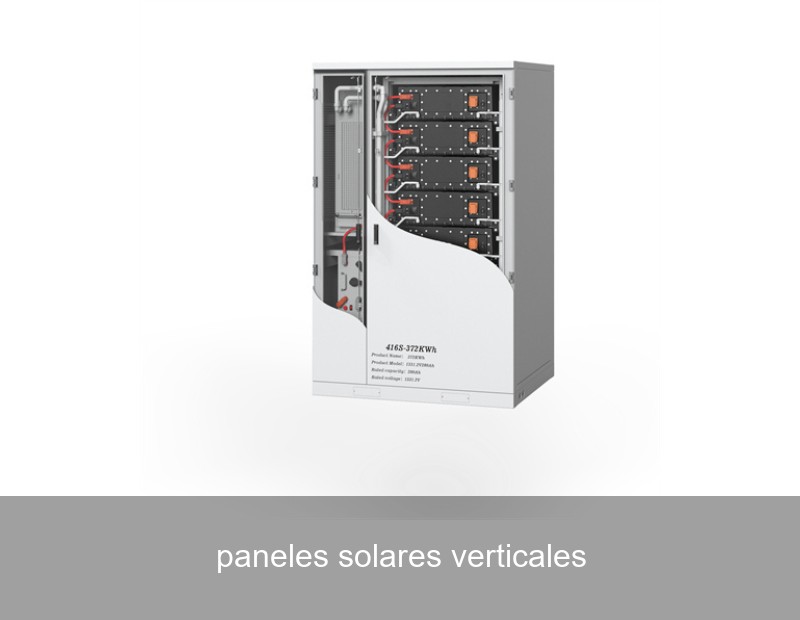
Image: A modern Battery Energy Storage System (BESS). Source: Unsplash (License-free)
Imagine a winery in California using vertical solar panels along its vineyard borders. The panels generate power from dawn to dusk. Our Highjoule storage system captures the morning surplus, uses it to power cooling systems during the expensive afternoon peak, and then discharges again in the evening for lighting and processing. This maximizes self-consumption, slashes energy bills, and provides backup power—all managed seamlessly by our AI-driven Energy Management Platform.
For residential clients, our Home Energy Vault integrates with diverse solar setups, including vertical balcony or facade systems popular in European cities, turning every kilowatt-hour into controlled savings and security.
Practical Applications: Where Vertical Solar Shines
Where does this technology make the most sense today? Let's explore a few key applications:
- Agricultural & Agri-business (Agrivoltaics): As shown in Germany, vertical rows between crops minimize shading while providing a steady income stream from energy production.
- Urban and Perimeter Solutions: Sound barriers along highways, fencing around industrial parks, or building facades in dense cities can become productive assets. This is ideal for meeting corporate sustainability targets where roof space is limited.
- Cold Climate Optimization: In northern US states or Scandinavia, vertical panels avoid snow accumulation and excel at capturing reflective light from snow cover, boosting winter output.
- Microgrids and Off-Grid Systems: For remote communities or industrial sites, combining vertical solar with a robust Highjoule microgrid controller creates a dependable, hybrid power source that is less susceptible to single-point generation failures.
Are Vertical Solar Panels Right for Your Energy Goals?
The journey towards vertical solar panels starts with a clear assessment of your goals, space, and energy profile. It's not a one-size-fits-all replacement for rooftop solar, but a versatile and strategic complement to the energy transition toolkit.
At Highjoule, we don't just provide storage hardware; we provide holistic smart, efficient, and sustainable power solutions. Whether you're a farmer looking to future-proof your land, a factory manager aiming to cut peak demand charges, or a municipality planning a sustainable infrastructure project, the combination of innovative solar design and advanced storage is key.
What unique vertical space around your property could be transformed into a clean energy source, and how would an intelligent storage system like Highjoule's maximize its financial and operational impact for you?
 Inquiry
 Online Chat