


Understanding Pannelli Fotovoltaici Classe A1: Your Guide to Premium Solar Efficiency
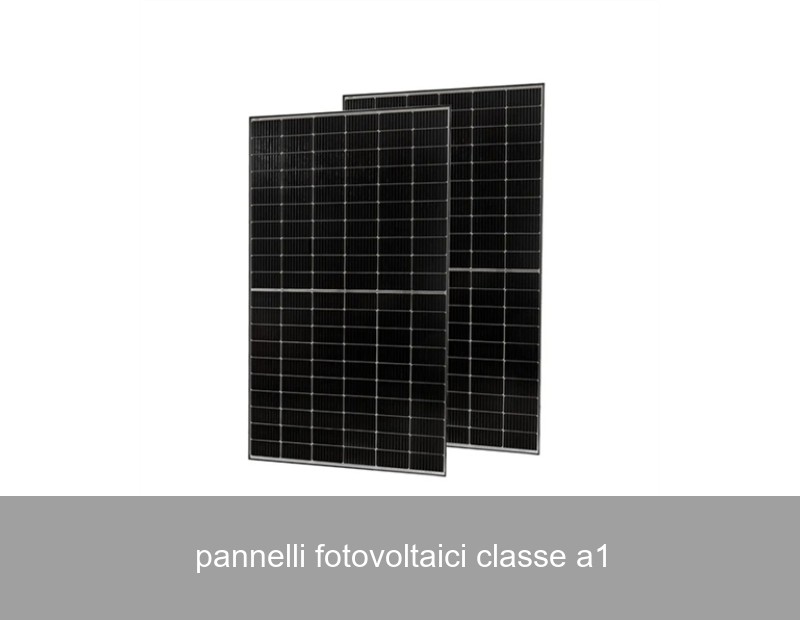
If you're researching solar panels in Europe, you've likely come across terms like "pannelli fotovoltaici classe A1." It sounds technical, but understanding this classification is key to unlocking the highest performance and return on investment from your solar energy system. In essence, pannelli fotovoltaici classe A1 represents the top tier of solar panel quality and efficiency, a critical factor for homeowners and businesses aiming for energy independence and sustainability. But what does this classification truly mean for your energy yield, especially when paired with a modern storage solution? Let's demystify the concept and explore how choosing top-class components forms the foundation of a truly intelligent power system.
Table of Contents
- What Are Pannelli Fotovoltaici Classe A1?
- Why Panel Efficiency and Classification Matter
- Beyond the Panel: The Critical Role of Energy Storage
- Case Study: Maximizing ROI in Southern Italy
- Choosing Your Complete Energy Solution
What Are Pannelli Fotovoltaici Classe A1?
The classification "Classe A1" for photovoltaic panels primarily refers to the quality and tolerance of the solar cells used in the module's manufacturing. In simple terms, solar cells are sorted and binned based on their measured electrical output and efficiency. Panels labeled as Classe A1 are constructed using cells that fall within a very tight, high-performance tolerance range (typically a positive power tolerance of 0 to +5%). This means every panel in this class consistently meets or exceeds its rated wattage output.
Think of it like sorting batteries: Class A1 panels are the "premium grade" that deliver exactly what they promise, while lower classes (B, C) may have greater variances and lower actual performance. This classification impacts:
- Power Output Consistency: Every A1 panel in your array performs uniformly.
- Long-Term Degradation: Higher-grade cells often correlate with better long-term durability and a slower power degradation rate.
- Space Efficiency: Higher efficiency A1 panels generate more power per square meter, crucial for roofs with limited space.
Image: High-efficiency solar panels ensure maximum energy harvest from limited roof space. Source: Unsplash
Why Panel Efficiency and Classification Matter
The phenomenon is clear: not all solar panels are created equal. Two identical-looking installations can yield significantly different annual energy production based on the underlying panel class and technology.
Let's look at the data. According to the National Renewable Energy Laboratory (NREL), the efficiency of commercial monocrystalline silicon panels—the type most likely to achieve A1 classification—has steadily increased from around 15% to over 22% in recent years. This 7%+ jump translates directly into needing fewer panels for the same system size, reducing installation hardware and labor costs.
However, the most common pitfall in system design is focusing solely on the panels. The real-world performance of even the best pannelli fotovoltaici classe A1 is only as good as the ecosystem that manages their power. This brings us to the indispensable partner for premium solar: the advanced battery energy storage system (BESS).
Beyond the Panel: The Critical Role of Energy Storage
Premium panels generate premium power, often in the middle of the day when consumption might be low. Without storage, this excess, high-value electricity is fed back to the grid, often at a low feed-in tariff. The logical next step is to capture that self-generated energy for use when you need it most—during the evening peak, during grid outages, or on cloudy days.
This is where companies like Highjoule transform a simple solar installation into a resilient and intelligent power asset. Since 2005, Highjoule has specialized in designing integrated storage solutions that maximize the return from high-efficiency solar arrays. Our HPS Series (Home Power Solution) and CBS Series (Commercial Battery System) are engineered to seamlessly couple with top-tier solar panels.
Our systems feature advanced lithium iron phosphate (LiFePO4) battery chemistry for safety and longevity, integrated energy management software that learns consumption patterns, and hybrid inverters capable of intelligent grid interaction. For a homeowner with pannelli fotovoltaici classe A1, a Highjoule system doesn't just store energy; it optimizes every kilowatt-hour, deciding in real-time whether to power the home, charge the battery, or sell to the grid based on cost and consumption.
Case Study: Maximizing ROI on a Southern Italian Agri-Business
Let's examine a real-world application. A winery in Puglia, Italy, installed a 50 kW solar array using premium pannelli fotovoltaici classe A1. Their goal was to reduce operational costs and power their refrigeration units sustainably.
| Metric | Without Highjoule BESS | With Highjoule CBS-50 System |
|---|---|---|
| Self-Consumption of Solar | 35% | 85% |
| Grid Energy Purchased (Annual) | ~42,000 kWh | ~9,000 kWh |
| Bill Savings (Estimated) | €8,400/year | €18,500/year |
| Payback Period | 7 years | 4.5 years |
| Backup Power During Grid Outage | None | Critical loads for 12+ hours |
The data speaks volumes. By adding a Highjoule CBS-50 battery storage system, the winery nearly tripled its direct use of solar energy. The system stores excess midday production and releases it during the evening cooling cycles and irrigation pumps. The result was a drastic cut in grid dependence and a significantly improved return on investment, protecting their operations from both price volatility and grid instability. This case underscores that the full value of high-class panels is unlocked only when paired with intelligent storage.

Image: Commercial solar installation at an agricultural site. Source: Unsplash
Choosing Your Complete Energy Solution
So, how should you approach your project? Start with the best panels you can justify—pannelli fotovoltaici classe A1 are a sound investment. But immediately pair that decision with planning for storage. Here’s a logical step-by-step approach:
- Audit & Goal Setting: Analyze your consumption patterns (using a year's worth of bills or smart meter data). Define goals: Is it bill reduction, backup power, carbon footprint, or all three?
- Design the Hybrid System: Work with a certified installer who can model the combined performance of your chosen A1 panels and a compatible BESS like Highjoule's systems. Ensure the inverter is a hybrid model capable of managing both DC-coupled solar and battery charging efficiently.
- Consider the Software Brain: The hardware is vital, but the energy management system (EMS) is the brain. Highjoule's EnergyOS™ platform provides predictive charging, grid service compatibility, and user-friendly monitoring.
- Plan for the Future: Opt for a modular storage system that allows you to expand battery capacity as your needs evolve.
For deeper insights into solar technology trends, readers can refer to the annual IEA PVPS Snapshot Report.
Highjoule: Your Partner in Complete Energy Independence
At Highjoule, we don't just sell batteries; we provide integrated power solutions. Our expertise spans from residential HPS systems to large-scale industrial and microgrid solutions. For a homeowner with premium solar, our HPS system acts as a home's energy hub. For a factory or farm, our scalable CBS units can form a virtual power plant, providing not just savings but also potential revenue through grid services.
By choosing Highjoule, you're ensuring that the superior output of your pannelli fotovoltaici classe A1 is harnessed, stored, and dispatched with maximum intelligence and reliability. We bridge the gap between high generation and high consumption, making sustainable energy practical and economical.
Given that the efficiency of solar panels will continue to inch upward, what will be the next breakthrough that further boosts the self-sufficiency of your home or business—and how will you prepare your system to adapt to it?
 Inquiry
 Online Chat