


Powering Your Home in Tamil Nadu: A Guide to Modern Solar Power Systems
Imagine a hot summer afternoon in Chennai or Coimbatore. The sun beats down, the air conditioners hum, and the electricity meter spins relentlessly. For many homeowners in Tamil Nadu, this scene comes with a familiar anxiety: high electricity bills and the worry of unreliable grid power. But what if that intense sunlight could be the solution, not just a contributor to the problem? A well-designed solar power system for home in Tamil Nadu is no longer just an eco-friendly dream; it's a practical, financially savvy response to rising energy costs and a commitment to energy independence. This guide will walk you through the why and how, blending global insights with local relevance.
The Rise of Home Solar: More Than Just Panels
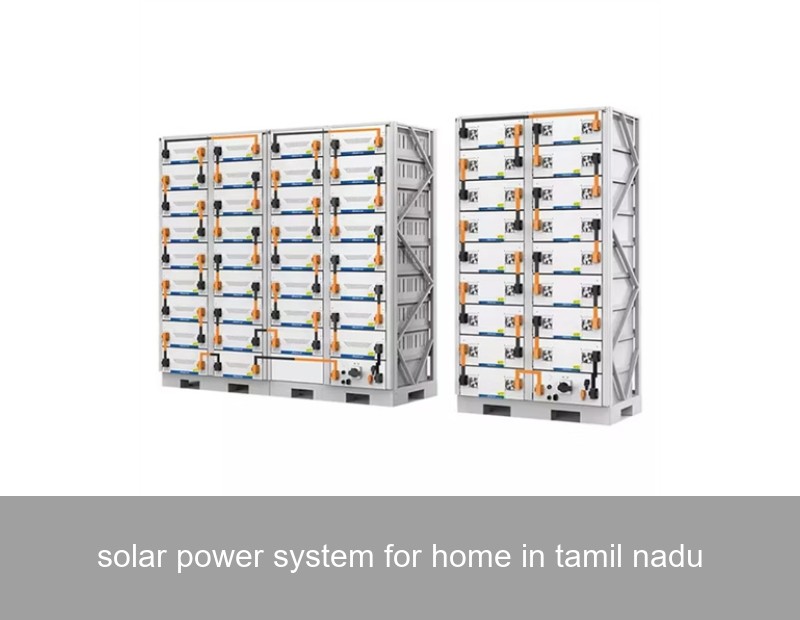
The conversation around home solar has evolved dramatically. It's moved from simply installing photovoltaic (PV) panels to creating an integrated energy ecosystem. A modern solar power system for home combines generation, storage, and intelligent management. Think of it this way: the solar panels are your personal power plant, but without a way to store excess energy for use at night or during cloudy periods, you're missing half the opportunity. This is where advanced battery energy storage systems (BESS) become the game-changer, transforming solar from a daylight-only supplement into a 24/7 primary power source.
Data Driving the Shift: Why Tamil Nadu is Ideal
Tamil Nadu isn't just a candidate for solar; it's a prime location. Let's look at the numbers. The state boasts one of the highest solar insolation levels in India, averaging about 5.5 to 6.0 kWh/m²/day. To put that in perspective, a typical 3 kW rooftop system in Madurai or Tiruchirappalli can generate approximately 12-15 kWh of electricity on a sunny day—enough to power a household's lights, fans, refrigerator, television, and even an air conditioner for several hours.
Furthermore, with increasing grid tariffs and the state's progressive net metering policies, the financial logic is compelling. The payback period for a quality solar-plus-storage system has shrunk significantly, often ranging between 5-7 years, after which the electricity generated is virtually free for the lifespan of the system (25+ years for panels).
A Real Case Study: From Bill Shock to Energy Surplus
Consider the experience of the Kumar family (name changed for privacy) in a suburban villa near Coimbatore. Facing monthly electricity bills consistently upwards of ₹8,000, they decided to invest in a 5 kW rooftop solar system coupled with a 10 kWh battery storage unit in early 2022.
| Metric | Before Solar (2021 Avg.) | After Solar+Storage (2023 Avg.) |
|---|---|---|
| Monthly Electricity Bill | ₹8,200 | ₹450 (minimum grid charge) |
| Grid Dependency | 100% | <10% |
| Daily Self-Consumption | 0 kWh | ~18 kWh |
| Annual CO2 Offset | ~0 Tons | Approx. 4.5 Tons |
"The system wasn't just about saving money," Mr. Kumar noted. "During the frequent, brief power fluctuations common in our area, our lights don't even flicker. The battery takes over seamlessly. Our investment has paid for itself in peace of mind as much as in rupees." This case underscores that a solar power system for home in Tamil Nadu addresses both economic and reliability concerns.

Image Source: Unsplash (Representative image of a modern home solar installation)
Key Components of a Robust Home Solar System
Understanding the parts helps you make an informed choice. A complete system includes:
- Solar Panels (Modules): Convert sunlight into direct current (DC) electricity. Monocrystalline panels are often preferred for their higher efficiency, especially on space-constrained roofs.
- Inverter: The brain of the system. It converts DC from the panels into usable alternating current (AC) for your home appliances. For systems with batteries, a hybrid inverter is essential.
- Battery Storage System: The heart of energy independence. It stores surplus solar energy for use later. Lithium-ion phosphate (LFP) batteries are now the global standard for safety, longevity, and performance.
- Balance of System (BoS): Mounting structures, cables, connectors, and safety devices like DC isolators and surge protectors.
- Energy Management System (EMS): The intelligence. This software optimizes when to use solar power, charge the battery, draw from the grid, or even feed back surplus, maximizing savings and efficiency.
Highjoule's Smart Solutions for Modern Homes
This is where global expertise meets local application. At Highjoule, with nearly two decades of experience powering homes and businesses across Europe, North America, and now expanding into key markets like India, we understand that a one-size-fits-all approach doesn't work. For a homeowner in Tamil Nadu considering a solar power system for home, our integrated solutions offer distinct advantages.
Our HES (Home Energy System) series is designed for resilience and simplicity. It combines our high-efficiency hybrid inverters with our proprietary LFP battery packs, all managed by the intuitive Highjoule Energy OS. This system is built to handle Tamil Nadu's specific challenges: high ambient temperatures and variable grid quality. Our batteries feature advanced thermal management to ensure long life even in hot climates, and our inverters include ultra-fast grid detection to provide a seamless backup transition during outages—a critical feature for areas experiencing frequent load-shedding or voltage dips.
Moreover, our cloud-based monitoring platform lets you track your energy production, consumption, and savings in real-time from your smartphone, giving you complete control over your home's energy flow. We focus on making advanced technology work quietly and reliably in the background of your daily life.

Image Source: Unsplash (Representative image of energy monitoring)
Why Battery Choice Matters
Not all batteries are created equal. While exploring options, it's crucial to look beyond just capacity (kWh). Key metrics include depth of discharge (DoD), cycle life, operating temperature range, and safety certifications. For instance, a battery with a 6000-cycle life at 90% DoD will outlast one with a 3000-cycle rating by years, offering better long-term value. Highjoule's battery chemistry and built-in battery management system (BMS) are engineered for maximum cycle life and safe operation, a standard we've honed serving the stringent markets of Europe and the U.S. You can learn more about battery technology evolution from authoritative sources like the U.S. Department of Energy.
Making the Decision: Steps to Your Solar Journey
Ready to explore? Here's a practical path forward:
- Energy Audit: Review your past year's electricity bills to understand your average monthly consumption (in kWh).
- Roof Assessment: Evaluate your roof's space, orientation (south-facing is ideal in the Northern Hemisphere), and shading. A local installer can help with this.
- System Sizing: Based on your audit and goals (bill reduction vs. full backup), a provider can size your PV array and battery storage. A common goal for a solar power system for home in Tamil Nadu is to cover 70-90% of your annual consumption.
- Quotation & Financing: Get detailed quotes that break down equipment (brand, model, warranties), installation costs, and projected savings. Explore financing options if needed.
- Installation & Commissioning: Choose a certified, experienced installer. After installation, the system must be tested and connected to the grid under the Tamil Nadu net metering policy, a process your installer should manage.
For insights into global solar trends and policies that often influence local markets, resources like the International Energy Agency (IEA) reports can provide valuable context.
So, as you look at the abundant sunshine over your home today, what's the first question you'll ask to turn that potential into power and savings for your family?
 Inquiry
 Online Chat