


Finding Your Peak Battery Supplier: A Guide to Powering Through Demand Spikes
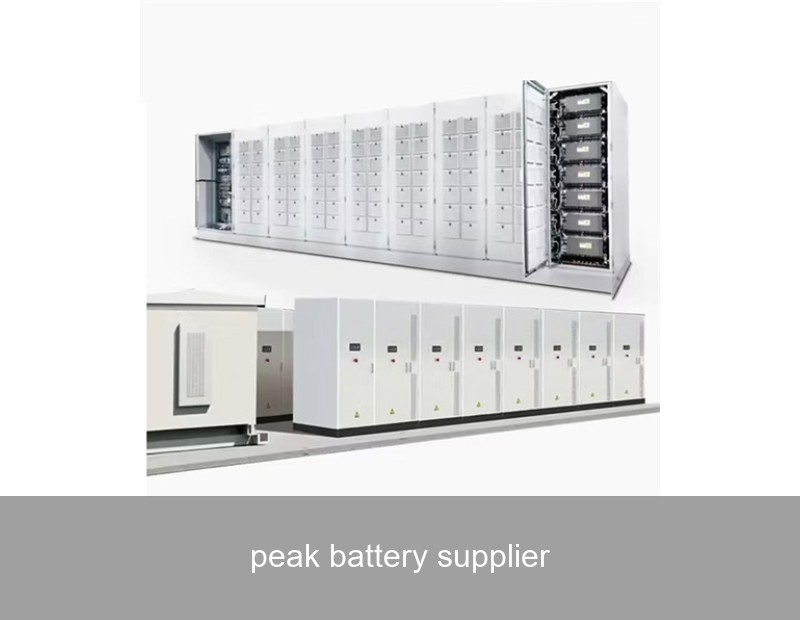
In today's energy landscape, "peak demand" is more than just a grid operator's concern. For businesses, factories, and even homeowners, these periods of maximum electricity use directly translate to the highest costs and the greatest strain on infrastructure. Managing these peaks is no longer a luxury; it's a financial and operational imperative. This is where the strategic partnership with a peak battery supplier becomes critical. A specialized supplier doesn't just provide batteries; they deliver a complete system engineered to identify, shave, and capitalize on those costly peak periods, turning a liability into an asset. Let's explore how the right technology partner can redefine your energy resilience.
Table of Contents
- The Peak Problem: More Than Just a Bill Shock
- The Data: Quantifying the Peak Cost Burden
- Case Study: A European Manufacturing Plant's Success
- Beyond Basic Storage: What Makes a True Peak Battery Supplier?
- The Highjoule Approach: Intelligent Peak Management
- The Future of Peak Management: Integration and Intelligence
The Peak Problem: More Than Just a Bill Shock
You've likely seen it on your electricity bill: a demand charge or a time-of-use rate that seems disproportionately high. This isn't an error. Utilities often structure commercial and industrial tariffs to include significant charges based on the highest 15 or 30-minute average power draw (kW) during a billing cycle. This "peak demand" sets a costly benchmark for the entire month. The phenomenon is simple: your facility ramps up operations, multiple high-power machines turn on simultaneously, and suddenly, you've set a new peak. The result? A bill that reflects not just how much energy you used (kWh), but the intensity of that usage. Relying on the grid alone during these times is like paying premium highway tolls daily. The solution lies in having a dedicated, on-site power reserve to seamlessly supplement grid power during these short, intense bursts—the core function of a peak shaving battery system.
The Data: Quantifying the Peak Cost Burden
The numbers make a compelling case. According to the U.S. Department of Energy, demand charges can account for 30% to 70% of a commercial customer's total electricity bill. In some regions with constrained grids, this figure climbs even higher. For a medium-sized industrial facility with a peak demand of 1 MW, a single monthly peak event could add tens of thousands of dollars in annual costs. The financial impact is clear, but so is the systemic one: these collective peaks force utilities to maintain and activate expensive, often carbon-intensive "peaker plants," which are only run a few hundred hours a year. By mitigating your own peak, you're not just saving money; you're contributing to a more stable and sustainable grid—a win-win that forward-thinking businesses are increasingly prioritizing.
Case Study: A Bavarian Automotive Parts Factory
Let's look at a real-world example from our work in Europe. A major automotive component manufacturer in Bavaria, Germany, faced steep demand charges and growing pressure to meet corporate decarbonization goals. Their production line, especially the high-heat treatment and pressing stages, caused sharp, predictable daily power spikes at 10 AM and 2 PM.
Highjoule was engaged as their peak battery supplier to design and deploy a tailored solution. We installed a 1.2 MWh containerized battery energy storage system (BESS) integrated directly with their main distribution panel and controlled by our Adaptive Peak Engine (APE) software.
The results over the first 12 months were significant:
- Demand Charge Reduction: The system shaved an average of 850 kW off their peak demand, leading to a 40% reduction in monthly demand charges.
- ROI Timeline: The calculated payback period was under 5 years, based on energy savings alone.
- Ancillary Benefits: The system also provided backup power for critical loads and participated in a local grid flexibility program, generating additional revenue streams.
This case underscores that a modern peak shaving system is a multi-faceted asset, not just a cost center. The key was a supplier capable of delivering the hardware, the intelligent software, and the grid interconnection expertise.

Image: A modern containerized battery storage system, similar to industrial installations. Source: Unsplash
Beyond Basic Storage: What Makes a True Peak Battery Supplier?
Not all battery providers are created equal, especially when your goal is precise peak shaving. A commodity battery pack won't suffice. You need a peak battery supplier that offers a holistic solution. Here’s what to look for:
- Advanced System Integration: The BESS must seamlessly interface with your existing electrical infrastructure without disrupting operations.
- Predictive, AI-Driven Software: The brain of the system. It must analyze your load patterns, weather data, and tariff schedules to predict peaks and dispatch battery power with millisecond precision.
- Hardware Engineered for Performance: Batteries designed for the high-power, short-duration cycles of peak shaving, not just long-duration energy shifting. This often involves specific battery chemistry and power conversion system (PCS) specifications.
- Deep Regulatory Knowledge: A supplier must navigate local utility interconnection rules, building codes, and potentially, incentive programs like the Investment Tax Credit (ITC) in the U.S. or various EU Green Deal initiatives.
| Feature | Commodity Battery Vendor | Specialized Peak Battery Supplier |
|---|---|---|
| Primary Focus | Energy capacity (kWh) | Power output & intelligent dispatch (kW) |
| Software Intelligence | Basic monitoring | Predictive analytics & automated peak shaving |
| System Design | Often off-the-shelf | Customized to load profile & tariff |
| Value Proposition | Lower upfront cost | Maximized lifetime ROI & grid services |
The Highjoule Approach: Intelligent Peak Management
At Highjoule, our philosophy is that a peak shaving system should be a proactive, profit-generating asset. We've spent nearly two decades refining our approach, which centers on our IntelliPeak™ BESS platform. This isn't just a battery cabinet; it's an integrated ecosystem. The platform combines our high-power density lithium-ion battery modules with our proprietary Adaptive Peak Engine (APE) software. APE continuously learns your facility's unique energy fingerprint, forecasting demand spikes hours in advance and autonomously orchestrating the discharge cycle to keep your grid draw below a target threshold.
For our commercial and industrial clients, this means we size the system not just for capacity, but for the specific power and duration needed to conquer your peaks. Furthermore, our systems are designed with dual purposes. While their primary job is peak shaving, they stand ready to provide emergency backup power and can be configured to participate in utility demand response programs, creating an additional revenue offset. As your peak battery supplier, Highjoule provides end-to-end service: from initial energy analysis and financial modeling, through seamless installation and grid interconnection, to ongoing performance monitoring and optimization.

Image: Visualization of energy management and load forecasting. Source: Unsplash
The Future of Peak Management: Integration and Intelligence
The next evolution for peak shaving is deep integration with on-site generation, particularly solar PV. Imagine a system where the battery not only shaves peaks but also stores excess solar energy produced at midday to deploy against the evening peak—a common pattern in both commercial and residential settings. This creates a virtuous cycle of self-consumption and grid independence. Furthermore, as virtual power plants (VPPs) gain traction, as noted by research from sources like the IEA, individual peak shaving systems will become aggregated grid resources, offering frequency regulation and capacity services. The intelligence of the software platform will be the differentiator, deciding in real-time whether to save money by shaving a peak or earn money by supporting the grid.
Is Your Current Energy Strategy Prepared for the Next Peak?
Peak demand isn't going away. If anything, with the electrification of transport and heat, managing these spikes will become more crucial for both cost control and sustainability. The question is no longer if you should address peak demand, but how and with which partner. A specialized peak battery supplier brings the engineering expertise, technological intelligence, and market knowledge to transform this challenge into a tangible competitive advantage. What will your facility's peak demand profile look like this time next year—will it be a line item of concern or a benchmark of your efficiency?
 Inquiry
 Online Chat