


Phinergy Battery for Sale: Exploring the Future of Metal-Air Power and Today's Storage Solutions
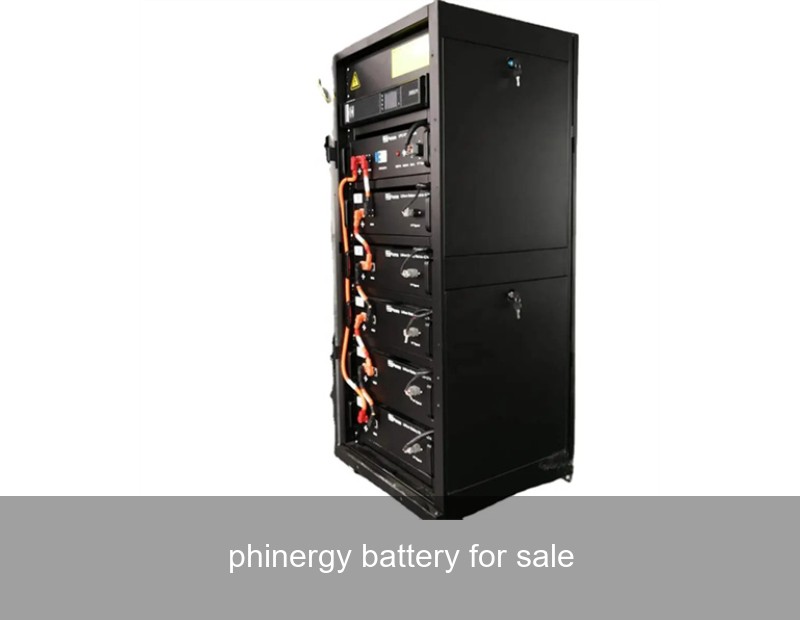
If you're searching for a "Phinergy battery for sale," you're likely a tech enthusiast, an industry professional, or a forward-thinking business owner who's heard whispers about a revolutionary energy storage technology. The promise is captivating: a battery that uses aluminum, one of Earth's most abundant metals, and air to generate electricity, offering incredible energy density. But what's the real story behind Phinergy, and are these systems actually available for purchase today? More importantly, what are the reliable, high-performance energy storage solutions you can implement right now? Let's demystify the hype and explore the practical landscape of modern battery storage.
What is a Phinergy Battery? The Aluminum-Air Powerhouse
Phinergy is an Israeli company pioneering metal-air energy systems, primarily focusing on aluminum-air (Al-Air) batteries. Unlike the lithium-ion batteries powering our phones, EVs, and home storage systems today, an Al-Air battery generates electricity through an electrochemical reaction between aluminum plates and oxygen from the air. Think of it more as an "energy generator" than a typical rechargeable battery. The aluminum slowly corrodes as it reacts with oxygen, releasing a significant amount of energy in the process.

Image Source: Wikimedia Commons (Creative Commons). Aluminum's abundance is a key driver for technologies like metal-air batteries.
How Does the Phinergy Aluminum-Air Battery Work?
The core principle is elegant in its simplicity. Inside the battery cell, an aluminum anode reacts with oxygen from the air (drawn in through a specialized cathode) in the presence of an electrolyte. This reaction produces electricity, aluminum hydroxide, and heat. The used aluminum hydroxide can later be recycled back into pure aluminum at an industrial facility, creating a closed-loop cycle.
- Anode: Made of aluminum plates (the fuel).
- Cathode: A proprietary air electrode that allows oxygen from the air to enter.
- Electrolyte: A water-based solution that facilitates the reaction.
The standout advantage? Extraordinary energy density. Phinergy claims its technology can achieve up to 8 times the energy density of conventional lithium-ion batteries by weight. This makes it a tantalizing prospect for applications where weight and range are critical, such as electric vehicles (EVs) and long-duration stationary storage.
The Promise & The Challenge: Weighing Phinergy's Potential
Let's break down the potential versus the practical hurdles using a simple table:
| Advantages (The Promise) | Challenges (The Current Reality) |
|---|---|
| Extremely High Energy Density | Not Rechargeable In-Situ |
| Uses Abundant, Safe Materials (Aluminum) | Requires an External Industrial Recycling Process |
| Long Shelf Life & Safety (No thermal runaway risk like Li-ion) | Lower Power Density (Slower energy release) |
| Potential for Very Low Cost at Scale | Early Commercial Stage, Not Mass-Market Ready |
The key takeaway? While the technology is scientifically sound and has been demonstrated in pilots (like a 2022 EV range-extender pilot with Mahle), it exists primarily in the demonstration and niche application phase. You cannot simply buy a Phinergy battery system off the shelf for your home or business. The infrastructure for the closed-loop aluminum recycling is still being developed.
"Phinergy Battery for Sale": Understanding the Current Market Reality
So, if you see a listing for a "Phinergy battery for sale," it's crucial to be skeptical. It might refer to:
- Evaluation Kits or Prototypes: For research institutions or potential development partners.
- Misleading Marketing: Capitalizing on the buzz of an emerging technology.
- Future Reservation Programs: Some companies offer early "reservations" for technology still years from commercialization.
For commercial, industrial, or residential users who need reliable, proven, and financially viable energy storage today, the market is dominated by advanced lithium-ion and lithium iron phosphate (LFP) battery systems. This is where established leaders like Highjoule provide immediate, impactful solutions.
Today's Proven Solutions: Highjoule's Advanced Energy Storage Systems
While we eagerly watch innovators like Phinergy develop the future, Highjoule has been delivering the present and future of energy resilience since 2005. Our focus is on deploying intelligent, safe, and highly efficient battery energy storage systems (BESS) that solve real-world energy problems right now.
For businesses in Europe and the U.S. facing volatile energy prices, grid instability, or ambitious sustainability goals, our H-Series Commercial & Industrial (C&I) Storage Systems offer a turnkey solution. These systems utilize state-of-the-art LFP battery chemistry, renowned for its safety, long cycle life (over 6,000 cycles), and stability. Integrated with our proprietary Energy Management System (EMS), they automatically perform energy arbitrage (buying cheap grid power, storing it, and using it during expensive peak hours), provide backup power, and seamlessly integrate with on-site solar PV.
For utility-scale and microgrid applications, our MegaJoule Containerized BESS provides a scalable powerhouse. A single 20-foot container can deliver over 1 MWh of storage, ready to be deployed for grid stabilization, renewable energy firming, or creating independent community microgrids.

Image Source: Unsplash (Free to use). Representative image of a modern containerized battery storage system.
Case Study: Real-World Power with Lithium-Ion
Let's move from theoretical promise to tangible results. A mid-sized manufacturing plant in Bavaria, Germany, partnered with Highjoule to tackle its high energy costs and carbon footprint. The facility had a substantial rooftop solar array but was still exporting power at midday and drawing expensive grid power in the evening.
- Problem: High peak demand charges, underutilized solar generation.
- Highjoule Solution: A 250 kWh / 500 kW H-Series C&I BESS with advanced EMS.
- Result: The system stores excess solar generation after noon and discharges it during the evening peak (4 PM - 9 PM). Within the first year, the client achieved:
- 18% reduction in overall electricity costs.
- 40% reduction
- Increased on-site consumption of solar power from 55% to over 80%.
- ROI projected in under 5 years, with a system lifespan of 15+ years.
This is the power of today's technology—deployed, operational, and delivering verified financial and environmental returns. You can read more about the importance of storage for grid stability from the International Energy Agency (IEA).
The Future Energy Mix: A Place for Every Technology
The energy transition needs a diverse portfolio. Phinergy's aluminum-air technology holds immense promise for long-duration storage (think storing solar energy for days or weeks, not just hours) and specialized transport applications. It could be a crucial piece of the puzzle in the coming decades.
However, for the critical needs of the next 10-15 years—decarbonizing our grids, empowering businesses with energy independence, and integrating renewables at an unprecedented pace—the robustness, falling costs, and proven track record of modern lithium-based systems are unmatched. At Highjoule, we combine these reliable batteries with our intelligent software to create adaptive systems that are ready for the future. As new technologies like metal-air mature, our platform-based architecture is designed to potentially integrate them, ensuring our clients' investments are protected.
So, are you looking to future-proof your operations with a storage system that delivers proven ROI today, while keeping an eye on the horizon of innovation?
 Inquiry
 Online Chat