


Powering the Future of Connectivity: The Critical Role of Energy Storage for Outdoor Telecom Equipment Cabinets
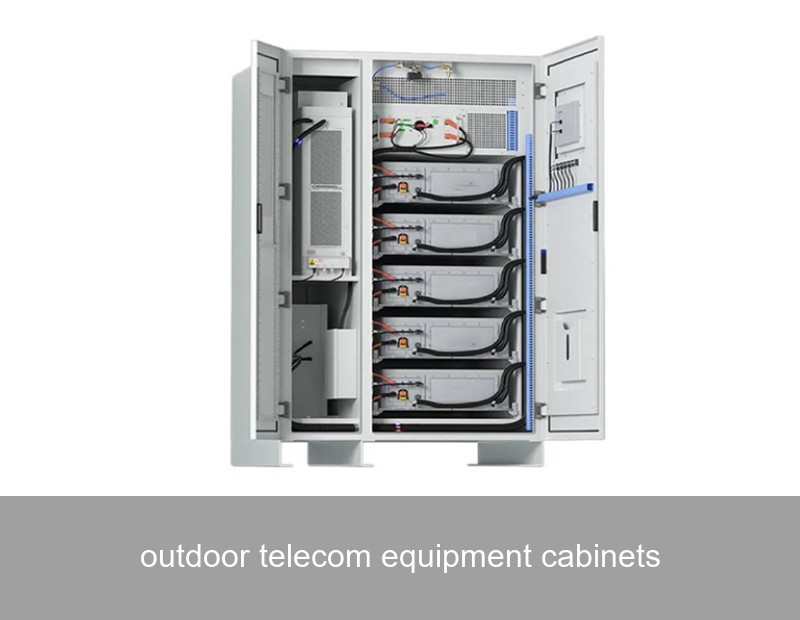
Imagine driving through a remote area, your phone seamlessly switching between cell towers, maintaining that crucial video call or navigation signal. Ever wondered what keeps that connection alive, especially when the grid falters? The unsung hero is often the outdoor telecom equipment cabinet – and more importantly, the reliable power system within it. As our world becomes more connected, the demand for 100% network uptime is non-negotiable. This article explores the evolving power challenges for telecom infrastructure and how modern energy storage solutions are revolutionizing network resilience and sustainability.
Table of Contents
- The Silent Challenge: Powering Remote Networks
- Beyond the Lead-Acid Battery: Data-Driven Demands
- Case Study: A European Telco's Path to Resilience
- The Modern Solution: Intelligent DC-Coupled Energy Storage
- How Highjoule Powers Uninterrupted Connectivity
- Future-Forward: Sustainability and Smart Management
The Silent Challenge: Powering Remote Networks
Outdoor telecom cabinets are the backbone of mobile networks, housing sensitive electronics for signal transmission. They are deployed everywhere—from urban street corners to isolated mountaintops. Their primary power challenge is simple to state but complex to solve: provide continuous, clean DC power to critical telecom loads, 24/7, regardless of grid health, weather, or fuel supply issues.
Traditional setups often rely on a combination of grid power, diesel generators, and banks of lead-acid batteries. When the grid fails, batteries provide immediate backup until a generator kicks in. However, this model is increasingly problematic. Diesel is costly, emits pollutants, requires frequent maintenance refueling, and contradicts corporate sustainability goals. Meanwhile, lead-acid batteries have a short lifespan, degrade quickly in temperature extremes common in outdoor cabinets, and pose recycling challenges.

Image Source: Unsplash - Representative image of outdoor telecom infrastructure.
Beyond the Lead-Acid Battery: Data-Driven Demands
The shift to 5G and edge computing is a game-changer. 5G equipment is more power-hungry, and network densification means more cabinets in more locations. According to a GSMA report, mobile network energy consumption could triple by 2025 without proactive intervention. This isn't just about backup; it's about managing higher continuous loads efficiently and sustainably.
Let's look at the key pain points driving the search for new solutions:
- Operational Expenditure (OPEX): Fuel costs and frequent battery replacements drain budgets.
- Reliability Risk: Battery failure or delayed generator start during an outage leads to network downtime.
- Environmental Targets: Major telecom operators have committed to net-zero goals, making diesel reliance untenable.
- Site Constraints: Physical space for batteries and fuel tanks is limited, and maintenance access can be difficult.
Case Study: A European Telco's Path to Resilience
Consider the real-world example of a major European telecommunications provider operating in Scandinavia. They faced a critical challenge with cabinets in forested and coastal regions prone to winter storms and grid instability. Their legacy lead-acid systems in unheated cabinets would fail prematurely in cold temperatures, and diesel deliveries to remote sites during storms were unreliable.
The Project: Pilot deployment of integrated lithium-ion battery storage with solar hybrid power at 20 remote cabinet sites.
| Metric | Before Upgrade | After Upgrade |
|---|---|---|
| Backup Duration Guarantee | ~6 hours (variable with temperature) | 24+ hours (consistent) |
| Site Maintenance Visits | ~12 per year (fueling, battery checks) | 2 per year (primarily for inspection) |
| Diesel Fuel Consumption | Approx. 500 liters/site/year | 0 liters/site/year |
| Estimated Battery Lifespan | 3-4 years | 10+ years |
The data speaks for itself. The operator achieved near-total energy autonomy for these critical nodes, slashed OPEX, eliminated on-site emissions, and dramatically improved network availability during severe weather events. This case exemplifies the transformative potential of modernizing the power core of the outdoor telecom equipment cabinet.
The Modern Solution: Intelligent DC-Coupled Energy Storage
So, what does the next-generation power system look like? The answer lies in intelligent, DC-coupled energy storage systems (ESS) built around lithium-ion (Li-ion) technology, specifically Lithium Iron Phosphate (LFP). LFP chemistry offers superior safety, a longer cycle life, and excellent performance across a wide temperature range—a perfect fit for harsh outdoor environments.
The core advantages of a modern ESS over a traditional setup include:
- Direct DC Coupling: The battery integrates directly with the cabinet's 48V DC bus, minimizing conversion losses and simplifying design.
- Advanced Battery Management System (BMS): This "brain" ensures each cell operates safely, monitors health, and optimizes lifespan.
- Thermal Management: Integrated heating and cooling systems maintain the battery at its ideal operating temperature year-round.
- Remote Monitoring & Control: Operators can view state-of-charge, health, and performance data in real-time from a central network operations center (NOC).

Image Source: Unsplash - Representative image of industrial battery installation.
How Highjoule Powers Uninterrupted Connectivity
At Highjoule, we've dedicated nearly two decades to solving these exact energy challenges. Our Telecom Power Series is engineered specifically for the rigorous demands of outdoor cabinet applications. We don't just supply batteries; we provide a complete, intelligent power resilience platform.
Our solution for outdoor telecom equipment cabinets centers on the HJ-TPS48V system. It's a compact, self-contained unit featuring:
- High-Density LFP Modules: Offering up to triple the energy density of lead-acid in the same footprint, with a warranty-backed 10+ year design life.
- Integrated DC-DC Conversion & BMS: A seamless "plug-and-play" replacement for legacy battery strings, with built-in intelligence for grid/generator/solar interfacing.
- Ruggedized NEMA 3R/4 Enclosure: Built to withstand rain, snow, dust, and corrosive elements.
- Highjoule iQ Cloud Platform: This is where true intelligence lies. Network managers gain a dashboard view of every cabinet's power status, receive predictive failure alerts, and can optimize charge cycles based on weather forecasts and grid tariff data.
For a major US wireless carrier, deploying Highjoule systems meant transitioning from reactive maintenance to predictive management. They now pre-emptively charge batteries via the grid before forecasted storms, ensuring maximum backup capacity and reducing the need for diesel generation. This intelligent energy management turns a passive backup component into an active grid asset.
Future-Forward: Sustainability and Smart Management
The evolution doesn't stop at reliable backup. The future outdoor telecom equipment cabinet is a hub for sustainable energy. By integrating a small solar array, the cabinet can offset grid consumption, further reduce diesel use, and even achieve net-zero energy operation in sunny climates. The intelligent ESS manages this hybrid input flawlessly.
Furthermore, as virtual power plants (VPPs) and grid services markets evolve, telecom operators could aggregate the distributed storage capacity of thousands of cabinets. During periods of high grid demand, they could strategically discharge a small percentage of stored energy (while maintaining backup reserves) to support grid stability and generate new revenue streams. Research from the National Renewable Energy Laboratory (NREL) highlights the vast potential of distributed storage for grid services.
An Open Question for Network Planners
As you plan your network's expansion and modernization, consider this: Is your power strategy still reactive, or is it intelligent and future-proof? When your next grid outage occurs, will you be scrambling with fuel trucks, or will your network operations center simply watch as every cabinet site on the map confidently switches to seamless, silent, and sustainable backup power?
 Inquiry
 Online Chat