


Portable Power Station 5000 Watts: Your Ultimate Guide to High-Capacity Mobile Energy
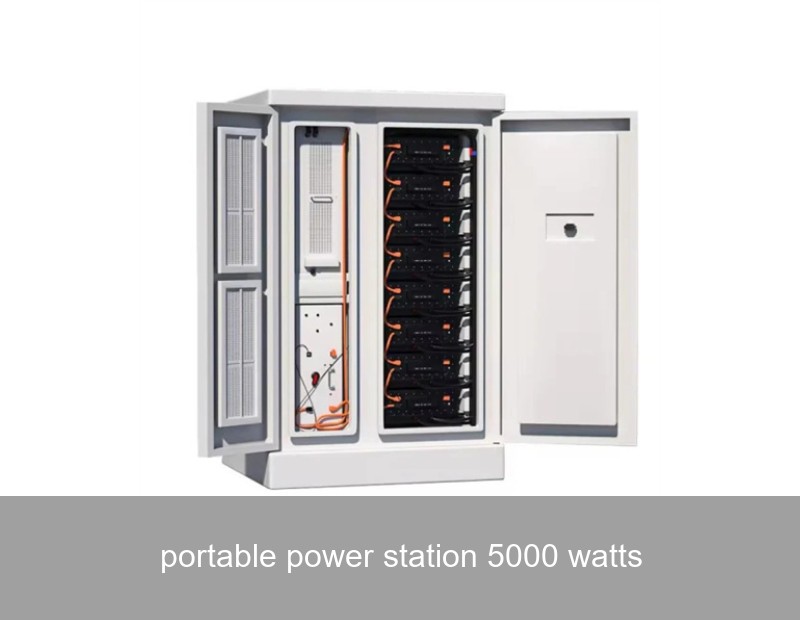
Imagine you're on a remote film set, powering high-wattage lights and camera equipment, or managing critical tools at a disaster relief site where the grid is down. The common thread? A desperate need for reliable, substantial off-grid power. This is where the portable power station 5000 watts category shines. Unlike smaller power banks, these units are robust energy hubs capable of running heavy-duty appliances and multiple devices simultaneously. For professionals and serious adventurers, understanding this technology is key to unlocking true energy independence. As a leader in advanced energy storage, Highjoule brings its decades of expertise from commercial and residential systems to the forefront of portable, high-wattage power solutions.
Table of Contents
- The Rise of the 5000W Portable Power Hub
- Key Specifications and What They Mean for You
- Real-World Applications: Beyond the Obvious
- A Case Study: Powering a Sustainable Construction Site in California
- Choosing the Right System: Battery Tech and Features
- Highjoule's Approach to Professional-Grade Portable Power
- Future-Proofing Your Energy Independence
The Rise of the 5000W Portable Power Hub
The demand for portable power isn't new, but the expectation for its capability has skyrocketed. We've moved from needing to charge a phone to wanting to run a refrigerator, a circular saw, or even a small HVAC unit remotely. The 5000-watt portable power station represents a sweet spot in the market: powerful enough for serious applications, yet often designed with portability in mind via wheels and handles. This surge aligns with broader trends in renewable adoption and grid instability. According to the U.S. Department of Energy, resilience is a growing priority, with consumers and businesses seeking backup options. A 5000W unit can serve as a mobile microgrid, often accepting solar panel input, turning it into a clean, silent alternative to traditional gas generators.

Credit: Unsplash - A high-capacity portable power station being charged by solar panels, a key feature for off-grid use.
Key Specifications and What They Mean for You
Not all 5000W stations are created equal. Let's decode the specs:
- Rated & Surge Power: A true 5000W (5kW) running wattage handles sustained loads. Crucially, the surge power (often 10,000W+) is what allows you to start motor-driven devices like pumps or compressors that require a high initial jolt.
- Battery Capacity (Wh): Watt-hours indicate the fuel tank. A 5000W output with a 5000Wh battery could theoretically run a 5000W device for one hour, or a 500W device for 10 hours. Most units have capacities between 4000Wh and 6000Wh.
- Port Variety & Output: Look for multiple 120V/240V AC outlets, high-amperage DC ports (like 12V car outlets), and several USB-C PD ports. This variety is what makes it a true "station."
- Input & Recharge Time: How fast can you refill it? Support for high-wattage AC charging, solar input (up to 1500W+), and sometimes even EV charging stations is critical.
| Appliance | Estimated Wattage | Runtime on a 5000Wh Battery |
|---|---|---|
| Refrigerator | 150-400W | 12-33 hours |
| Circular Saw | 1200-1800W | 2.7-4.1 hours |
| Medical CPAP Machine | 30-60W | 83-166 hours |
| Space Heater | 1500W | ~3.3 hours |
Real-World Applications: Beyond the Obvious
While emergency backup is a primary driver, the versatility of a 5000 watt portable power station is staggering.
- Professional Use: Contractors can run power tools on job sites without permits, noise, or fumes from generators. Film crews can power lighting and gear in pristine natural locations silently.
- Off-Grid Living & RVing: It becomes the core of a compact solar setup, running appliances, electronics, and climate control systems, enabling comfortable, extended off-grid stays.
- Outdoor Events & Food Trucks: Vendors can power blenders, griddles, and lighting sustainably, meeting local noise and emission regulations that prohibit generators.
- Remote Research & Disaster Response: Provides critical, reliable power for communication and medical equipment where infrastructure is damaged or non-existent.
A Case Study: Powering a Sustainable Construction Site in California
Let's look at a real example. A mid-sized construction company in Sonoma County, California, committed to a net-zero emissions site for a new residential development. Noise ordinances and sustainability goals prohibited diesel generators. Their solution? They deployed three portable power station 5000 watts units, paired with temporary solar canopy arrays.
The Data: Over a 12-week period, the stations powered an average daily load of 15kWh, running compound miter saws (1800W), job site radios, task lighting, and battery-charging stations. The solar input averaged 12kWh per day, meaning the system was over 80% solar-powered. The company reported a 100% reduction in on-site generator emissions and a 60% reduction in fuel-related costs compared to a similar-sized traditional site. Perhaps most surprisingly, workers noted the lack of noise reduced fatigue and improved communication, potentially enhancing site safety.
Choosing the Right System: Battery Tech and Features
The heart of any power station is its battery. Most high-end models, including those developed by Highjoule, now use Lithium Iron Phosphate (LiFePO4) chemistry. Why? It offers superior cycle life (often 3000+ cycles to 80% capacity), enhanced safety due to thermal stability, and better performance across a wider temperature range compared to traditional NMC lithium-ion. For a $2000+ investment, this longevity is crucial.
Beyond the battery, smart features define the user experience. Look for:
- App monitoring for remote control and diagnostics.
- Seamless automatic transfer switching (ATS) for true uninterruptible power supply (UPS) functionality in backup scenarios.
- Expandable capacity, allowing you to connect external battery modules to double or triple your stored energy.
- Durable, weather-resistant designs for outdoor use.

Credit: Unsplash - The control panel of a modern high-wattage portable power station, showing multiple outlets and a digital display.
Highjoule's Approach to Professional-Grade Portable Power
At Highjoule, our journey since 2005 in building large-scale stationary storage for homes, businesses, and microgrids directly informs our portable solutions. We understand that reliability isn't just a feature; it's a requirement. Our foray into the high-capacity portable segment applies the same rigorous engineering principles.
Our upcoming Highjoule Nomad 5K power station is designed with the professional user in mind. It features a true 5000W/10,000W surge pure sine wave inverter, a scalable LiFePO4 battery starting at 5120Wh, and industry-leading solar input compatibility of up to 3000W, allowing for incredibly fast recharge times under the sun. Furthermore, it integrates with Highjoule's ecosystem, meaning data on energy usage and solar harvest can be viewed alongside your home or business's main energy system, providing a holistic view of your energy footprint. We build not just a product, but a seamless component of your broader energy resilience strategy.
Future-Proofing Your Energy Independence
The landscape of energy is shifting beneath our feet. With increasing grid volatility and the urgent need to decarbonize, a 5000-watt portable power station is more than a convenience; it's a strategic asset. It empowers you to create and manage your own power, to take clean energy anywhere, and to ensure continuity no matter what. The technology, particularly with LiFePO4 batteries and high-efficiency solar charging, has reached a maturity point where it is both powerful and practical for demanding daily use.
As you consider your own energy needs—whether for your business, your adventures, or your home's backup plan—what single piece of equipment or system function would be most critical to keep running during an unexpected 24-hour outage?
 Inquiry
 Online Chat