


Finding Your Top Choice Solar for Sale: A Guide to Smart Energy Investment
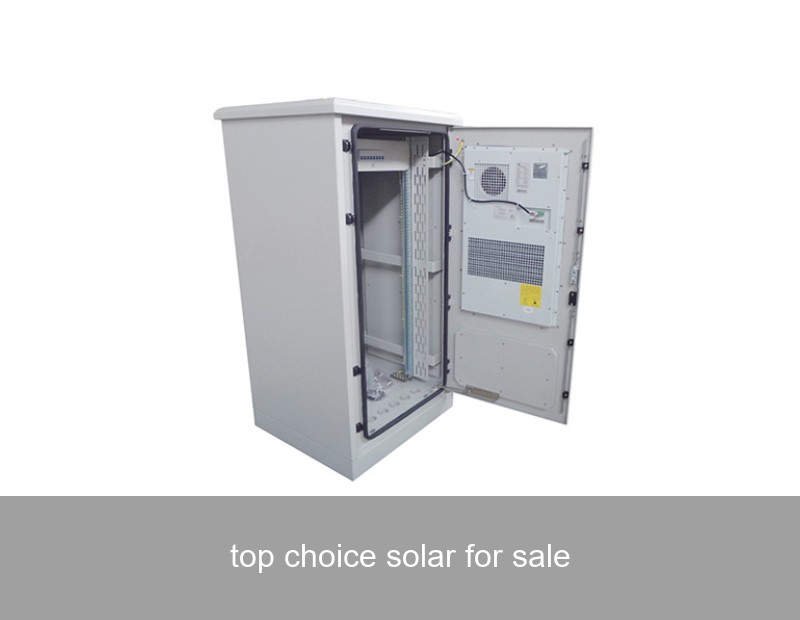
So, you're looking for the top choice solar for sale. That's a fantastic decision, but let's be honest—the market can feel overwhelming. Between panels, inverters, batteries, and countless installers, how do you ensure your investment truly pays off? The real "top choice" isn't just a product; it's a holistic system designed for reliability, efficiency, and long-term value. This guide will cut through the noise, using real-world data and insights to help you identify what makes a solar solution truly stand out, especially when paired with intelligent storage.
Table of Contents
- The Phenomenon: More Than Just Panels on a Roof
- The Data: Why Storage is the New Benchmark
- The Case Study: A Californian Business's Journey to Resilience
- The Insight: The Hallmarks of a "Top Choice" System
- The Highjoule Solution: Engineered for Peak Performance
- Your Next Step: Questions to Ask Before You Buy
The Phenomenon: More Than Just Panels on a Roof
Gone are the days when solar was solely about reducing grid electricity bills. Today's energy landscape, marked by increasing grid volatility and a desire for true energy independence, has reshaped the definition of a "top choice." Homeowners and business managers now seek systems that generate, manage, and store power intelligently. The phenomenon is the shift from a simple solar purchase to a strategic energy infrastructure investment. The real value is unlocked not just when the sun shines, but when it sets, during peak tariff hours, or when the grid fails.

Image Source: Unsplash - A modern solar and storage installation.
The Data: Why Storage is the New Benchmark
Let's look at the numbers. According to the U.S. Department of Energy's Solar Futures Study, solar could provide up to 40% of the nation's electricity by 2035. But the key enabler is storage. Consider this: without storage, a typical home solar system might only directly use 30-50% of the energy it produces, exporting the rest to the grid at low rates. With a battery, self-consumption can soar to 70% or more, dramatically increasing bill savings.
Furthermore, data from regions like California and Germany shows that peak solar generation often does not align with peak energy demand (which occurs in the early evening). This creates the "duck curve" challenge for grids, making stored solar energy an increasingly critical asset. The financial case is clear. For instance, time-of-use (TOU) rates in many U.S. states and European countries mean electricity can cost 2-3 times more during peak hours. A system that can discharge stored solar energy during these windows delivers direct, substantial savings.
A Real-World Case Study: Resilience for a California Winery
Let's examine a concrete example. A mid-sized winery in Napa Valley, California, faced three critical issues: high operational costs from refrigeration, frequent grid disruptions during wildfire season, and expensive demand charges from their utility.
Their "top choice" solution involved a 250 kW solar array coupled with a 500 kWh containerized battery energy storage system (BESS). Here are the outcomes after one year:
| Metric | Before System | After System |
|---|---|---|
| Grid Electricity Bill | $12,000/month (avg.) | $1,500/month (avg.) |
| Demand Charges | ~$4,000/month | Reduced by 95% |
| Business Hours Lost to Outages | 48 hours (previous year) | 0 hours |
| Carbon Footprint | ~120 metric tons CO2e/year | ~25 metric tons CO2e/year |
The system paid for itself in under 5 years, not even factoring in the value of avoided spoilage and business continuity. This case perfectly illustrates that the top choice solar for sale is inherently tied to advanced storage for commercial applications.
The Insight: The Hallmarks of a "Top Choice" System
Based on the phenomenon and data, we can distill the essential features that separate a commodity setup from a premium investment:
- High-Efficiency, Durable Components: Look for tier-one solar panels with strong performance warranties and inverters with high conversion efficiency.
- DC-Coupled Battery Architecture: This often more efficient design stores solar energy directly as DC power, minimizing conversion losses compared to older AC-coupled systems.
- Intelligent Energy Management System (EMS): The brain of the operation. A good EMS learns your usage patterns, weather forecasts, and utility rates to autonomously optimize when to charge, discharge, or export energy.
- Scalability and Modularity: Your energy needs may grow. A top system allows you to add more battery capacity or solar panels seamlessly.
- Professional System Design & Lifelong Support: The best hardware underperforms without expert design, installation, and long-term operational support.
The Highjoule Solution: Engineered to Be Your Top Choice
At Highjoule, with nearly two decades of experience since 2005, we've engineered our products around these very hallmarks. We don't just sell components; we provide integrated, intelligent power solutions.
For residential and small commercial clients, our HyperCell Home series is a DC-coupled, all-in-one storage system. Its built-in AI energy manager maximizes self-consumption and provides whole-home backup, ensuring your "top choice" solar investment works harder for you 24/7.

Image Source: Unsplash - Representative of industrial battery storage monitoring.
For larger commercial, industrial, and microgrid applications, our MegaCore BESS platform is the industry's workhorse. Featuring:
- UL 9540 certified safe lithium-iron-phosphate (LFP) battery cells.
- Modular design from 100 kWh to multi-megawatt-hour installations.
- Advanced grid-support functions for peak shaving, demand charge management, and backup power.
Our global team provides everything from initial consultancy and custom design to installation supervision and remote monitoring via our Highjoule Horizon OS, ensuring your system delivers optimal financial and operational returns for decades.
Why Highjoule Stands Apart
Our deep expertise in both grid-scale storage and behind-the-meter applications allows us to design systems with unparalleled insight. We understand the interplay between the local asset and the wider grid, a crucial perspective as energy markets evolve. As noted by the International Renewable Energy Agency (IRENA), system integration is key to the future energy transition—a principle at the core of our design philosophy.
Your Next Step: Questions to Ask Before You Buy
As you evaluate your options for the top choice solar for sale, turn these insights into actionable questions for any provider:
- Is the battery system DC-coupled for higher round-trip efficiency?
- Can the energy management software integrate real-time utility rates and weather data for automated optimization?
- What is the total system warranty, and what does the long-term service and support package include?
- Can you provide a detailed financial model showing payback period and ROI under different scenarios (e.g., changing energy prices)?
- Do you have a case study with monitored performance data from a project with a profile similar to mine?
Armed with this knowledge, what specific energy challenge—be it unpredictable bills, reliability concerns, or sustainability goals—will you solve first with your new system?
 Inquiry
 Online Chat