


Power House Solar Panels: Transforming Your Property into an Energy Fortress
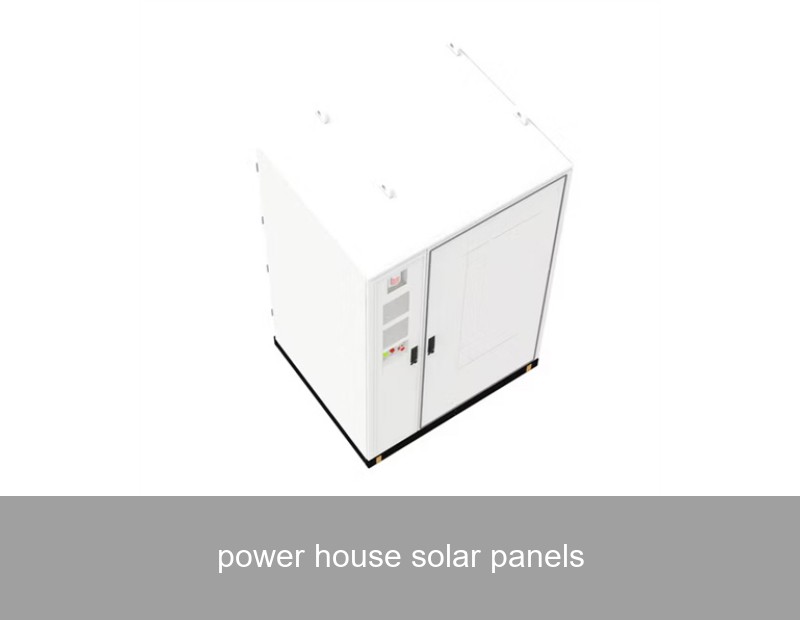
Imagine your home or business not just using electricity, but actively managing it. Picture a system that captures the sun's abundance, stores it for when you need it most, and intelligently decides how to use every kilowatt-hour for maximum benefit and savings. This isn't a futuristic concept—it's the reality of today's power house solar panel systems. Moving beyond simple solar arrays, a true "power house" integrates generation, storage, and smart management to create a resilient, efficient, and independent energy entity. For over 18 years, Highjoule has been at the forefront of this revolution, engineering advanced battery energy storage systems (BESS) that are the critical backbone of any modern energy-independent property.
What is a Power House Solar Panel System?
Let's clear up a common misconception. A "power house" isn't defined by the solar panels alone. While high-efficiency photovoltaic (PV) panels are the engine, the true transformation comes from the integration of three core components:
- The Generation Layer: High-quality solar panels that convert sunlight into direct current (DC) electricity.
- The Storage & Conversion Core: A battery storage system and inverters that store excess energy and convert DC to usable alternating current (AC) for your appliances.
- The Intelligence Layer: An energy management system (EMS) that acts as the brain, optimizing flow between panels, batteries, the grid, and your consumption.
It's this synergy that elevates a building from a passive energy consumer to an active "prosumer"—both producing and professionally managing energy.

Credit: Photo by Vivint Solar on Unsplash. A modern power house integrates solar generation with on-site storage.
The Phenomenon: From Passive Consumer to Prosumer
The energy landscape is shifting dramatically. Grid instability, volatile fossil fuel prices, and increasing climate-consciousness are driving homeowners and businesses to seek control. The initial wave was about solar panels reducing grid dependence during the day. But the limitation became glaringly obvious: what happens when the sun sets, or during peak grid demand when electricity costs skyrocket? The phenomenon of installing solar without storage often leads to "spilling" unused solar energy back to the grid at low rates, only to buy it back at night at a premium. This is where the modern power house concept truly shines, turning a one-dimensional solution into a 24/7 energy asset.
The Data Reality: Why Storage is Non-Negotiable
The numbers paint a compelling picture. According to the U.S. Department of Energy's Solar Futures Study, solar could provide up to 40% of the nation's electricity by 2035, but notes that "storage is critical for aligning variable solar generation with electricity demand." Let's break down a typical scenario:
| Scenario | Solar-Only System | Solar + Storage Power House |
|---|---|---|
| Self-Consumption | ~30-50% (excess exported) | 70-90%+ (excess stored for later) |
| Grid Independence During Outage | Zero (most inverters shut down for safety) | High (seamless backup power for hours or days) |
| Impact on Utility Bill | Reduces daytime consumption charges | Reduces demand charges & avoids peak-time rates |
For commercial and industrial users, demand charges—fees based on the highest 15-minute power draw in a month—can constitute up to 50% of the electricity bill. A power house system with intelligent discharge can "peak shave," saving thousands of dollars monthly.
Case Study: A German Manufacturing Plant's Transformation
Consider the real-world example of a mid-sized automotive parts manufacturer near Stuttgart, Germany. Facing rising Strompreise (electricity prices) and a corporate mandate to reduce carbon footprint, they installed a 500 kWp rooftop solar array in 2020. While it cut daytime costs, they still faced high grid usage at night and significant demand charges.
In 2022, they partnered with Highjoule to complete their power house. We integrated a Highjoule HVC-800 commercial battery storage system with a capacity of 800 kWh and our proprietary GridSynergy EMS. The results after one year:
- Grid Consumption Reduction: Increased from 35% to 82% overall.
- Demand Charge Savings: Peak power draw from the grid reduced by 75%, saving approximately €18,000 annually.
- ROI Timeline: Projected payback period for the storage addition improved to under 6 years, thanks to Germany's dynamic energy market and the system's ability to participate in grid-balancing services.
"The Highjoule system didn't just store energy," the plant manager noted. "It became an active financial tool. Our facility is now a true power house, resilient against blackouts and price spikes."
Beyond the Basics: The Intelligent Core of a Modern Power House
The battery is the heart, but the Energy Management System (EMS) is the brain. A sophisticated EMS like Highjoule's GridSynergy does more than just switch between power sources. It uses weather forecasting, load prediction, and real-time electricity price data (in deregulated markets) to make autonomous decisions:
- Should I charge the batteries from the solar panels or from the grid tonight when rates are low?
- Is a grid outage likely during this storm? Prioritize battery reserve.
- The grid is stressed. Should I discharge to support community stability (and get paid for it)?
This intelligence is what separates a basic backup system from a revenue-generating, grid-supportive power house asset.

Credit: Photo by American Public Power Association on Unsplash. The battery storage core, like Highjoule's systems, enables energy independence.
How Highjoule Enables Your True Power House
Since 2005, Highjoule has specialized in the most complex part of the equation: advanced, safe, and intelligent storage. Our products are the enabling technology that unlocks the full potential of your solar panels.
- For Homes: Our Residential H-Series units feature scalable capacity, seamless backup power, and an intuitive app that puts energy management in your pocket. They integrate flawlessly with leading solar inverters.
- For Business & Industry: The Commercial HVC Series offers modular, containerized solutions designed for peak shaving, demand charge management, and uninterrupted operations. Their robust design ensures safety and longevity.
- For Microgrids & Utilities: Our large-scale GridMax BESS solutions provide grid stability, renewable energy firming, and deferred infrastructure investment.
Every Highjoule system is built with industry-leading thermal management and safety protocols, giving you peace of mind that your power house is not only smart but also fundamentally secure.
The Future is a Network of Power Houses
The ultimate vision is a decentralized, resilient grid comprised of millions of individual power houses—homes, factories, and campuses—all generating, storing, and sharing clean energy. This virtual power plant (VPP) concept is already being piloted across Europe and the United States. By aggregating distributed resources like Highjoule-equipped systems, grid operators can manage demand more effectively and integrate more renewables, as highlighted in a recent report by the International Energy Agency.
So, ask yourself this: Is your current solar setup just a fair-weather friend, or is it ready to become the resilient, intelligent, and economical power house your property deserves? What would the ability to control your energy destiny, regardless of time or weather, mean for your security and bottom line?
 Inquiry
 Online Chat