


Solar Panels with Battery Storage: The Complete Guide to Energy Independence
Have you ever watched your solar panels generate a surplus of clean energy on a sunny afternoon, only to see it flow back to the grid, knowing you'll have to buy electricity back in the evening? This common experience highlights the single biggest limitation of solar-only systems. The solution? Integrating solar panels with battery storage. This combination isn't just an upgrade; it's a transformative step towards true energy resilience and maximizing your investment in renewable energy. For over 18 years, Highjoule has been at the forefront of this evolution, designing intelligent battery storage systems that seamlessly pair with solar arrays to unlock their full potential for homes and businesses across the globe.
Table of Contents
- The Solar Power Gap: Generation vs. Consumption
- How Solar Panels with Battery Storage Work: A Seamless Symphony
- Key Benefits of Adding Battery Storage to Your Solar System
- A Real-World Case Study: The German Bakery Embracing 24/7 Renewable Power
- Choosing the Right Battery Storage System: Key Considerations
- Highjoule's Role in Your Energy Independence Journey
The Solar Power Gap: Generation vs. Consumption
Let's face a fundamental mismatch. Solar panels produce the most electricity when the sun is highest—typically midday. However, for most households and businesses, energy consumption peaks in the early morning and again in the evening. According to the U.S. Department of Energy, this "duck curve" phenomenon is becoming more pronounced as solar adoption grows. The graph shows a deep dip in net grid demand during sunny days and a steep ramp-up as the sun sets. Without storage, this excess midday energy is often exported to the grid at lower rates, while you import expensive power during peak hours. A battery storage system bridges this temporal gap, turning your solar installation from a daytime contributor into a round-the-clock power plant.

Image: A modern home equipped with solar panels and a wall-mounted battery storage unit. Source: Unsplash (Photographer: Andreas Gücklhorn)
How Solar Panels with Battery Storage Work: A Seamless Symphony
Think of your solar array as a diligent producer and the battery as a savvy manager of your energy wealth. Here’s the typical flow of energy in a modern, integrated system:
- Solar Generation: During daylight, solar panels convert sunlight into direct current (DC) electricity.
- Conversion & Primary Use: An inverter converts DC to alternating current (AC) for immediate use in your home or business. Your appliances run on solar power first.
- Battery Charging: Any surplus energy not immediately consumed is directed to charge your battery storage system, like the Highjoule Hive series.
- Discharging on Demand: When solar production falls (at night or on cloudy days), the system intelligently draws power from the battery to run your loads, minimizing grid imports.
- Grid Interaction (Optional): If the battery is full and needs are met, excess can be exported. Conversely, the grid remains as a backup if the battery is depleted.
Modern systems, powered by advanced energy management software, make millions of these decisions automatically to optimize for cost, efficiency, or resilience.
Key Benefits of Adding Battery Storage to Your Solar System
Moving to solar panels with battery storage delivers a powerful combination of financial, practical, and environmental advantages.
- Maximize Self-Consumption: Dramatically increase the portion of your solar energy used on-site, sometimes from 30-40% to 70% or more. This directly shields you from rising utility rates.
- Backup Power & Resilience: Weather events and grid outages are becoming more common. A battery system like the Highjoule Fortress for commercial applications can provide critical backup power, keeping lights on, refrigerators running, and businesses operational.
- Peak Shaving: For businesses with demand charges (fees based on your highest power draw in a period), batteries can discharge during peak usage times to "shave" that expensive spike, leading to substantial savings.
- Supporting Grid Stability: Some utilities offer programs where you can earn revenue by allowing your battery to provide grid services. This turns your storage system into a potential income stream.
- Enhanced Sustainability: By relying less on grid power, which may still be generated from fossil fuels, you further reduce your carbon footprint.
A Real-World Case Study: The German Bakery Embracing 24/7 Renewable Power
Consider "Bäckerei Schmidt," a mid-sized artisanal bakery in Bavaria, Germany. They installed a 50 kW solar rooftop system in 2018 but faced a classic problem: high overnight energy use for refrigeration and early morning baking, while their solar power peaked in the afternoon. In 2022, they integrated a Highjoule Fortress 100 kWh battery storage system.
| Metric | Before Battery | After Battery |
|---|---|---|
| Solar Self-Consumption | 38% | 89% |
| Grid Electricity Purchases | 62% of needs | 11% of needs |
| Peak Demand Charge | Reduced by 40% | - |
| Annual Energy Cost Savings | - | €8,200 (vs. solar-only) |
The bakery now runs almost entirely on its own solar energy, day and night. The system also provides guaranteed backup power for their cold storage, protecting thousands of euros worth of inventory during the region's occasional winter grid disturbances. This case exemplifies how commercial entities move beyond just saving money to building operational resilience.

Image: A modern bakery with high energy demands for machinery and refrigeration. Source: Unsplash (Photographer: ELEVATE)
Choosing the Right Battery Storage System: Key Considerations
Not all batteries are created equal. When evaluating systems to pair with your solar panels, focus on these core specs:
- Capacity (kWh): The total amount of energy the battery can store. Think of it as the size of your fuel tank.
- Power Rating (kW): How much electricity the battery can deliver at once. This determines how many appliances you can run simultaneously from the battery.
- Depth of Discharge (DoD): The percentage of the battery's capacity that is safely usable. A higher DoD means more usable energy from the same physical battery.
- Round-Trip Efficiency: The percentage of energy put into the battery that you can get back out. High-quality systems, like those from Highjoule, typically exceed 94%.
- Chemistry: Lithium-ion phosphate (LFP) is now the dominant chemistry for stationary storage due to its long lifespan, safety, and stability, as noted by research from NREL.
- Warranty & Lifespan: Look for a strong warranty that guarantees both a certain number of years and a minimum remaining capacity (e.g., 10 years or 10,000 cycles at 70% remaining capacity).
Highjoule's Role in Your Energy Independence Journey
Since 2005, Highjoule has specialized in crafting advanced energy storage solutions that make solar panels with battery storage a reliable, intelligent, and profitable reality. Our product ecosystem is designed to scale with your needs:
- For Homes: The Highjoule Hive series offers scalable, sleek designs with intuitive energy management apps, allowing homeowners to monitor, control, and optimize their energy flow effortlessly.
- For Business & Industry: The Highjoule Fortress commercial systems are built for durability and high-power performance, featuring modular architecture that can be expanded as your energy demands grow.
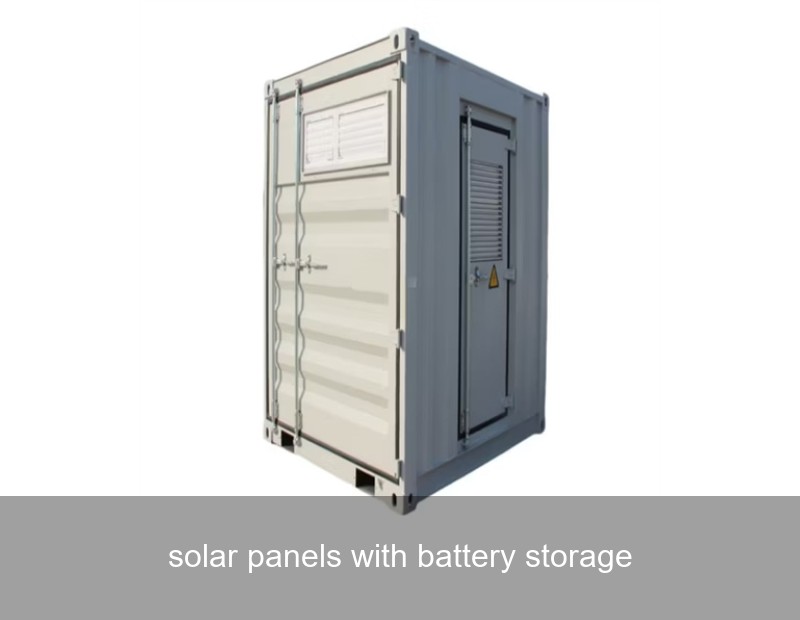
- For Microgrids & Utilities: Our large-scale containerized solutions provide grid stability and enable renewable integration for communities and utility projects.
Beyond hardware, our Orion Energy Management Platform uses AI and real-time data to optimize every kilowatt-hour, whether your goal is to save money, ensure uptime, or participate in grid-balancing programs. We provide full-service support from design and commissioning to ongoing monitoring and maintenance, ensuring your system performs optimally for decades.
Ready to Transform Your Solar Investment?
The journey from simply generating solar power to fully managing your own energy ecosystem is more accessible than ever. The technology is proven, the economics are increasingly favorable, and the benefits extend far beyond the monthly bill. What would energy independence look like for your home or business—is it financial savings, unwavering resilience during a storm, or taking the final step in your sustainability mission? Explore how Highjoule's tailored solutions can make that vision a concrete reality.
 Inquiry
 Online Chat