


Power Master Energy Storage Cabinet: The Heart of Modern Energy Independence
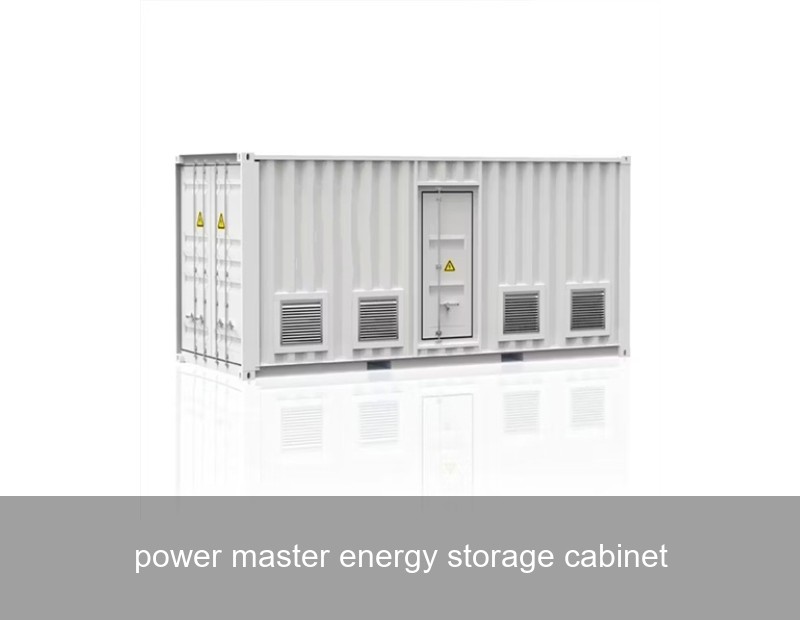
Imagine a device that acts as a sophisticated "energy bank" for your home or business. It quietly charges when energy is plentiful and cheap, then seamlessly powers your life when the grid is strained, expensive, or down. This isn't science fiction; it's the reality enabled by the Power Master Energy Storage Cabinet. As a cornerstone of modern energy management, these intelligent systems are transforming how we generate, store, and consume electricity. For forward-thinking businesses and homeowners across Europe and the US, understanding this technology is the first step toward resilience, sustainability, and significant cost savings. In this article, we'll demystify the power master cabinet, explore the pressing challenges it solves, and look at how companies like Highjoule are leading the charge with smart, integrated solutions.
What is a Power Master Energy Storage Cabinet?
At its core, a Power Master Energy Storage Cabinet is a fully integrated, containerized system that houses all the critical components for storing electrical energy. Think of it not as a simple battery box, but as the intelligent command center for your on-site power. It typically integrates high-density battery modules (like Lithium Iron Phosphate or LiFePO4, known for safety and longevity), a sophisticated battery management system (BMS), power conversion systems (PCS/inverters), thermal management, and safety mechanisms—all in one robust, often modular, enclosure.
Its primary role? To time-shift energy. It stores excess solar power generated at midday for use in the evening. It can draw power from the grid during off-peak, low-cost periods to use during expensive peak hours—a process known as peak shaving. And, crucially, it provides backup power during outages, ensuring continuity for critical operations. This makes it the indispensable partner to solar PV arrays and a key player in the stability of microgrids.

Image Source: Unsplash - Representative image of a contemporary energy storage system.
The Grid Phenomenon: Why We Can't Just Rely on Sunshine and Wind
Here's a reality we all face: our energy grids were built for a different era. They were designed for predictable, centralized power generation—like coal or gas plants—pushing electricity in one direction to consumers. Today, we have a flood of renewable, but intermittent, energy from rooftops and wind farms. This creates a double-edged sword.
On one hand, a sunny, windy day can produce more power than the local grid can handle, forcing curtailment (wasting clean energy). On the other hand, a calm, cloudy period or a sudden surge in demand (like everyone turning on air conditioning at 6 PM) can strain the grid to its limits, risking blackouts and spiking energy prices. This volatility is the central phenomenon driving the adoption of energy storage. Without a "buffer" or a "shock absorber," the transition to renewables hits a hard ceiling.
The Data Behind the Need: Volatility, Costs, and Outages
Let's put some numbers to the challenge. In the US, power outages are becoming more frequent and severe. A report from the U.S. Energy Information Administration (EIA) indicates that the average U.S. customer experienced just over eight hours of electricity interruptions in 2020, with major events being a primary driver. In Europe, energy prices have seen unprecedented volatility. For instance, the day-ahead electricity price in Germany reached record highs in 2022, frequently exceeding €500/MWh, compared to a historical average around €40-€50/MWh.
For a commercial or industrial operation, these aren't just statistics; they translate directly to the bottom line:
- Demand Charges: Many businesses pay not just for total energy used (kWh), but for their highest rate of consumption (kW) in a billing period. A short period of high-power use can lead to exorbitant monthly fees.
- Operational Downtime: A single outage can halt production, spoil inventory, and disrupt critical services. The cost can run into thousands per minute for manufacturing or data centers.
- Missed Sustainability Goals: Without storage, a significant portion of self-generated solar energy may be exported to the grid at low value, rather than used on-site to displace fossil fuel consumption.
Case Study: A Bavarian Dairy's Journey to Energy Independence
Let's look at a real-world example. Hofgut Mühlenberg, a medium-sized dairy and cheese production facility in southern Germany, faced a classic energy dilemma. Their refrigeration units and processing equipment created high, sporadic power demands, leading to steep demand charges. Their rooftop solar system covered about 40% of their annual needs, but much of its midday output was exported while they still bought expensive power in the early morning and evening.
Their solution was the installation of a Highjoule Power Master Energy Storage Cabinet—specifically, the Highjoule H-Cube 200 Commercial Series. This scalable system was configured with a 240 kWh capacity and a 120 kW inverter. The results, monitored over one year, were compelling:
| Metric | Before Installation | After Installation |
|---|---|---|
| Peak Grid Demand | 185 kW | 105 kW (43% reduction) |
| Solar Self-Consumption | ~35% | ~82% |
| Grid Energy Purchased | 310,000 kWh/year | 175,000 kWh/year |
| Estimated Annual Savings | — | €28,500 (from demand charges & energy arbitrage) |
| CO2e Reduction | — | Approx. 62 tonnes/year |
Furthermore, the system now provides seamless backup power for their cold storage, eliminating the risk of spoilage during grid outages. For Hofgut Mühlenberg, the power master cabinet transformed their solar array from a partial solution into the core of a resilient, cost-effective energy ecosystem.
The Highjoule Solution: Intelligent Power Master Cabinets for Every Need
As a global leader with nearly two decades of experience since 2005, Highjoule designs its Power Master Energy Storage Cabinets with a focus on intelligence, safety, and adaptability. We understand that a dairy in Germany, a tech campus in California, and a residential community in Sweden have different needs. Our product philosophy is to provide a modular, software-driven platform that can be tailored precisely.
Our flagship systems, like the H-Cube Series for Commercial & Industrial (C&I) applications and the HomeCore Series for residential, are built around a few key principles:
- Ultra-Safe LFP Chemistry: All our cabinets utilize Lithium Iron Phosphate batteries, which are inherently more stable and have a longer lifespan than other lithium-ion variants.
- Advanced Energy Management System (EMS): This is the "brain." Our AI-powered EMS doesn't just react; it predicts. It analyzes weather forecasts, historical consumption, and real-time grid pricing signals to optimize charge/discharge cycles for maximum economic return.
- Scalable & Modular Design: Need more capacity? Our cabinets are designed for easy expansion. You can start with a configuration that matches your current budget and scale up as your needs grow.
- Grid Services Ready: For larger installations, our systems can be configured to participate in grid-balancing services (like frequency regulation), creating an additional revenue stream for the owner.
By integrating seamlessly with both new and existing solar installations, a Highjoule cabinet elevates a simple energy asset into a strategic, profit-generating tool.

Image Source: Unsplash - Technician interacting with an energy storage system interface.
Key Components of a Modern Energy Storage Cabinet
To truly appreciate the engineering, let's briefly open the door (figuratively!) on a Highjoule Power Master Cabinet:
- Battery Racks (LFP Modules): The energy reservoir. Modular racks of LiFePO4 cells, chosen for their 6,000+ cycle life and excellent thermal stability.
- Battery Management System (BMS): The guardian. It monitors every cell for voltage, temperature, and state of charge, ensuring safety and longevity by preventing overcharge or deep discharge.
- Bi-Directional Inverter (PCS): The translator. It converts the DC electricity from the batteries into AC power for your building, and vice-versa for charging. Highjoule uses high-efficiency inverters to minimize energy loss during conversion.
- Thermal Management System: The climate control. A dedicated cooling/heating system keeps the batteries at their ideal operating temperature year-round, which is critical for performance and lifespan.
- System Controller & EMS: The strategist. This unit communicates with your solar inverters, grid connection, and load meters, executing the optimization algorithms that maximize value.
The Future Outlook: Smarter Grids and New Possibilities
The evolution of the Power Master Energy Storage Cabinet is tightly linked to the rise of the virtual power plant (VPP). Imagine hundreds or thousands of distributed Highjoule systems—in homes, shops, and factories—networked together via cloud software. During times of extreme grid stress, these aggregated systems can be dispatched as a single, flexible resource to feed power back to the grid, preventing blackouts and deferring the need for costly fossil-fuel "peaker" plants. This turns every participant into a prosumer, actively supporting grid stability.
Furthermore, advancements in battery technology and system intelligence are continuously driving down costs and improving capabilities. The next generation of cabinets will feature even tighter integration with electric vehicle charging, enabling smart charging that leverages cheap, stored solar power.
So, as you look at your own energy bills, sustainability targets, or concerns about resilience, ask yourself: Is your current energy setup a passive cost center, or is it ready to become an active, intelligent asset for the future? What would the ability to control and optimize your power flow mean for your operations or your home?
 Inquiry
 Online Chat