


Power Station Solar Panel Systems: The Future of Energy Independence
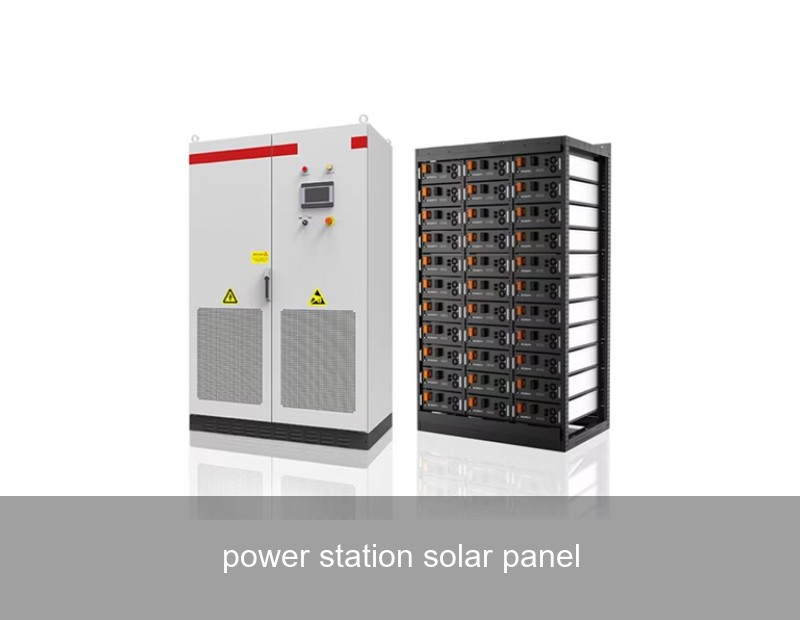
Imagine a power station on your rooftop, in your backyard, or at your business. This isn't science fiction—it's the reality enabled by modern power station solar panel systems. For homeowners and businesses across Europe and the US, the dream of energy self-sufficiency is increasingly driven by integrating high-efficiency photovoltaic (PV) panels with advanced, intelligent battery storage. This combination transforms a simple solar array into a personal, resilient power station. As grid instability and energy costs rise, understanding this integrated technology is key to taking control of your power. Companies like Highjoule, a global leader in advanced energy storage since 2005, are at the forefront, designing systems that make this transition seamless, smart, and sustainable.
Table of Contents
The Rise of the Personal Power Station
The traditional model of one-way power flow—from a centralized utility to a passive consumer—is breaking down. A confluence of factors is driving this shift: volatile fossil fuel prices, increasing frequency of extreme weather events causing grid outages, and strong policy support for decarbonization, like the EU's Green Deal and the US Inflation Reduction Act. The initial phenomenon was simple: install solar panels to reduce electricity bills. But the data reveals a limitation. The US Department of Energy notes that solar generation peaks midday, often misaligned with peak home demand in the evening. Without storage, excess solar energy is exported to the grid, often at low rates, leaving you reliant on the grid when the sun goes down.

Image: A modern home integrating solar panels and a wall-mounted battery storage unit, creating a personal power station. Source: Unsplash.
Beyond the kW: Why Storage is the Game-Changer
This is where the concept evolves from a "solar system" to a true "power station solar panel" setup. Adding a battery energy storage system (BESS) is the pivotal step. Think of the solar panels as the fuel source and the battery as the engine and fuel tank of your personal power station. The logic is a clear progression:
- Phenomenon: Solar overproduction is wasted, and evening/nighttime needs are met by the grid.
- Problem: This creates ongoing costs and leaves you vulnerable to outages.
- Solution: Store daytime surplus for use anytime, maximizing self-consumption.
The data is compelling. A typical home battery system can increase self-consumption of solar energy from 30-50% to 70-90% or more. For a commercial entity, this isn't just about savings; it's about operational continuity and demand charge management, which can constitute up to 50% of a commercial electricity bill.
Key Components of a Modern Solar Power Station
A robust, personal power station relies on three intelligent components working in harmony:
| Component | Role | Key Consideration |
|---|---|---|
| High-Efficiency Solar Panels | Primary energy generation. | Look for high wattage (400W+), good low-light performance, and a strong warranty. |
| Smart Hybrid Inverter | Brain of the system. Converts DC to AC and manages energy flow between panels, battery, and grid. | Must be compatible with your battery chemistry and capable of islanding (off-grid operation). |
| Advanced Battery System | Energy storage reservoir. Stores DC electricity for later use. | Focus on usable capacity (kWh), depth of discharge (DoD), cycle life, and integrated safety/management systems. |
Real-World Impact: A Case Study from Bavaria
Let's move from theory to a tangible example. Consider a medium-sized dairy farm in Bavaria, Germany. Their challenge was twofold: high energy costs for cooling and milking operations, and vulnerability to grid fluctuations that could spoil product.
- Solution Deployed: A 120 kW rooftop solar array paired with a 240 kWh containerized battery storage system.
- Data & Results: Within the first year, the farm achieved 82% energy self-sufficiency. The battery system provided seamless backup during two grid outages, preventing tens of thousands of euros in potential spoilage. By leveraging intelligent energy management, they also participated in a regional grid-balancing program, creating an additional revenue stream. This case illustrates how a power station solar panel system solves for economics, resilience, and even grid support.

Image: Agricultural businesses are prime candidates for solar power stations, combining energy savings with operational resilience. Source: Unsplash.
Highjoule's Role: Intelligence at the Core
This is where expertise and technology matter most. Simply connecting panels to a battery isn't enough. The true value lies in the intelligence that optimizes every kilowatt-hour for your specific needs. Since 2005, Highjoule has specialized in this very challenge. Our systems are designed to be the intelligent core of your personal power station.
For residential clients, our HOMESERIES battery systems feature AI-driven energy management software. It learns your consumption patterns, weather forecasts, and utility rate schedules to autonomously decide when to store, use, or even sell energy back to the grid, maximizing your financial return. For commercial and industrial (C&I) applications, our MEGAPACK solutions offer scalable, containerized storage. These systems go beyond backup; they enable peak shaving (dramatically reducing demand charges), time-of-use optimization, and integration into microgrids. A school in California using Highjoule's C&I system, for instance, reported a 35% reduction in annual energy costs while ensuring uninterrupted power for critical facilities.
Our approach is holistic. We provide the advanced lithium iron phosphate (LiFePO4) battery technology—known for its safety and long cycle life—paired with our proprietary GridSync™ inverter platform. This integrated hardware and software solution is what transforms a collection of components into a reliable, revenue-generating asset. As noted by the International Energy Agency, innovation in system integration and digitalization is critical to unlocking storage's full value, a principle central to Highjoule's design philosophy.
Navigating the Decision: What to Ask Your Provider
When planning your power station solar panel project, ask potential providers these critical questions:
- Does your system offer true islanding capability for off-grid operation during outages?
- What is the expected cycle life of the battery at my typical depth of discharge?
- How does the energy management system integrate with real-time data (grid prices, weather)?
- Can the system be easily scaled in the future if my energy needs grow?
Future Trends and Your Next Steps
The landscape is moving towards even greater interactivity. Concepts like vehicle-to-grid (V2G), where your EV battery becomes part of your home's storage, and peer-to-peer (P2P) energy trading within communities, are on the horizon. These innovations will make your personal power station not just an island of independence, but a node in a more resilient, decentralized energy network. The National Renewable Energy Laboratory (NREL) actively researches these grid-interactive technologies, underscoring their coming importance.
The journey to energy independence starts with a single question: What would uninterrupted, cost-predictable, and sustainable power allow you to achieve—whether it's peace of mind for your family, resilience for your business, or a concrete step toward your sustainability goals?
 Inquiry
 Online Chat