


Power Supply Distribution System: The Beating Heart of Modern Energy Resilience
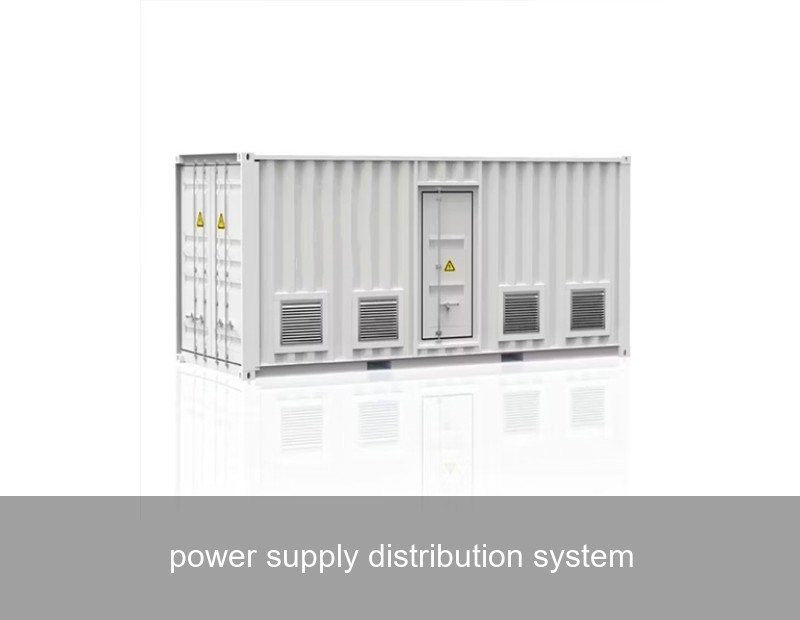
Imagine your home's electrical panel, but on the scale of an entire factory, hospital, or community. That's essentially the role of a power supply distribution system – the critical network that takes electricity from its source and reliably delivers it to every outlet, machine, and light. But as our world pivots towards renewables and faces increasing grid instability, this once-static system is undergoing a radical transformation. The key to this evolution? Intelligent integration with advanced energy storage.
Table of Contents
- The Phenomenon: A Grid Under Pressure
- The Data: Quantifying the Cost of Unreliability
- The Solution: Smart Storage as a Distribution System Game-Changer
- Case Study: A German Manufacturing Plant's Journey to Resilience
- Highjoule's Role: Engineering Smarter Distribution Hubs
- The Future: Your Grid, Your Rules
The Phenomenon: A Grid Under Pressure
You've likely seen the headlines: "Heatwave Strains Power Grid" or "Storm Leaves Thousands Without Power." These aren't isolated incidents; they're symptoms of a global challenge. Our traditional, centralized power supply distribution system was designed for a different era—one with predictable demand and large, steady fossil-fuel plants. Today, we're adding volatile renewable sources like solar and wind, electrifying transportation and heating, and experiencing more extreme weather events. The grid's one-way, "always-on" model is being stretched thin, leading to vulnerabilities at the final distribution points where businesses and communities connect.

The traditional distribution system is being reimagined with intelligence and storage at its core.
The Data: Quantifying the Cost of Unreliability
Let's talk numbers. Power interruptions are far more than an inconvenience. According to a report by the U.S. Department of Energy, power outages cost the U.S. economy an estimated $150 billion annually. For a medium-sized industrial facility, even a momentary dip in voltage—a "sag"—can trigger hours of costly downtime, spoiled materials, and equipment damage. In the EU, the drive for decarbonization is pushing renewable penetration past 40% in some regions, inherently increasing grid variability. The bottom line? The financial and operational risks of a passive connection to the main grid are higher than ever.
Common Pain Points in Traditional Distribution
- Peak Demand Charges: Utilities often charge commercial users not just for total energy used, but for their highest 15-minute power draw ("peak demand"). This can constitute up to 50% of an electricity bill.
- Voltage Fluctuations: Aging infrastructure and renewable intermittency can cause sags and swells, harming sensitive equipment.
- Lack of Backup: Most distribution panels offer no isolation or backup during a grid outage. When the grid goes down, everything stops.
The Solution: Smart Storage as a Distribution System Game-Changer
This is where the story gets exciting. We can transform these pain points into opportunities by making the local power supply distribution system intelligent and autonomous. Think of a Battery Energy Storage System (BESS) not just as a backup battery, but as a dynamic power hub integrated directly into your facility's distribution panel. This system can:
- Shave Peak Demand: Discharge stored energy during short periods of high usage, dramatically lowering demand charges.
- Provide Voltage Support: Act as a buffer, smoothing out fluctuations and ensuring clean, stable power for critical loads.
- Enable Islanding: In a blackout, the system can automatically disconnect from the main grid (islanding) and power essential circuits for hours.
- Integrate Solar: Store excess solar energy produced at midday for use in the evening, maximizing self-consumption.
Case Study: A German Manufacturing Plant's Journey to Resilience
Let's look at a real-world example. A mid-sized automotive parts supplier in Bavaria, Germany, was facing annual electricity costs of over €850,000, with nearly €300,000 attributed to peak demand charges. Their production line was also sensitive to micro-outages, causing costly stoppages.
Their solution was a retrofit of their power supply distribution system with a 500 kWh / 250 kW integrated battery storage system. The results were compelling:
| Metric | Before Installation | After Installation | Change |
|---|---|---|---|
| Peak Demand from Grid | 450 kW | 310 kW | -31% |
| Annual Demand Charge Cost | ~€300,000 | ~€195,000 | €105,000 saved |
| Production Stoppages (from sags) | 8-10 per year | 0 | 100% reduction |
| Solar Self-Consumption | 35% | 78% | +123% increase |
This project, completed in 2023, delivered a return on investment in under 5 years, not even accounting for the avoided losses from production halts. It's a prime example of modernizing distribution at the point of use.

Intelligent control systems are vital for managing energy flow in a modern distribution setup.
Highjoule's Role: Engineering Smarter Distribution Hubs
At Highjoule, we've spent nearly two decades moving beyond just supplying battery units. We engineer comprehensive power supply distribution system solutions. Our approach is to create a seamless interface between the grid, on-site generation (like solar), and your facility's critical loads.
Our Core Product & Service Integration:
- Highjoule H-Series Commercial ESS: Our flagship battery systems are built with lithium iron phosphate (LFP) chemistry for safety and longevity. They come with integrated hybrid inverters that can manage grid connection, solar input, and backup power pathways simultaneously.
- Intelligent Energy Management System (EMS): The true brain of the operation. Our EMS uses real-time data and AI-driven forecasting to make millisecond decisions: when to charge from the grid or solar, when to discharge to avoid a peak, and when to island. It turns your storage into an active financial and operational asset.
- Customized Distribution Integration: Our technical experts don't just drop off a battery. We work with your electrical engineers to design the optimal point of interconnection within your existing distribution panel or switchgear, ensuring seamless operation and compliance with all local grid codes (like VDE-AR-N 4105 in Germany or UL 9540 in the USA).
For a large-scale shopping center in Texas, we implemented a 2 MWh system that acts as a virtual power plant (VPP), participating in grid demand response programs to generate additional revenue, all while protecting the center's core operations. This dual-purpose approach is the future of distributed energy.
The Future: Your Grid, Your Rules
The narrative is shifting from passive consumption to active participation. Your power supply distribution system is no longer just a cost center; it's a platform for resilience, savings, and sustainability. The technology is proven, the economics are clear, and the need is growing.
What would it mean for your operations if the next grid disturbance happened, and your lights, servers, and production lines didn't even flicker? What if your next utility bill showed a 30% reduction in peak charges?
We invite you to explore what a modern, intelligent energy hub could look like for your facility. What is the single biggest energy challenge your distribution system faces today?
 Inquiry
 Online Chat