


Powering the Future: Why Prefabricated Houses in Spain Are Embracing Advanced Energy Storage
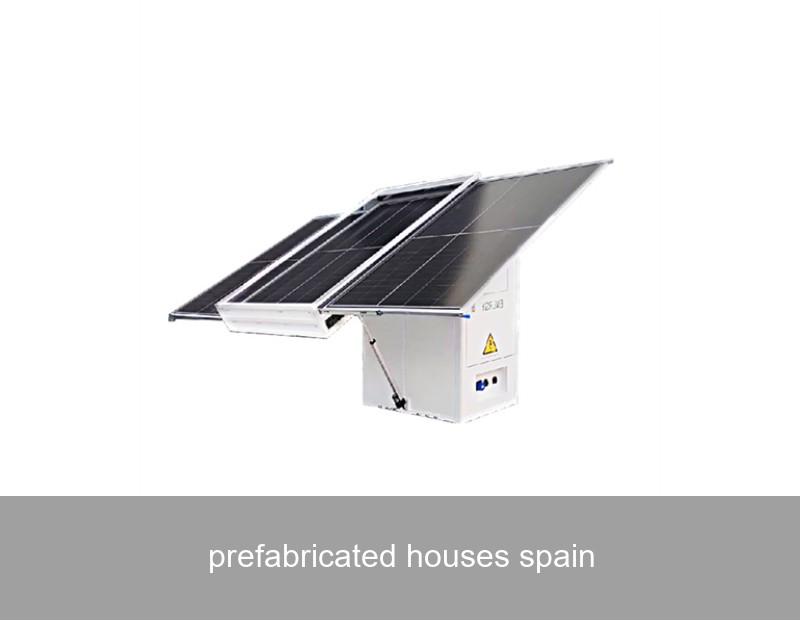
Imagine a sleek, modern home in the sun-drenched hills of Andalusia. It's a prefabricated house, built with precision and sustainability at its core. But there's one crucial element that transforms this beautiful structure from a mere dwelling into a true energy-independent haven: a smart, integrated battery storage system. For homeowners and developers across Spain and Europe, the combination of prefabricated houses and advanced energy storage is no longer a luxury—it's the intelligent foundation for a resilient, cost-effective, and sustainable lifestyle. This article explores the powerful synergy between these two technologies and how they are redefining modern living.
Table of Contents
- The Spanish Sun: A Powerhouse with a Problem
- The Perfect Match: Prefab Construction Meets Smart Storage
- Data & Economics: The Clear Case for Storage
- Case Study: A Self-Sufficient Prefab Community in Valencia
- Choosing the Right Storage for Your Prefabricated Home
- Highjoule: Your Partner in Sustainable Energy Independence
The Spanish Sun: A Powerhouse with a Problem
Spain is blessed with over 2,500 hours of sunshine annually, making it one of Europe's prime locations for solar energy. It's a no-brainer to install photovoltaic (PV) panels on your prefabricated house in Spain. But here's the catch: the sun doesn't shine on a utility company's schedule. Peak solar production happens in the middle of the day, while household energy demand typically spikes in the early morning and evening. Without a way to capture that midday surplus, up to 50% of the clean energy you generate could be exported to the grid for minimal compensation, leaving you to buy back expensive power at night.
This mismatch is the central challenge. It turns a potential energy asset into an inefficient system. The question for modern homeowners is simple: how do you harness the full potential of your rooftop solar investment?
The Perfect Match: Prefab Construction Meets Smart Storage
This is where the philosophy of prefabricated construction aligns perfectly with advanced energy storage. Prefabricated houses are built on principles of efficiency, quality control, and integrated design. Why should their energy systems be any different? Integrating a battery storage system during the planning and construction phase is far more effective than a retrofitted solution later.
- Design Integration: Storage systems can be seamlessly incorporated into the architectural plans, with dedicated, ventilated spaces for battery cabinets, ensuring safety and aesthetics.
- Streamlined Installation: Just as prefab modules arrive ready to assemble, a pre-configured storage system can be installed and commissioned in sync with the home's electrical setup, reducing labor time and cost.
- Future-Proof Foundation: A modern prefab home is designed to last. Pairing it with a scalable storage system from the start ensures the home's energy infrastructure is as forward-thinking as its construction method.
Think of it as building a complete, high-performance vehicle rather than just an engine. The home and its energy system work as one cohesive unit.
Beyond Backup: The Multi-Function Battery
Modern energy storage is about much more than just emergency backup. A smart battery system for your Spanish prefab home acts as a personal energy manager:
- Self-Consumption Optimization: Store excess solar energy for use at night, dramatically increasing your energy independence from the grid.
- Bill Management: Leverage time-of-use tariffs by using stored energy during peak price periods, slashing your electricity bills.
- Grid Services & Stability: Advanced systems can even provide services to the local grid, contributing to community resilience (a feature increasingly relevant in remote or island areas).
Data & Economics: The Clear Case for Storage
Let's talk numbers. According to data from the International Renewable Energy Agency (IRENA), the levelized cost of electricity from solar PV has fallen by over 80% in the past decade. However, the value of that energy is maximized when it's consumed, not just generated.
For a typical Spanish household with a 6kW solar installation, adding a 10kWh battery can increase self-consumption from around 30-40% to 70-80% or more. This directly translates to a higher return on investment (ROI) for your solar system. With volatile energy prices across Europe, the ability to lock in a significant portion of your electricity cost at a near-zero marginal rate provides profound financial predictability. The investment in storage pays for itself by closing the loop on your personal energy ecosystem.

Image: A modern, energy-efficient prefabricated home ideal for integrating solar and storage. (Credit: Unsplash)
Case Study: A Self-Sufficient Prefab Community in Valencia
Let's look at a real-world example. A new development of 15 prefabricated houses in the Valencia region was designed with a net-zero energy goal. Each home was fitted with a 7kWp solar array. The developer initially considered a traditional grid-feed setup but pivoted to include integrated battery storage for each unit.
Solution Deployed: Each home received a modular, wall-mounted 12.8kWh lithium iron phosphate (LiFePO4) battery system with a hybrid inverter. The systems were installed during the final construction phase, with cabling and mounting points pre-planned.
| Metric | Result |
|---|---|
| Average Household Self-Consumption Rate | Increased from an estimated 35% to 82% |
| Average Grid Electricity Import | Reduced by 78% |
| Projected Payback Time for Storage Add-on | ~6-7 years (accelerated by rising grid tariffs) |
| Homeowner Satisfaction (Survey) | 94% cited "energy bill reduction" and "peace of mind" as key benefits. |
This case demonstrates that the integration is not only technically feasible but also economically compelling, creating a strong unique selling point for the development.
Choosing the Right Storage for Your Prefabricated Home
Not all battery systems are created equal. For a system that will be the heart of your home for 15+ years, key considerations include:
- Chemistry & Safety: LiFePO4 batteries are widely regarded as the safest and most durable option for residential use, with a longer lifespan and superior thermal stability.
- Scalability: Can you start with a smaller capacity and expand later as your needs (like adding an electric vehicle) grow?
- Software Intelligence: The "brain" of the system matters. Look for smart energy management that can learn your habits, respond to weather forecasts, and adapt to changing tariff structures.
- Integration Ease: The system should be compatible with major inverter brands and allow for simple monitoring via a user-friendly app.
Highjoule: Your Partner in Sustainable Energy Independence
This is where Highjoule's expertise becomes pivotal. Since 2005, Highjoule has been at the forefront of advanced energy storage solutions globally. We understand that a prefabricated house in Spain represents a modern, efficient approach to living, and its energy system should reflect that.
Our Residential Energy Hub product line is specifically engineered for seamless integration. Built with ultra-safe LiFePO4 cells, our modular systems are designed for easy installation and future expansion. The Highjoule smart energy management platform optimizes every kilowatt-hour, prioritizing self-consumption, managing costs, and ensuring you have reliable backup power when needed.
For developers and architects specializing in prefabricated homes, Highjoule offers tailored technical partnership. We provide pre-installation consultancy, system design support, and training to ensure the storage solution is a perfectly fitted component of the home, not an afterthought. By choosing Highjoule, you're not just buying a battery; you're investing in a comprehensive, intelligent energy ecosystem for the life of the home.
Image: A clean, integrated wall-mounted battery storage unit, similar to Highjoule's residential solutions. (Credit: Unsplash)
The journey towards a truly sustainable and independent home is clearer than ever. With the powerful combination of prefabricated design and advanced storage, homeowners in Spain and beyond can take definitive control of their energy future. The technology is proven, the economics are sound, and the environmental impact is positive.
What will your first step be towards designing an energy system that matches the innovation of your prefabricated home?
 Inquiry
 Online Chat