


Best Photovoltaic Panels 2024: A Guide to High-Performance Solar for Your Home or Business
As we move deeper into 2024, the question on the minds of homeowners and business leaders across Europe and the U.S. isn't just *whether* to go solar, but *how to choose the best photovoltaic panels for maximum return*. The market is buzzing with terms like "N-type," "heterojunction," and "bifacial," making the selection process feel overwhelming. But here's the core truth: the "best" panel isn't a one-size-fits-all title. It's the one that delivers optimal, reliable energy for your specific roof, climate, and energy goals over the next 25+ years. This guide will cut through the noise, using real-world data and insights to help you identify the top-performing solar technology of 2024 and understand how it integrates into a truly intelligent energy system.
Table of Contents
- The 2024 Shift: Beyond Basic Efficiency
- Key Criteria for the Best PV Panels in 2024
- Beyond the Panels: The System is the Solution
- Highjoule's Role in Your Solar Journey
- How to Future-Proof Your Solar Investment
The 2024 Shift: Beyond Basic Efficiency to Real-World Performance
For years, the solar industry raced for the highest laboratory efficiency percentage. While efficiency remains crucial, the focus in 2024 has matured. We're now prioritizing real-world yield, durability, and long-term value. Why? Because a panel that loses power output faster in hot climates or under partial shading isn't the "best," even with a stellar lab rating.
The leading technology driving this shift is N-type silicon, particularly designs like TOPCon (Tunnel Oxide Passivated Contact) and HJT (Heterojunction Technology). These panels have lower degradation rates, better temperature coefficients, and higher bifaciality. According to the National Renewable Energy Laboratory (NREL), N-type cells now consistently top efficiency charts, with commercial modules exceeding 22.5% efficiency. This translates directly to more kilowatt-hours generated per square meter of your roof over the system's lifetime.

Image: Modern N-type solar panels offer higher real-world yields. (Source: Unsplash, Representative Image)
Key Criteria for the Best PV Panels in 2024
When evaluating panels this year, look beyond the brochure's headline number. Here’s your checklist:
- Cell Technology: Prioritize N-type (TOPCon, HJT) over traditional P-type PERC for better longevity and performance.
- Degradation Rate: The best panels offer a first-year degradation of ≤1% and an annual rate of ≤0.4% thereafter, guaranteeing more power in year 20.
- Temperature Coefficient: A key factor for hot climates in Southern Europe or the U.S. Southwest. Look for a coefficient closer to -0.30%/°C rather than -0.40%/°C.
- Warranty: A product warranty of 15+ years and a linear power warranty of 25-30 years that guarantees a high percentage (e.g., 92% output in year 25) is now standard for tier-one manufacturers.
| Technology | Avg. Module Efficiency | Key Advantage | Ideal For |
|---|---|---|---|
| N-type TOPCon | 22.5% - 23.5% | Excellent balance of high efficiency, lower cost premium, great performance in varied light | Most residential and commercial applications |
| N-type HJT | 23.0% - 24.0%+ | Superior temperature coefficient, very low degradation, bifacial gain | Hot climates, high-ambition projects where space is limited |
| Advanced P-type PERC | 21.0% - 22.0% | Cost-effective, proven reliability | Budget-conscious projects with ample space |
A Real-World Case: Maximizing Limited Roof Space in Hamburg
Let's ground this in reality. A medium-sized manufacturing facility in Hamburg, Germany, faced rising energy costs and limited roof space. Their goal: maximize self-consumption and reduce grid dependence. They chose high-efficiency N-type HJT panels (24.2% efficiency) over standard options.
- Challenge: Roof space could only fit a 50 kWp system with standard panels.
- Solution: High-efficiency HJT panels allowed for a 58 kWp system on the same area.
- Result: The system now generates approximately 52,000 kWh annually, covering 65% of the facility's daytime load (up from a projected 55%). The superior temperature coefficient of the HJT panels ensures consistent output even on warmer days, a factor often underestimated in Central European projects.
This case, documented by the Fraunhofer Institute for Solar Energy Systems ISE, highlights that the "best" panel unlocked greater financial and energy outcomes within a physical constraint.
Beyond the Panels: The System is the Solution
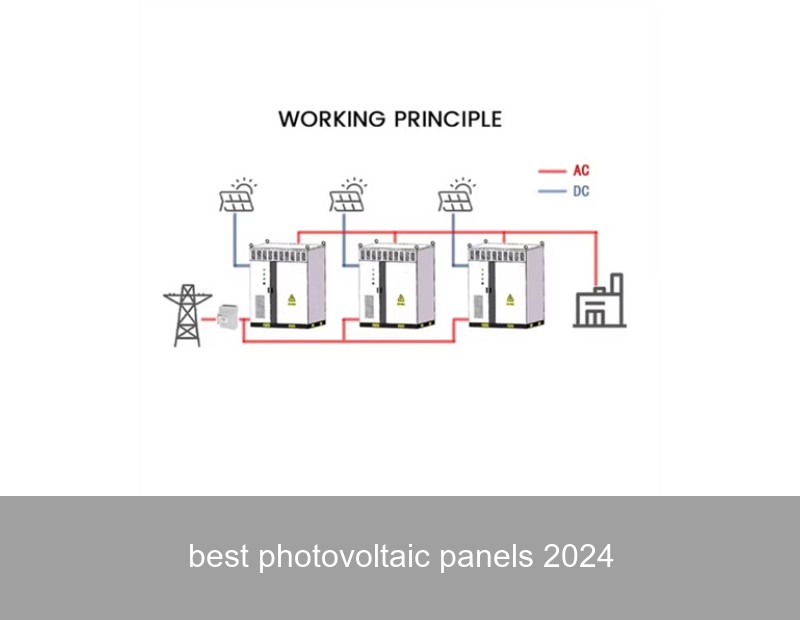
Even the best photovoltaic panels of 2024 are only one part of the equation. Their generated energy must be managed, stored, and used intelligently. This is where the balance of system—inverters, energy management software, and crucially, the battery storage system—becomes paramount.
Think of it this way: premium panels are a powerful engine, but a battery and smart energy manager are the transmission and brain that put that power to work exactly when and where you need it. Without storage, excess solar energy is exported to the grid for minimal compensation, missing the opportunity to power your home or business in the evening when rates are high.
Highjoule's Role in Your Solar Journey
At Highjoule, we view premium solar panels as the essential fuel source for a comprehensive energy independence strategy. Since 2005, we've specialized in integrating the latest photovoltaic technology with our advanced, AI-driven battery storage systems. Our HPS (Highjoule PowerStack) series for commercial & industrial applications and HRS (Highjoule Residential Solution) for homes are designed to seamlessly pair with high-output arrays from leading manufacturers.
Our systems don't just store energy; they learn your consumption patterns, optimize for time-of-use rates (critical in California, Texas, and parts of Europe), and provide backup power during outages. For a business using the best photovoltaic panels of 2024, integrating a Highjoule system can increase self-consumption of solar power from 30-40% to over 80%, dramatically improving the return on your solar investment.

Image: A modern home battery storage system, like Highjoule's HRS, is key to maximizing solar use. (Source: Unsplash, Representative Image)
How to Future-Proof Your Solar Investment
Choosing a solar system is a 25-year decision. To ensure your investment remains optimal, consider these steps:
- Demand a Detailed Simulation: A reputable installer should model your specific roof with different 2024 panel technologies, accounting for shading, orientation, and local weather, not just provide a generic quote.
- Plan for Storage Now: Even if you don't install a battery immediately, ensure your inverter and system architecture are "storage-ready." Retrofitting can be costly. Highjoule's systems are designed for easy integration with new or existing solar arrays.
- Ask About the Ecosystem: How will the panels, inverter, and any future battery communicate? A closed, proprietary system can limit upgrades. Seek open-protocol compatibility for flexibility.
The energy landscape is evolving rapidly, with electric vehicles and smart appliances becoming mainstream. Your solar and storage system should be the resilient, adaptable heart of this new energy home or business.
The Final Piece: What Does True Energy Independence Look Like for You?
We've explored the technical benchmarks that define the best photovoltaic panels in 2024 and the critical importance of pairing them with intelligent storage. But the real question extends beyond specs and warranties. Is your goal to simply reduce your electricity bill, or to achieve resilience against blackouts? Are you looking to power an electric vehicle with sunshine, or to meet corporate sustainability targets with tangible data?
The combination of cutting-edge solar panels and a smart Highjoule storage system is how abstract goals become concrete, measurable reality. What's the first energy challenge you'd like your solar investment to solve?
 Inquiry
 Online Chat