


Understanding the Price of Lithium Batteries in Nigeria: A Gateway to Energy Independence
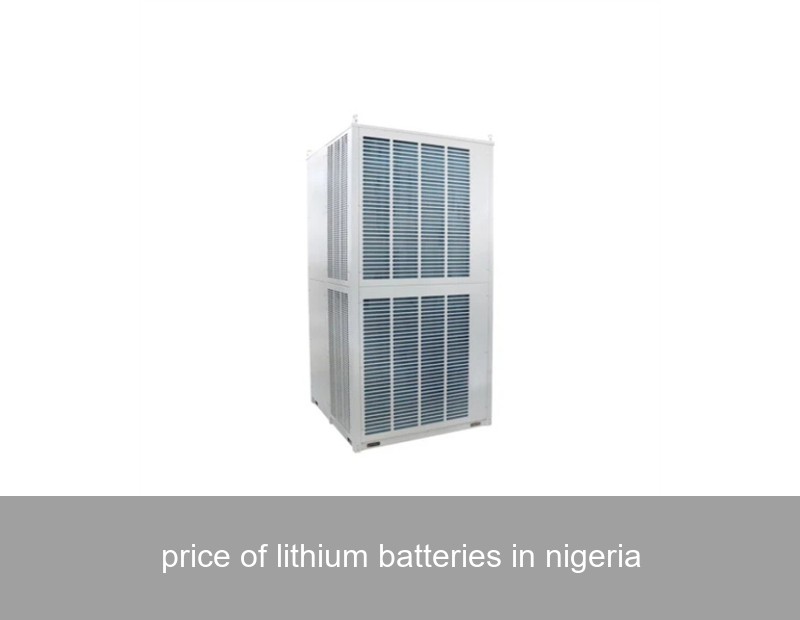
As Nigeria strides towards a more stable and sustainable energy future, one question is on the minds of businesses, communities, and forward-thinking homeowners: what drives the price of lithium batteries in Nigeria? This isn't just about a number on an invoice. It's about unlocking reliable power for industries, keeping clinics operational, and empowering homes to break free from the grid. The conversation around lithium battery costs is, at its heart, a conversation about Nigeria's energy resilience and economic growth. In this article, we'll demystify the factors influencing these prices, explore real-world applications, and look at how advanced solutions from global leaders like Highjoule are creating value far beyond the initial investment.
Table of Contents
- Beyond the Sticker Shock: What Really Determines Lithium Battery Prices?
- The Nigerian Energy Landscape: A Perfect Storm for Battery Storage
- A Case Study in Lagos: Solar + Storage Powers a Manufacturing Hub
- Total Cost of Ownership: Why Quality Outweighs Initial Price
- Highjoule's Smart Solutions for the Nigerian Market
- The Future of Energy Storage in Nigeria
Beyond the Sticker Shock: What Really Determines Lithium Battery Prices?
When you first inquire about the price of lithium batteries in Nigeria, the figure might seem high. But let's break it down. The cost is not arbitrary; it's a composite of global and local factors.
- Global Commodity Markets: The prices of key raw materials like lithium, cobalt, and nickel are set internationally. Supply chain disruptions or increased demand from the global electric vehicle industry can cause fluctuations. According to the International Energy Agency (IEA), demand for lithium for EV batteries grew 65% in 2022 alone, putting pressure on supply.
- Technology and Cell Chemistry: Not all lithium batteries are the same. Lithium Iron Phosphate (LFP) chemistry, for instance, is known for its safety, long cycle life, and stability in high temperatures—a crucial factor for Nigeria's climate. While sometimes slightly higher in initial cost than other chemistries, its longevity offers better value over time.
- Logistics and Importation: Shipping heavy, sensitive battery systems across the globe and navigating Nigerian ports adds significant cost. Reliable suppliers factor in robust packaging, certified transportation, and all necessary customs clearance to ensure products arrive safely and compliantly.
- Intelligence and Software: A modern battery is more than just cells in a box. The value—and part of the cost—lies in the integrated Battery Management System (BMS) and energy management software. This "brain" optimizes performance, prevents damage, and extends lifespan, protecting your investment.
So, while the initial price per kWh might grab your attention, the smarter question is: what am I getting for my investment, and what will it save me in the long run?
The Nigerian Energy Landscape: A Perfect Storm for Battery Storage
Nigeria presents a powerful use case for energy storage. Frequent grid instability and the high cost of diesel generation create significant operational and financial burdens. Here’s where lithium batteries shift from being an expense to a strategic asset.
| Challenge | Impact on Business/Home | How Battery Storage Provides a Solution |
|---|---|---|
| Grid Outages & Unreliability | Production halts, data loss, spoiled goods, discomfort. | Provides instant backup power, bridging gaps seamlessly. |
| High Diesel/Fuel Costs | Sky-high operational expenses and unpredictable budgeting. | Stores cheaper solar energy or grid power during off-peak times to displace diesel use. |
| Voltage Fluctuations | Damage to sensitive electronic equipment and appliances. | Conditions power, providing clean, stable voltage output. |
| Expanding Solar Adoption | Excess solar energy produced in the afternoon is wasted. | Stores surplus solar for use at night, maximizing self-consumption and ROI on solar panels. |
In this context, the price of lithium batteries in Nigeria must be weighed against the crippling cost of not having reliable power. For many, the payback period is surprisingly short.

Credit: Photo by American Public Power Association on Unsplash. Solar plus storage is a transformative solution for commercial and industrial sites.
A Case Study in Lagos: Solar + Storage Powers a Manufacturing Hub
Let's move from theory to practice. A medium-sized plastic manufacturing company in the Ikeja industrial area of Lagos faced monthly diesel costs exceeding ₦8 million (approx. $5,300) to run its generators for over 12 hours daily. Grid supply was erratic and of poor quality.
The Solution: In 2023, the company installed a 500kW solar PV system coupled with a 750kWh lithium-ion battery energy storage system (BESS). The system was designed to power critical manufacturing lines and office facilities.
The Data-Driven Outcome (First 12 Months):
- Diesel Consumption Reduction: 85% decrease, saving approximately ₦81.6 million annually.
- ROI Timeline: The project's payback period was calculated at under 4 years, based on energy savings alone.
- Operational Uptime: Production line downtime due to power issues fell to near zero.
- Carbon Footprint: Estimated reduction of over 450 tonnes of CO2 emissions per year.
This case, documented by the Sustainable Energy for All (SEforALL) initiative in a 2024 market report, highlights a critical insight: the capital expenditure for high-quality solar and storage is rapidly offset by slashed operational expenditure. The price of lithium batteries in Nigeria was, for this manufacturer, the key to unlocking massive, predictable savings and operational resilience.
Total Cost of Ownership: Why Quality Outweighs Initial Price
Choosing the cheapest battery option can be the most expensive decision. Total Cost of Ownership (TCO) includes the purchase price, installation, maintenance, lifespan, and performance degradation.
A low-quality battery might offer a tempting upfront price of lithium batteries in Nigeria, but consider:
- Cycle Life: A quality LFP battery from a reputable manufacturer can deliver 6,000+ charge/discharge cycles while retaining 80% of its capacity. A poor-quality battery may degrade to 80% in just 1,500 cycles, needing replacement three times as often.
- Efficiency: High-efficiency batteries (e.g., 98% round-trip efficiency) lose very little energy during charging and discharging. A less efficient battery (e.g., 92%) wastes valuable solar or grid power as heat, increasing your effective cost per usable kWh.
- Safety & Warranty: Robust engineering, thermal management, and a strong BMS prevent catastrophic failures. A reputable global provider like Highjoule backs its systems with comprehensive, long-term warranties and local technical support, ensuring peace of mind.
Highjoule's Smart Solutions for the Nigerian Market
With nearly two decades of experience since 2005, Highjoule designs its advanced energy storage systems with diverse global markets in mind. For Nigerian clients, we offer more than just hardware; we offer a partnership for energy independence.
Our H-Series Commercial & Industrial (C&I) ESS is engineered for demanding environments. It features:
- LFP Chemistry: Optimized for safety, longevity, and high-temperature performance.
- Modular Scalability: Start with what you need and expand capacity as your business grows.
- AI-Powered Energy Management: Our proprietary software learns your load patterns, optimizes for solar self-consumption, and can even participate in future grid services, potentially creating a revenue stream.
- Remote Monitoring & Support: Our team can monitor system health remotely, often diagnosing and resolving issues before you're even aware of them, minimizing downtime.
For residential and smaller commercial applications, our HomePower+ integrated storage systems provide a seamless, all-in-one solution that pairs perfectly with solar installations, giving homeowners control over their energy use and costs.
By focusing on TCO and providing intelligent, reliable products, Highjoule ensures that the discussion around the price of lithium batteries in Nigeria is framed correctly: as an investment with a clear and compelling return.

Credit: Photo by ThisisEngineering on Unsplash. Advanced monitoring and control are key to maximizing battery system value.
The Future of Energy Storage in Nigeria
The trajectory is clear. As solar penetration increases and the national grid evolves, battery storage will be the linchpin of a modern, decentralized energy network. Innovations in battery technology and economies of scale, as noted by research from BloombergNEF, are expected to continue driving down costs globally. For Nigeria, this means the economic case for storage will only grow stronger.
But the future isn't just about cheaper hardware; it's about smarter systems. Imagine microgrids powering entire communities, commercial hubs trading stored energy, and a more resilient national infrastructure. The foundation for this is being laid today by the decisions of businesses and individuals investing in quality storage solutions.
So, as you evaluate your path to energy security, we leave you with this question: What could your business or home achieve with a power supply that is as reliable, predictable, and sustainable as the ambition driving Nigeria forward? The answer to that may be more valuable than any single price tag.
 Inquiry
 Online Chat