


Beyond Lithium Ion Battery: The Future of Energy Storage is Here
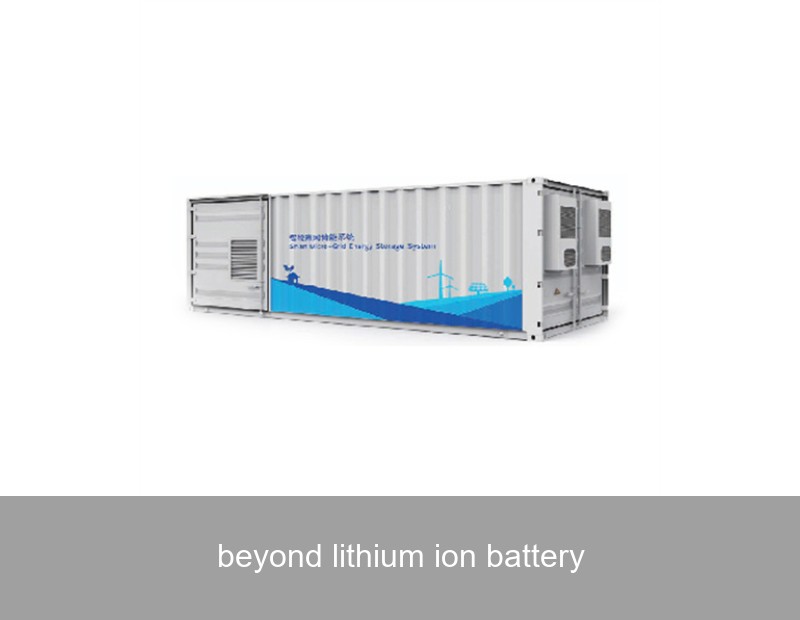
For decades, the lithium-ion battery has been the undisputed champion of the energy storage world. From powering our smartphones to enabling the first wave of electric vehicles and home battery systems, its impact is undeniable. But as our global ambitions for renewable energy and grid resilience grow, we're starting to bump up against its limitations. This has sparked a crucial question: what comes next? The answer lies in the exciting world of beyond lithium ion battery technologies. These innovative solutions aren't just incremental improvements; they represent a fundamental shift towards more sustainable, safer, and longer-lasting power for our homes, businesses, and communities.
Table of Contents
- The Limitation: Why We Need to Look Beyond Lithium-Ion
- The Contenders: Promising Beyond Lithium Ion Battery Technologies
- A Real-World Case: Stability for a German Industrial Park
- Highjoule's Role: Bridging Today's Needs with Tomorrow's Tech
- The Future Landscape: What to Expect
The Limitation: Why We Need to Look Beyond Lithium-Ion
First, let's be clear: lithium-ion batteries aren't going away anytime soon. At Highjoule, we continue to refine and deploy advanced lithium-ion systems because they offer excellent energy density and efficiency for many applications. However, the transition to a renewables-dominated grid exposes key challenges:
- Resource Concerns: Lithium, cobalt, and nickel are finite resources. Their mining and processing raise environmental and ethical questions, and price volatility can impact project economics.
- Safety & Longevity: Thermal runaway risks, though managed with sophisticated BMS (Battery Management Systems), remain a concern, especially for large-scale installations. Furthermore, degradation over thousands of cycles is a factor for grid-scale, daily cycling.
- Duration & Cost for Grid-Scale: For truly fossil-free grids, we need to store energy not just for hours, but for days or even weeks. Scaling lithium-ion to multi-day storage often becomes prohibitively expensive.
This isn't just theory. Grid operators from California to Bavaria are actively seeking solutions that can provide longer-duration, non-flammable storage to back up solar and wind farms during prolonged calm or cloudy periods.
The Contenders: Promising Beyond Lithium Ion Battery Technologies
The "beyond lithium" landscape is diverse, focusing on abundant materials and novel chemistries. Here are some front-runners:
1. Flow Batteries: The Long-Duration Champion
Imagine a battery where power and energy are decoupled. That's the principle of a flow battery. Energy is stored in liquid electrolytes held in external tanks. To increase storage duration, you simply use larger tanks. Vanadium redox flow batteries (VRFBs) are the most commercially advanced, offering exceptional cycle life (20,000+ cycles) and minimal degradation.
- Best for: Grid-scale storage, microgrids, industrial backup (8+ hours of storage).
- Key Advantage: Long lifespan and safe, non-flammable chemistry.

Image Source: U.S. Department of Energy (public domain)
2. Sodium-Ion Batteries: The Abundant Alternative
Sodium-ion technology works on a similar principle to lithium-ion but uses sodium, which is one of the most abundant elements on Earth. This eliminates resource constraints and can significantly reduce costs.
- Best for: Large-scale stationary storage, potentially complementing lithium-ion where extreme energy density isn't critical.
- Key Advantage: Lower cost potential, sustainability, and good performance in a wide temperature range.
3. Solid-State Batteries: The Next Evolution in Safety & Density
This technology replaces the flammable liquid electrolyte in a lithium-ion battery with a solid material. This could dramatically improve safety, allow for higher energy density, and enable faster charging.
- Best for: Electric vehicles and potentially high-density stationary storage where space is at a premium.
- Key Advantage: Enhanced safety and the potential for higher energy density.
| Technology | Key Material | Typical Cycle Life | Best Use Case | Development Stage |
|---|---|---|---|---|
| Lithium-Ion (NMC) | Lithium, Nickel, Manganese, Cobalt | 4,000 - 6,000 | Daily cycling (2-4 hrs), Residential, C&I | Mature |
| Vanadium Flow Battery | Vanadium | 15,000 - 20,000+ | Long-Duration Storage (6-24+ hrs), Grid, Microgrid | Commercial |
| Sodium-Ion | Sodium | 3,000 - 5,000 (early data) | Large-Scale Stationary Storage | Early Commercial |
A Real-World Case: Stability for a German Industrial Park
Let's look at a concrete example. A major industrial park in North Rhine-Westphalia, Germany, faced two challenges: rising grid demand charges and the need for a failsafe backup power system for its precision manufacturing lines. A lithium-ion system could handle short-term peak shaving, but for the required 10+ hours of backup during a potential grid outage, it was economically and spatially challenging.
The solution was a hybrid approach. The park installed a 2 MWh vanadium flow battery system for long-duration backup and daily load-shifting of its base load, paired with a smaller, high-power lithium-ion system for instantaneous peak shaving. The results, monitored over 18 months, were compelling:
- Backup Duration Achieved: 12 hours at critical load.
- Demand Charge Reduction: 22% annual savings.
- Cycle Performance: The flow battery showed zero measurable degradation after over 2,700 full cycles.
This case, documented in a report by the Fraunhofer Institute for Solar Energy Systems, highlights how moving beyond lithium ion battery technology for specific needs can provide superior economic and technical outcomes.
Highjoule's Role: Bridging Today's Needs with Tomorrow's Tech
At Highjoule, we view the energy storage landscape pragmatically. There is no one-size-fits-all "winner." The future is a diverse portfolio of storage technologies, each applied where it makes the most sense. Our mission is to provide intelligent, sustainable power solutions today while actively integrating the most promising next-generation technologies as they mature.
Our current H-Series commercial and industrial energy storage systems leverage the latest in safe, long-life lithium-iron-phosphate (LFP) chemistry, a more stable and cobalt-free variant of lithium-ion. They are controlled by our proprietary Adaptive Grid OS™, an AI-driven platform that optimizes for cost, efficiency, and grid services.
Critically, our platform is chemistry-agnostic. This means we are already testing and preparing for the integration of beyond lithium ion battery systems, such as flow batteries, into our ecosystem. For a large microgrid or industrial client, we can design a hybrid system where our software seamlessly manages a high-power lithium-ion battery for quick bursts and a long-duration flow battery for sustained output – creating the ultimate resilient and cost-effective solution.
For residential customers, our EchoHome Battery systems provide reliable solar self-consumption and backup with a focus on safety and longevity, giving homeowners peace of mind while we monitor the advancement of future technologies like solid-state for eventual market readiness.
The Future Landscape: What to Expect
The journey beyond lithium ion battery is not a race to replace, but to augment and optimize. We expect to see:
- Hybridization Dominating: More projects combining different battery types to balance power, energy, and cost.
- Geography-Specific Solutions: Regions with abundant vanadium or sodium resources may see localized manufacturing and adoption of those technologies.
- Software as the Key Differentiator: As hardware becomes more commoditized, the intelligence to manage diverse storage assets—as Highjoule's Adaptive Grid OS™ does—will be the critical value driver.
Research continues to accelerate. Organizations like the U.S. Department of Energy's Long Duration Storage Shot initiative are pushing for systems that can store energy for 10+ hours at a fraction of today's cost, a target that will almost certainly require these new chemistries.
So, as you plan for your business's energy resilience or your community's clean energy future, the question isn't simply "which battery?" It's: "How can we build an intelligent storage strategy that leverages the best of today's technology while being ready for the breakthroughs of tomorrow?" What is the most critical factor—safety, duration, or upfront cost—for your next energy storage project?
 Inquiry
 Online Chat