


Why Your Next Solar Project Needs a Trusted Supplier of ETFE Panel
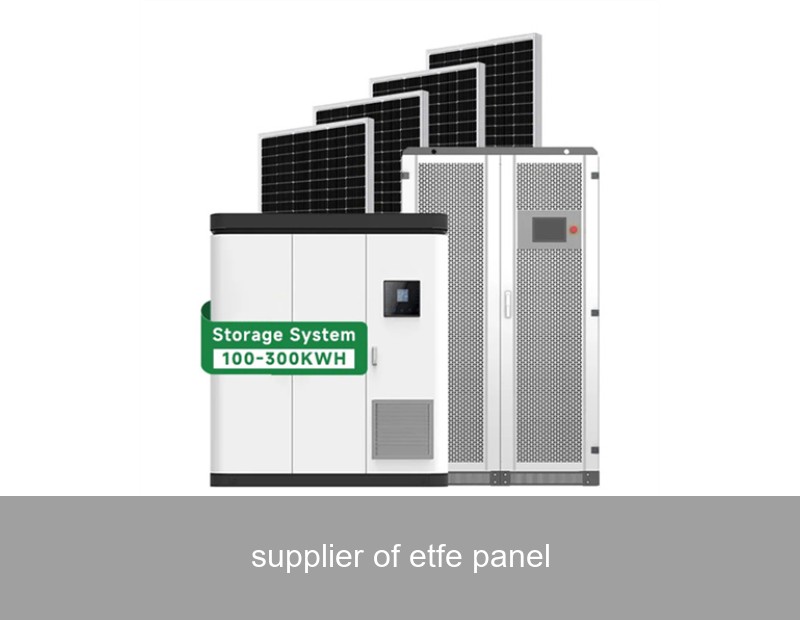
If you're planning a commercial, industrial, or large-scale residential solar installation, you're likely focused on panel efficiency and inverter specs. But there's a critical, often overlooked component that can make or break your system's long-term performance: the front protective layer. For decades, tempered glass was the default choice. However, a superior material is rapidly changing the game—ETFE (ethylene tetrafluoroethylene). Choosing the right supplier of ETFE panel technology is no longer a niche consideration; it's a strategic decision impacting durability, weight, yield, and ultimately, your return on investment. Let's explore why.
What is an ETFE Panel, and Why is it a Game-Changer?
Imagine a solar panel that is significantly lighter, exceptionally durable against impacts, and maintains higher light transmission even after decades in the field. That's the promise of ETFE-based solar modules. Unlike traditional glass, ETFE is a fluorine-based polymer, a high-tech cousin of materials like Teflon®.
As a leading supplier of ETFE panel integrated solutions, Highjoule has witnessed its advantages firsthand across diverse climates, from hailstorms in Texas to coastal salt spray in Southern Europe. The core benefits stack up convincingly:
- Extreme Lightweight: ETFE film is up to 99% lighter than glass, radically reducing structural support needs and opening up applications on roofs with weight limitations.
- Superior Durability: It boasts high tensile strength and elasticity, making it highly resistant to cracking from hail, wind-borne debris, or thermal stress.
- Optical Excellence: ETFE has a light transmission rate of over 95%, comparable to glass. Crucially, its non-stick surface minimizes dust and dirt adhesion, and its hydrophobic nature allows for easy self-cleaning with rain.
- Long-Term Stability: The material is inherently UV resistant and does not yellow or degrade significantly over 25+ years, ensuring consistent performance.

Image: Modern solar installations increasingly utilize advanced materials for longevity. Credit: Wikimedia Commons
The Hidden Cost of Conventional Glass
While glass is rigid and offers a sense of solidity, it's also brittle. The phenomenon of "microcracks," often invisible to the naked eye, is a major concern. These cracks can develop during transport, installation, or from environmental stress, gradually degrading cell performance and leading to significant power loss over time. For asset owners, this translates into a silent erosion of their projected energy yield and financial returns.
The Data Doesn't Lie: ETFE's Performance Edge
Let's move beyond theory to measurable outcomes. The shift towards ETFE isn't just about material science; it's driven by hard data on reliability and total cost of ownership.
| Performance Metric | Traditional Glass Panel | ETFE-Capped Panel |
|---|---|---|
| Weight per m² | ~12-15 kg | ~3-5 kg |
| Hail Impact Resistance | Typically rated for 25mm hail at 23 m/s (IEC 61215) | Can withstand 50mm+ hail at higher speeds due to high elasticity |
| Potential-Induced Degradation (PID) Risk | Higher risk due to glass/ frame conductivity in damp conditions | Inherently lower risk as ETFE is an excellent insulator |
| Soiling Losses (Arid Climates) | Higher, due to static charge attracting dust | Significantly lower, hydrophobic surface promotes self-cleaning |
According to a long-term field study by the National Renewable Energy Laboratory (NREL), soiling and physical degradation are among the top contributors to underperforming PV assets. Materials that mitigate these issues directly protect the asset's financial viability.
From Theory to Practice: A Real-World Case in California
Consider the challenge faced by a logistics warehouse operator in the sun-drenched but dusty Inland Empire region of California. Their goal: maximize rooftop solar generation to offset high energy costs, but the roof structure had strict load limits, and frequent dust storms threatened heavy soiling losses.
The Solution: They partnered with Highjoule, not just as a supplier of ETFE panel components, but as a system integrator. Highjoule provided a tailored, lightweight solar canopy system utilizing high-efficiency bifacial modules capped with ETFE film instead of glass.
The Data-Driven Outcome (After 18 Months):
- Structural Savings: 60% reduction in rooftop load versus a glass-based system, eliminating the need for costly reinforcement.
- Enhanced Yield: Soiling-related performance losses measured at under 3%, compared to the 8-10% typical for glass panels in that area, as documented by the site's SCADA monitoring.
- Durability Tested: The site experienced an unseasonal hailstorm with stones measuring ~35mm. Post-storm inspection revealed zero damage to the ETFE surfaces, while neighboring properties with standard panels reported numerous cracked modules.
This case underscores that selecting an innovative supplier of ETFE panel technology isn't just about buying a product; it's about acquiring a performance guarantee for harsh environments.
Highjoule's Approach: Integrating Durability with Intelligence
At Highjoule, our expertise extends beyond simply sourcing materials. Since 2005, we have evolved into a provider of complete, intelligent energy storage and generation solutions. Our foray into ETFE-integrated solar stems from a core philosophy: maximizing lifetime energy yield and system resilience.
We don't just supply ETFE-laminated panels; we engineer them into cohesive systems. For instance, our HPS (Highjoule Power Stack) solutions for commercial & industrial applications can seamlessly integrate ETFE-based solar arrays with our advanced battery energy storage systems (BESS). This creates a robust microgrid where the durable solar generation reliably charges the storage, ensuring clean power availability even during grid outages or peak tariff periods.
Our role as a supplier of ETFE panel technology is deeply informed by our decades of experience in储能 (energy storage). We understand that the quality and consistency of the generation source are paramount for optimizing battery cycling, lifespan, and overall system economics. A more durable, consistently performing solar array means a more predictable and efficient energy input for your storage system.

Image: Monitoring and maintaining integrated energy systems is key to long-term success. Credit: Unsplash
How to Choose the Right Supplier of ETFE Panel for Your Project
With growing interest, how do you select a credible partner? Look for these markers of a true expert:
- Proven Track Record: Request case studies with verifiable performance data, not just material datasheets.
- System Integration Capability: Can they provide the balance of system components and ensure compatibility with inverters and mounting structures?
- Warranty & Support: What is the product and performance warranty? Do they offer long-term O&M (Operations & Maintenance) support?
- Technical Partnership: A good supplier will ask detailed questions about your site conditions, energy profile, and financial goals to advise if ETFE is truly the optimal solution.
Highjoule operates on this partnership model. We assess the entire project lifecycle, ensuring that the advanced materials we recommend—like ETFE—are part of a holistic, high-performance, and sustainable power solution, backed by our global service network.
The Future is Light and Tough
The transition in solar is mirroring trends in other industries—towards lighter, stronger, and smarter materials. As solar projects face increasingly volatile weather and economic pressures to deliver higher returns, the resilience offered by ETFE becomes a compelling value proposition. It represents a move from viewing panels as a commodity to treating them as a long-term, high-performance asset.
Is your next project facing weight constraints, high soiling risks, or severe weather exposure? What would a 5-10% improvement in long-term energy yield and a drastic reduction in maintenance risk mean for your financial model?
 Inquiry
 Online Chat