


Understanding the Prices of Solar Energy Storage Cabinets: A Smart Investment Guide
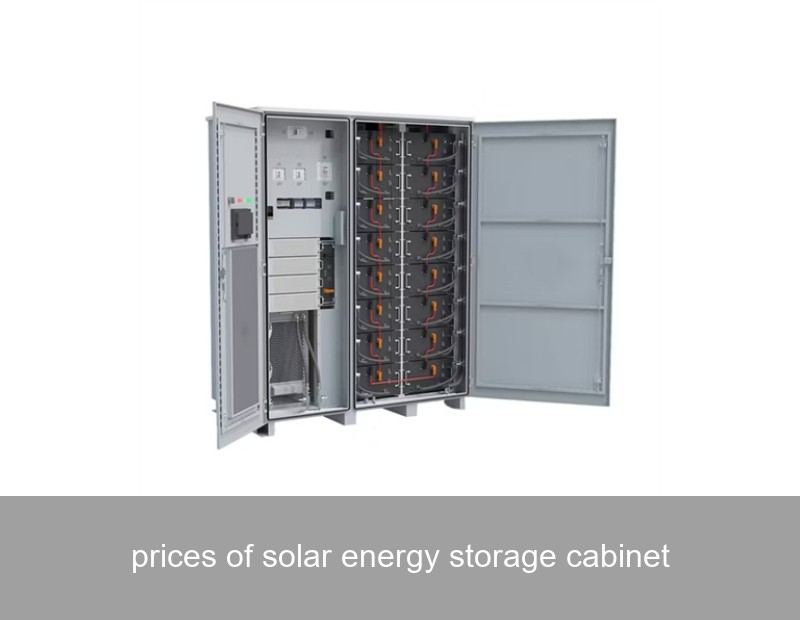
You've made the smart decision to go solar. The panels are up, they're generating clean power, and your electricity bills are dropping. But there's a nagging question: why is all that precious energy vanishing into the grid when the sun goes down? This is where a solar energy storage cabinet comes in. It's the missing piece that turns your solar array into a true 24/7 power station. However, when you start researching, the prices of solar energy storage cabinets can seem like a complex puzzle. Let's demystify this together. We'll break down the cost factors, show you the real value beyond the price tag, and explain why this technology is a game-changer for energy independence in Europe and the US.
Table of Contents
- The Solar Energy Storage Price Puzzle: More Than Just a Number
- Breaking Down the Costs: What's Inside the Cabinet?
- From Cost to Value: The Real ROI of Energy Storage
- Real-World Impact: A Case Study from California
- The Highjoule Advantage: Engineered for Performance and Value
- The Future of Storage: What's Next for Prices and Technology?
The Solar Energy Storage Price Puzzle: More Than Just a Number
When you see a price tag for a solar battery system, it's easy to get sticker shock. Quotes can range from a few thousand to tens of thousands of dollars or euros. But here's the crucial first insight: you're not just buying a box of batteries. You're investing in a sophisticated energy management system. The cabinet you see is the heart of a system that includes power electronics (the inverter/charger), sophisticated battery management software, thermal controls, and safety mechanisms. The initial prices of solar energy storage cabinets are influenced by a global cocktail of factors: raw material costs (like lithium and cobalt), supply chain logistics, regional installation labor rates, and, importantly, the level of intelligence built into the system.
Breaking Down the Costs: What's Inside the Cabinet?
To make an informed decision, let's look under the hood. The total installed cost typically comprises several key components.
- Battery Cells & Chemistry: This is the core cost driver. Lithium-ion phosphate (LFP) batteries, known for safety and long life, are now a dominant choice for home storage. While their per-kWh cost might be slightly higher than older chemistries, their longevity makes them more cost-effective over time.
- Power Conversion System (Inverter): Does the cabinet have a built-in hybrid inverter, or do you need a separate one? An integrated, "AC-coupled" system can simplify installation but may affect the upfront price.
- Capacity & Power Rating: Think of this as the size of your fuel tank vs. the power of the engine. Capacity (measured in kWh) dictates how much energy you can store. Power (measured in kW) dictates how many appliances you can run simultaneously. Your energy usage patterns will determine the optimal balance.
- Intelligence & Software: This is where brands truly differentiate. A smart system can learn your consumption, automatically switch to battery power during peak utility rate periods, and even participate in grid services (where available), creating revenue streams.
- Installation & Permitting: Complexity of installation, local building codes, and utility interconnection fees add to the final cost.
| Cost Component | Influence on Final Price | Consideration for Buyers |
|---|---|---|
| Usable Battery Capacity (kWh) | High Direct Correlation | Size based on nightly usage, not daily solar production. |
| Continuous Power Output (kW) | Significant | Ensure it can handle startup surges for pumps or AC units. |
| System Architecture (AC/DC Coupled) | Moderate | AC-coupled is often best for retrofits; DC-coupled for new solar+storage installs. |
| Warranty & Expected Cycle Life | Moderate to High | A longer, more comprehensive warranty often indicates higher-quality components. |
| Smart Energy Management Features | Moderate | Critical for maximizing financial return in areas with time-of-use rates. |
From Cost to Value: The Real ROI of Energy Storage
So, how do you justify the investment? The conversation shifts from price to value. A high-quality solar energy storage cabinet delivers value in multiple, often compounding, ways:
- Bill Savings via Arbitrage: In regions with Time-of-Use (TOU) pricing, like California or parts of the EU, you can use cheap stored solar energy during expensive peak evenings. This can slash the "peak" portion of your bill dramatically.
- Backup Power & Resilience: For many, this is priceless. Increasing grid instability due to extreme weather makes a home battery the ultimate insurance policy, keeping lights, refrigeration, and medical devices on during an outage.
- Increased Self-Consumption: In markets with low feed-in tariffs, using your own solar power is far more valuable than selling it cheaply back to the grid. Storage can boost your self-consumption rate from 30-40% to over 80%.
- Grid Services & Incentives: In some forward-thinking markets, aggregated home batteries can provide stability to the grid, and owners get compensated. Also, don't forget incentives! The US federal Investment Tax Credit (ITC) and various European grants (like the EU's energy storage initiatives) can reduce net cost by 20-30% or more.
Suddenly, that initial price is being offset by a decade or more of monthly savings and security.
Real-World Impact: A Case Study from California
Let's ground this in reality. Consider a typical household in the Bay Area, California, with a 8kW solar system and a TOU rate plan from PG&E. Their peak rates (4-9 pm) can exceed $0.45/kWh, while off-peak is around $0.25/kWh. Before storage, their excess daytime solar was credited at a low rate, and they bought expensive power in the evening.
By installing a 13.5kWh solar energy storage cabinet, the homeowner now:
- Virtually eliminates electricity purchases during the $0.45/kWh peak period.
- Increases their direct use of solar power from ~40% to over 90%.
- Has 8-10 hours of essential backup power during Public Safety Power Shutoffs (PSPS).
The Data: Annual bill savings from arbitrage and increased self-consumption amount to approximately $1,800. Combined with the 30% federal ITC, the system's payback period falls into the 7-9 year range—well within the system's warranty period. The value of resilience during multiple annual outages? That's a personal calculation, but for many, it's the deciding factor. A 2023 NREL study confirms that pairing storage with solar maximizes both economic and resilience benefits, especially in high-TOU markets.
The Highjoule Advantage: Engineered for Performance and Value
At Highjoule, we've been engineering advanced energy storage solutions since 2005. We understand that the true measure of a system isn't its sticker price, but its levelized cost of storage (LCOS)—the total cost over its entire life, divided by the energy it delivers. That's why our HES Series Solar Storage Cabinets are designed with a holistic, value-first approach.

Our cabinets are built around ultra-safe, long-life LFP battery cells, ensuring you get every cycle promised. The integrated Highjoule EnergyOS is the brain of the operation. It doesn't just react; it predicts. By syncing with local weather forecasts and your historical usage, it optimizes charge/discharge cycles to maximize your financial savings under any utility rate structure. For commercial clients, our GridFlex software stack enables participation in demand response programs, turning your storage asset into a revenue generator.
We offer scalable solutions, from the residential HES-10 to the commercial HES-100 series, allowing you to invest in the precise capacity you need today, with the option to expand later. This modularity protects your investment and ensures the prices of solar energy storage cabinets from Highjoule translate directly into long-term, measurable value and peace of mind.
The Future of Storage: What's Next for Prices and Technology?
The trend is clear: costs are on a steady downward trajectory while capabilities soar. BloombergNEF reports that the global average price for a lithium-ion battery pack has fallen by over 90% since 2010. Future innovations like solid-state batteries and sodium-ion chemistry promise even greater safety and potential cost reductions. However, the near-term future is about integration and intelligence. The next-generation solar energy storage cabinet won't be a standalone product; it will be the core of a home's energy ecosystem, seamlessly managing solar, storage, EV charging, and even heat pumps.
As grid dynamics evolve, the ability of your system to adapt through software updates will be critical. This is where choosing a provider with a strong track record in R&D, like Highjoule, becomes an investment in future-proofing. The question is no longer just "What does it cost?" but rather, "What ecosystem of value and adaptability am I buying into for the next 20 years?"
Ready to See Your Personalized Value Analysis?
The prices of solar energy storage cabinets are a starting point, but your unique energy profile, local rates, and personal resilience goals are what define the real investment. What would a 90% energy self-sufficiency rate look like for your home or business this year?
 Inquiry
 Online Chat