


Unlocking Energy Independence: The Smart Guide to Roof Photovoltaic Panels
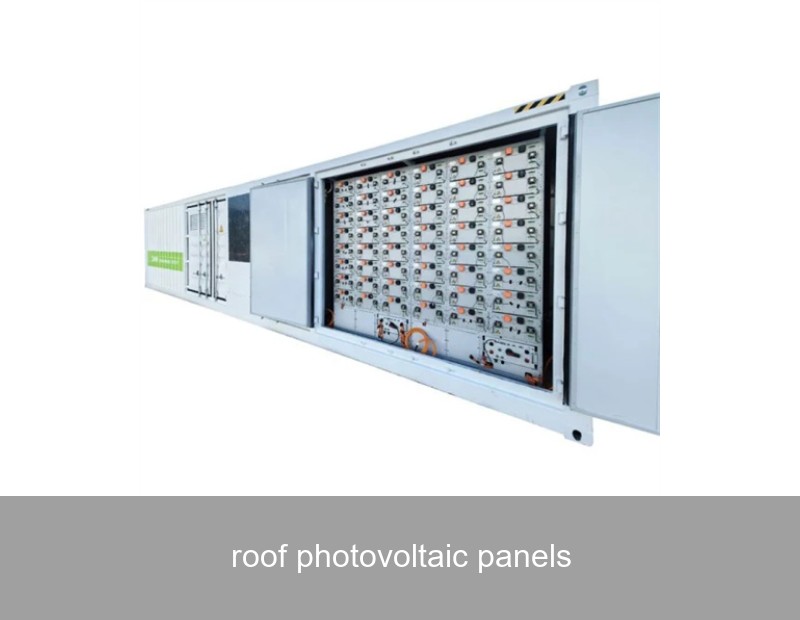
Have you ever looked at your roof and seen more than just shingles or tiles? For a growing number of homeowners and businesses across Europe and the U.S., that expanse is now a powerful asset: a clean, independent power station. Roof photovoltaic panels are transforming how we think about energy, turning passive structures into active generators. But the journey from sunlight to reliable household power involves more than just the panels themselves. It's about creating an intelligent, resilient energy ecosystem. As energy prices fluctuate and sustainability becomes a core concern, understanding the full potential of your rooftop solar investment is key. Let's explore how modern technology maximizes every ray of sunshine that hits your roof.
Table of Contents
- The Phenomenon: Rooftops as Power Plants
- The Data: More Than Just Peak Output
- Case Study: A German Bakery's Recipe for Resilience
- The Key Component: Why Your Solar System Craves a Brain
- The Highjoule Solution: Intelligent Storage for Your Solar Harvest
- What Does the Future Hold for Your Roof?
Credit: Photo by Vivint Solar on Unsplash
The Phenomenon: Rooftops as Power Plants
The shift is undeniable. Drive through neighborhoods in California, Spain, or the Netherlands, and you'll see the shimmering blue-black arrays of roof photovoltaic panels. This isn't just an environmental statement; it's a practical response to rising electricity costs and a desire for energy self-sufficiency. The phenomenon moves beyond the simple act of installation. The real story begins after the panels are up: what happens to all that energy when the sun is shining, but you're not home? Or when clouds roll in? This is where the initial excitement meets operational reality, highlighting a critical gap between generation and consumption.
The Data: More Than Just Peak Output
Let's talk numbers. A typical residential solar system might have a peak output of 6-10 kW. On a brilliant afternoon, it could be producing more than enough to run your home. However, according to data from the U.S. Department of Energy, the average residential consumption pattern peaks in the morning and evening, often misaligned with solar production peaks. This creates a curve:
- Excess Generation (Daytime): Surplus energy is often fed back to the grid, frequently at a lower feed-in tariff than the retail price you pay.
- Energy Deficit (Night/Cloudy): You draw power from the grid, paying full price, despite having a "power plant" on your roof.
This mismatch means without a storage solution, a significant portion of your solar investment—sometimes 40-60% of the energy produced—doesn't directly offset your highest-cost consumption. The system's true potential remains untapped.
Case Study: A German Bakery's Recipe for Resilience
Consider the real-world example of "Bäckerei Schmidt," a family-run bakery in Bavaria, Germany. They installed a 50 kW roof photovoltaic panel system in 2019 to power their ovens, refrigeration, and shop. Their challenge? Their energy-intensive baking started at 4 AM, long before sunrise, while their solar production peaked at midday.
| Metric | Before Storage | After Adding Battery Storage |
|---|---|---|
| Grid Energy Import (Night) | 65% of daily need | 15% of daily need |
| Solar Self-Consumption | ~35% | ~85% |
| Monthly Energy Cost Savings | €850 | €1,900 |
By integrating a high-capacity battery storage system in 2021, they could store the midday solar surplus and use it for their early morning baking shift. This increased their self-consumption rate dramatically, shielded them from volatile energy prices, and ensured their ovens kept running even during brief grid outages—a critical need for a perishable goods business. Their payback period for the combined system was cut by nearly 4 years.
The Key Component: Why Your Solar System Craves a Brain
This case study underscores a vital insight: roof photovoltaic panels are most effective as part of a system, not a standalone product. The battery is the heart of this system, but the energy management system (EMS) is the brain. A sophisticated EMS does more than just charge and discharge. It:
- Predicts: Uses weather forecasts to plan charging cycles.
- Optimizes: Decides the most economical moment to store, use, or even sell back energy based on real-time tariffs.
- Protects: Manages battery health for longevity and can form an "island" during blackouts.
Without intelligence, you're simply storing energy. With it, you're managing a valuable financial and operational asset.

Credit: Photo by American Public Power Association on Unsplash
The Highjoule Solution: Intelligent Storage for Your Solar Harvest
This is where Highjoule's expertise transforms your solar investment. We understand that every kilowatt-hour your roof photovoltaic panels produce is valuable. Our integrated storage solutions are designed to capture that value fully.
For residential and commercial clients, our HelioCore ESS (Energy Storage System) is the perfect partner for your solar array. It's not just a battery box; it's an all-in-one unit featuring our proprietary Adaptive Charge Logic (ACL) software. Think of ACL as an autopilot for your energy. It continuously learns your consumption patterns, integrates with local grid signals (where available), and optimizes energy flow to maximize your savings and self-sufficiency.
For larger-scale applications like microgrids or industrial facilities, our GridMax BESS (Battery Energy Storage System) provides utility-scale power and control. It can integrate with massive roof photovoltaic panel installations or ground-mounted solar farms, providing stability, peak shaving, and backup power to entire operations. Highjoule systems are designed with safety and longevity at their core, using lithium iron phosphate (LFP) chemistry for stability and a long cycle life, giving you peace of mind for decades.
Our services extend beyond hardware. We offer comprehensive Energy Profile Analysis, helping you right-size both your solar and storage components to meet your specific financial and resilience goals, whether you're in sunny Arizona or in Germany with more variable weather.
Beyond the Home: The Community Impact
When neighborhoods adopt smart solar-plus-storage systems, the benefits aggregate. Networks of homes with systems like Highjoule's can reduce strain on local transformers during heatwaves, defer costly grid upgrades, and contribute to community-wide resilience. It's a powerful step towards a decentralized, cleaner grid.
What Does the Future Hold for Your Roof?
Your roof has started its journey as an energy producer. The next step is to empower it with intelligence and storage. As electric vehicles become ubiquitous, the vision expands further: your roof photovoltaic panels could charge your car, your battery could power your home, and your entire property could operate as a single, efficient unit interacting seamlessly with the wider energy landscape.
The question is no longer just "Should I get solar panels?" The more insightful question to ask yourself is: "How can I design a complete energy system that truly liberates me from price volatility and makes my home or business resilient, starting with the roof?"
 Inquiry
 Online Chat