


Harnessing the Produto Gerado pela Luz Solar: From Sunlight to Sustainable Power
You've likely heard the terms: solar energy, photovoltaic power, clean electricity. But at its most fundamental, it's all about the produto gerado pela luz solar – the product generated by sunlight. This isn't just a technical phrase; it's the cornerstone of a global energy revolution. Every day, photons from the sun strike solar panels, creating a flow of direct current (DC) electricity, which is then converted into the alternating current (AC) that powers our homes, businesses, and industries. It's a clean, abundant, and increasingly cost-effective process. However, as any solar farm operator or homeowner with rooftop panels knows, this valuable "product" has one inherent characteristic: it's only produced when the sun shines. This simple fact creates both a monumental challenge and a tremendous opportunity for modern energy systems.
The Core Challenge: Intermittency and the "Duck Curve"
The intermittent nature of the produto gerado pela luz solar is the primary hurdle to its full integration. Solar generation peaks in the middle of the day, often exceeding immediate demand, and falls to zero at night, precisely when demand can spike. Grid operators famously refer to this dilemma as the "Duck Curve," a graphical shape showing the steep ramp-up of other power sources needed as solar output drops in the evening.
This mismatch leads to several critical issues:
- Economic Loss: Excess solar energy during peak generation hours can be curtailed (wasted) or sold back to the grid at very low, sometimes negative, prices.
- Grid Instability: Rapid fluctuations in solar output require fast-responding backup generation, often from fossil fuels, to maintain grid frequency and voltage.
- Missed Opportunity: The clean energy generated at noon isn't available to power homes during the high-demand evening hours, delaying the full displacement of carbon-intensive sources.
So, how do we transform solar from a variable source into a reliable, dispatchable one? The answer lies not just in generation, but in intelligent storage and management.
The Essential Role of Battery Energy Storage Systems (BESS)
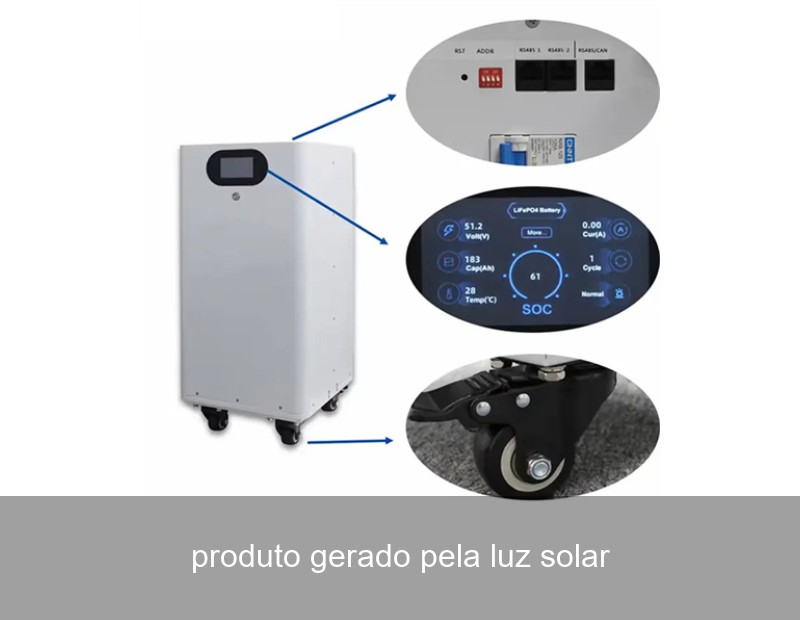
Think of a Battery Energy Storage System (BESS) as a "time machine" for the produto gerado pela luz solar. It captures the excess electricity produced during sunny periods, stores it efficiently, and releases it precisely when it's needed most. Modern BESS, utilizing advanced lithium-ion or other chemistries, are highly sophisticated assets that do much more than just charge and discharge.
| BESS Function | Benefit for Solar Power |
|---|---|
| Energy Arbitrage | Store cheap solar energy at noon, sell it during expensive peak evening hours. |
| Frequency Regulation | Provide instantaneous response to stabilize grid frequency, compensating for solar variability. |
| Capacity Firming | Make a solar farm's output predictable and reliable, like a traditional power plant. |
| Peak Shaving | Reduce demand charges for commercial & industrial users by using stored solar power during high-tariff periods. |
The integration of BESS with solar installations is no longer a luxury; it's becoming the standard for maximizing the economic and operational value of every kilowatt-hour generated by the sun. This is where expertise in system design and smart energy management becomes critical.
Visualizing the Solution: Solar + Storage in Action

Image Source: Unsplash (Representative image of a solar plus storage facility)
Case Study: A Real-World Success Story from Spain
Let's look at a concrete example from southern Europe, a region with excellent solar resources. A 50 MW solar farm in Andalusia, Spain, was experiencing significant curtailment during spring and summer months. Despite a high annual yield, nearly 15% of its potential produto gerado pela luz solar was being wasted due to grid congestion and low midday prices.
The solution was a co-located 20 MW / 40 MWh BESS. Here’s what happened after its commissioning:
- Revenue Increase: By storing curtailed and low-price energy and discharging during the evening peak (7-10 PM), the plant's overall revenue increased by over 22% annually.
- Grid Services: The BESS also participates in the Spanish frequency regulation market, providing an additional, steady revenue stream by using its rapid response capabilities to balance the grid. This service alone contributes approximately €120,000 per year.
- Firm Capacity: The hybrid plant can now guarantee a firm power output of 15 MW to the grid operator for critical evening hours, enhancing its contractual value.
This case, mirrored by many projects across the EU and the U.S., demonstrates that solar-plus-storage is a definitive economic and grid-supportive model.
Highjoule's Smart Solutions for Maximizing Solar Assets
At Highjoule, we've been at the forefront of this integration since 2005. We understand that capturing the produto gerado pela luz solar is only the first step; its true potential is unlocked through intelligent storage and management. Our approach goes beyond simply supplying hardware.
For our commercial and industrial clients, as well as solar farm developers, we provide turnkey solutions centered on our H-Series Modular Battery Storage Systems. These systems are engineered for durability, safety, and seamless integration with new or existing solar arrays. Paired with our proprietary Energy Management System (EMS) – JouleBrain AI, the system makes real-time decisions: when to store, when to discharge, and when to provide grid services, all to optimize the financial return on your solar investment.
Whether it's for a manufacturing plant in Germany looking to reduce its energy costs and carbon footprint, a microgrid for a remote community in the U.S., or a utility-scale solar farm in Portugal, Highjoule designs systems that ensure not a single watt of your precious solar product is wasted. Our services encompass feasibility studies, system design, installation, and ongoing performance monitoring and optimization.

Image Source: Unsplash (Representative image of advanced battery storage system components)
The Future Outlook: Smarter, More Resilient Grids
The synergy between solar generation and battery storage is accelerating the transition to a decarbonized grid. As costs continue to fall and software intelligence grows, we will see an ecosystem where millions of distributed solar-plus-storage systems act in concert, forming virtual power plants (VPPs) that provide clean, reliable, and resilient power. The produto gerado pela luz solar will evolve from a variable feed-in tariff commodity to the primary, dispatchable fuel for our economies.
What's the Next Step for Your Solar Project?
Are you planning a new solar installation, or do you have an existing array whose financial and grid potential you suspect is not fully tapped? What specific challenge – be it peak shaving, energy independence, or revenue diversification – is most critical for your operation as you look to harness the full value of the sun's product?
 Inquiry
 Online Chat