


Solar System Without Battery: Is It Still a Smart Energy Choice in 2024?
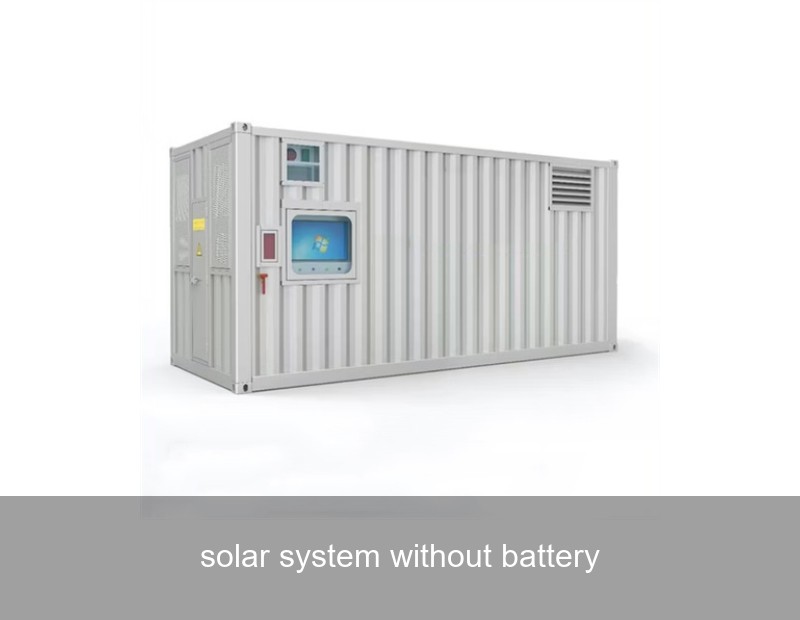
You’ve seen the sleek panels on rooftops and heard about slashing electricity bills. The decision to go solar seems straightforward. But here’s a question that stops many homeowners and businesses: Do you really need a battery? The traditional solar system without battery, known as a grid-tied system, is still widely installed. Yet, with changing energy landscapes in Europe and the U.S., is this setup future-proof? Let’s unpack the realities, the data, and the smart alternatives for a resilient energy strategy.
How a Grid-Tied Solar System Without Battery Works
In its simplest form, a solar system without battery is a direct partnership between your rooftop and the utility grid. During sunny hours, your panels generate DC electricity, which an inverter converts to AC power for your home. The magic of net metering comes into play here.
- Excess Generation: When you produce more than you use, the surplus is fed back to the grid. Your meter spins backwards, earning you credits.
- Deficit Times: At night, on cloudy days, or during high-demand periods, you seamlessly draw power from the grid, using up your credits.
It’s an elegant, cost-effective model that has powered the solar revolution for decades. But this elegance hinges on one critical, often overlooked factor: a stable, reliable, and cooperative grid.
The Pros and Cons: A Clear-Eyed Analysis
Let's break down the advantages and limitations to understand who this model still serves best.
| Pros | Cons |
|---|---|
| Lower Upfront Cost: Eliminating batteries reduces initial investment by 30-50%. | No Backup Power: During a grid outage, your solar system shuts off for safety. You're left in the dark. |
| Simpler System: Fewer components mean less maintenance and higher overall efficiency. | Vulnerable to Policy Shifts: Net metering rates are changing in many states and countries, reducing financial returns. |
| Immediate Bill Savings: Directly offsets daytime consumption with self-generated power. | Limited Self-Consumption: You export cheap solar power and import expensive grid power at night, missing out on full value. |
The Data Reality: Net Metering and Grid Dependency
The economics of a battery-less system are tightly wound to net metering policies. In the U.S., states like California has transitioned to NEM 3.0, which drastically reduces the compensation for exported solar energy. In Europe, feed-in tariffs have been phased out in major markets like Germany and Spain.
This creates a fundamental mismatch: you generate power when the sun shines (often midday), but energy demand and prices peak in the evening. The U.S. Department of Energy notes that high solar penetration without storage can strain grid management. Essentially, a solar system without battery makes you an active participant in an increasingly volatile energy market, with little control over the terms of trade.
Case Study: A California Business’s Wake-Up Call
Consider a real-world example. A mid-sized commercial bakery in Fresno, California, installed a 100kW solar system without battery in 2019 under the old NEM 2.0 rules. Their logic was sound: high daytime energy use for ovens and cooling. The system cut their bills by 60% initially.
However, two factors changed their calculus:
- Policy Change: The shift to NEM 3.0 in 2023 reduced the value of their exported energy by about 75%.
- Grid Instability: In 2024, a series of Public Safety Power Shutoffs (PSPS) due to wildfire risk halted their production for over 30 hours, costing them tens of thousands in spoiled inventory and lost revenue.
The bakery’s manager told us, “Our solar panels were useless when we needed them most. We were saving money until we weren’t—and then we were losing a lot more.” They are now retrofitting a battery storage system, a more complex and costly endeavor than an integrated initial installation.

Image Source: Unsplash (Representative image of commercial solar)
The Modern Solution: Intelligent Hybrid Systems
The conversation is no longer "solar vs. solar with battery." The advanced solution is an intelligent, software-driven hybrid system. This system includes solar, battery storage, and a smart energy management system (EMS) that optimizes every kilowatt-hour.
- Maximize Self-Consumption: Store midday solar excess for use during the expensive evening peak.
- Automatic Backup: Provide seamless, instant power during grid outages.
- Grid Services: In some markets, systems can participate in demand response programs, generating additional revenue.
- Future-Proofing: A hybrid system insulates you from net metering policy changes and rising electricity rates.
How Highjoule Enables Smarter Solar Energy Management
This is where Highjoule’s expertise transforms the equation. Since 2005, we’ve moved beyond simply providing hardware to delivering intelligent, integrated power solutions. For homeowners and businesses considering solar, we offer a more resilient path.
Our Highjoule H-Series Hybrid Storage Systems are designed to integrate seamlessly with new or existing solar arrays. The true intelligence lies in our EnergyOS™ platform, which acts as the brain of your power ecosystem. It continuously analyzes weather forecasts, your consumption patterns, and real-time grid electricity rates to make autonomous decisions: charge the battery, power the home, or sell back to the grid at the optimal moment.

Image Source: Unsplash (Representative image of a home battery system)
For our commercial and industrial clients, Highjoule’s microgrid controllers can orchestrate multiple energy sources—solar, storage, and even backup generators—to ensure operational continuity and maximize ROI. We don’t just sell a battery; we provide a strategic asset that manages energy cost and risk.
What's Your Energy Resilience Plan?
The story of the California bakery is not unique. It’s a pattern playing out across sunny regions in the U.S. and Europe. A solar system without battery is an excellent start, but in today's world, it represents an incomplete energy strategy. It addresses cost but leaves you exposed to volatility and disruption.
So, we leave you with this question to ponder: As you invest in a clean energy future, are you looking only to save on today's bill, or are you building a resilient, independent, and truly intelligent power system for the challenges of tomorrow? The choice defines not just your energy savings, but your energy security.
 Inquiry
 Online Chat