


Pure Sine Wave Solar BESS: The Essential Guardian for Your Clean Energy and Sensitive Electronics
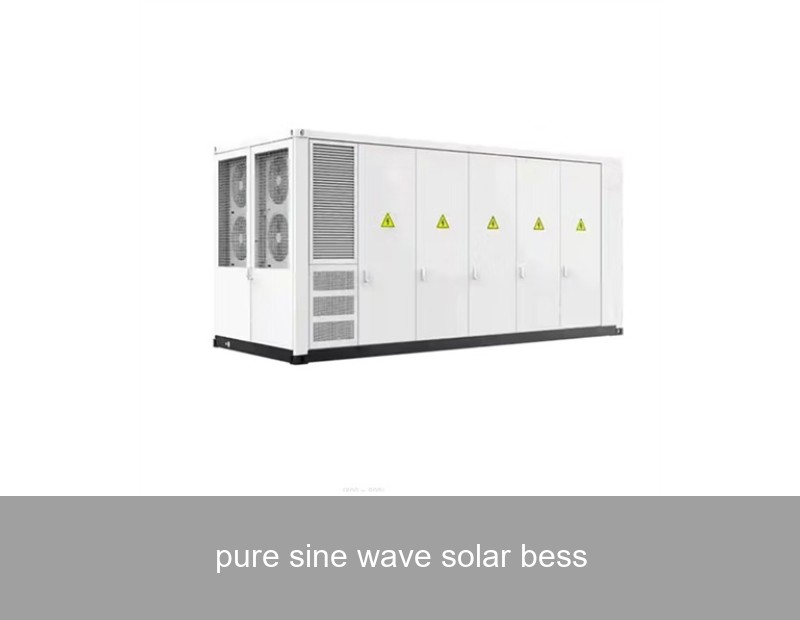
You've made a smart investment in solar panels to capture free energy from the sun. And pairing them with a Battery Energy Storage System (BESS) is the ultimate move for energy independence. But here's a question many homeowners and business operators don't think to ask: What does the power coming out of your battery actually look like? Not all power is created equal. For a system that truly protects your investment and powers your modern life seamlessly, the technology inside your inverter—specifically, a pure sine wave solar BESS—is not just a detail; it's the cornerstone of quality, reliability, and safety.
The Hidden Problem: "Dirty Power" from Your Solar Panels
Solar panels generate direct current (DC) electricity. Your home and the grid run on alternating current (AC). The device that bridges this gap is the inverter, a core component of any BESS. Its job is to convert DC to AC as efficiently and cleanly as possible. The "cleanliness" of this AC power is defined by its waveform—the graphical shape of the voltage over time.
Utility grid power, in an ideal world, is delivered as a smooth, rolling pure sine wave. However, the conversion process within cheaper or older inverter technologies can produce a "modified sine wave" or a choppy, "dirty" waveform. This might be fine for rudimentary tools or simple light bulbs, but it's a silent killer for the sophisticated electronics that fill our homes and businesses today.

Image Source: Power Electronic Tips (Illustrative comparison of waveforms)
The BESS Power Quality Divide: Modified Sine Wave vs. Pure Sine Wave
Let's break down the critical difference, because this choice fundamentally impacts what you can power and for how long.
| Feature | Modified Sine Wave Inverter (Typical in Low-Cost BESS) | Pure Sine Wave Inverter (In a High-Quality Solar BESS) |
|---|---|---|
| Waveform | Stepped, jagged approximation of a sine wave | Smooth, continuous wave identical to grid power |
| Compatibility | Basic resistive appliances (heaters, incandescent bulbs). Can damage or cause malfunctions in sensitive devices. | Everything. From motors and pumps to medical equipment, laptops, LED lighting, and variable-speed appliances. Safe and optimal for all. |
| Efficiency & Energy Use | Motors and compressors run hotter, use 10-20% more power, and have a significantly reduced lifespan. | Appliances run cooler, at their rated efficiency, and enjoy a normal operational life. |
| Audible Noise | Causes buzzing in speakers, audio equipment, and some lighting fixtures. Fans and motors hum loudly. | Silent, hum-free operation of all connected equipment. |
| Long-Term Value | Lower upfront cost, but high risk of damaging expensive electronics, leading to higher total cost of ownership. | Higher initial investment that pays off through protection of all assets, superior efficiency, and unwavering reliability. |
Key Benefits of a Pure Sine Wave Solar BESS
Choosing a system built around a pure sine wave inverter isn't just about avoiding problems—it's about unlocking superior performance.
- Universal Compatibility: Power your entire home or business with confidence, including sensitive gear like:
- Computers, Wi-Fi routers, and home entertainment systems
- High-efficiency HVAC systems with variable-speed compressors
- Kitchen appliances with digital controls (microwaves, espresso machines)
- Power tools with speed controls and medical devices (CPAP machines)
- Maximized Appliance Lifespan: The clean power reduces electrical and thermal stress on components. That means your refrigerator's compressor or your well pump won't be working overtime and burning out prematurely.
- True Peace of Mind During Outages: When the grid fails, your solar BESS becomes your sole power source. With a pure sine wave output, you won't have to worry about what you can or cannot plug in during an emergency—everything works as it should.
- Higher System Efficiency: Cleaner power conversion often means less energy is lost as heat within the inverter itself, putting more of your harvested solar energy to useful work in your home.
Real-World Impact: A California Winery Case Study
The theoretical advantages become crystal clear in practice. Consider a medium-sized winery in Sonoma County, California, that installed a solar BESS for energy cost savings and backup power during Public Safety Power Shutoffs (PSPS).
The Problem: Their initial, budget-oriented storage system used a modified sine wave output. During grid outages, their critical refrigeration units and fermentation tank control systems experienced:
- Audible humming and overheating in compressor motors.
- Unexplained resets in the digital temperature controllers.
- A measurable 15% increase in energy consumption during backup mode, shortening the available backup time.
The Solution & Data: They upgraded to a pure sine wave solar BESS solution. Post-installation monitoring over one year showed:
- 0 malfunctions in sensitive control equipment during 12 outage events totaling 80 hours.
- Refrigeration energy use during islanded mode returned to grid-parity levels, extending backup duration by nearly 20%.
- Elimination of motor hum, reducing noise pollution in the production facility.
This case underscores that for commercial applications where equipment longevity and process reliability are directly tied to revenue, a pure sine wave BESS is non-negotiable. The data on increased motor efficiency aligns with findings from resources like the U.S. Department of Energy on motor system optimization.
Choosing the Right System: What to Look For
When evaluating a solar battery storage system, don't just look at kilowatt-hour capacity. Dig deeper into the power quality specifications:
- Explicit "Pure Sine Wave" Specification: The product literature should state this clearly, not hide it in technical sheets.
- Total Harmonic Distortion (THD): This is the key metric. Look for a THD of less than 3% (ideally under 2%) at full load. Lower THD means a cleaner, purer sine wave. Highjoule systems, for instance, are engineered to maintain a THD of <2% across their entire operating range.
- Surge Power Capacity: Can the inverter handle the brief, high-power surge required to start large motors (like well pumps or air conditioners) without stumbling? A quality pure sine wave inverter will have a high surge rating.
- Grid-Forming Capability: In off-grid or microgrid scenarios, the BESS must "form" a stable grid on its own. This requires sophisticated control software working in tandem with the pure sine wave inverter—a hallmark of advanced systems.
The Highjoule Solution: Engineered for Clean, Reliable Power
At Highjoule, with nearly two decades of experience powering homes, businesses, and microgrids worldwide, we believe the output of your energy storage system should be better than the grid, not just a substitute. Our integrated pure sine wave solar BESS solutions are designed with this philosophy at their core.
Our HPS Series for residential and commercial applications features advanced hybrid inverters with ultra-low THD (<2%) pure sine wave output. This ensures that whether you're running a delicate research lab in Germany, a precision machining workshop in Texas, or simply want your smart home to function flawlessly during a blackout, the power is consistently clean and stable.
Furthermore, our systems are built with grid-forming intelligence. This means in a microgrid setup or during an outage, the Highjoule BESS doesn't just back up your home; it creates a perfect, miniature replica of the utility grid, enabling seamless operation of multiple homes or critical loads without cross-interference. This technology is crucial for the evolving energy landscape, as noted by research from institutions like the National Renewable Energy Laboratory (NREL).

Image Source: Highjoule (Example of a installed HPS Series residential BESS)
We combine this superior power electronics with high-density, long-cycle life lithium-ion batteries and an intuitive energy management system. This allows you to maximize solar self-consumption, participate in demand response programs where available, and build genuine resilience—all on a foundation of impeccable power quality.
Your journey to energy independence is too important to compromise on the quality of the power that fuels it. What sensitive device in your home or business can you absolutely not afford to have damaged or malfunction during the next power outage?
 Inquiry
 Online Chat