


Demystifying the Solar Charge Controller Circuit: The Brain Behind Your Battery's Health
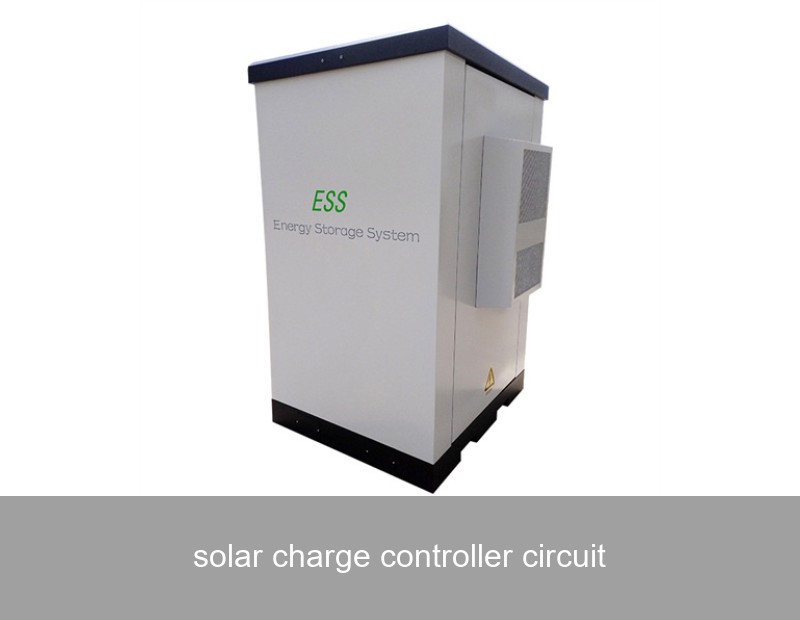
Have you ever wondered how the energy captured by your solar panels safely makes its way into your battery without causing damage? The unsung hero making this possible is the solar charge controller circuit. This intelligent device acts as the crucial gatekeeper, managing the flow of electricity to ensure your battery storage system lives a long, healthy, and efficient life. Whether you're powering a remote cabin, a residential home, or a commercial facility, understanding this component is key to a reliable renewable energy setup. As a global leader in advanced energy storage since 2005, Highjoule designs smart systems where every circuit, including the sophisticated charge controllers within our units, is optimized for performance and durability.
Table of Contents
- What is a Solar Charge Controller Circuit?
- How Does It Work? PWM vs. MPPT Explained
- Key Components Inside the Circuit
- Why a Quality Circuit is Non-Negotiable
- Real-World Impact: A Case Study from California
- Choosing and Integrating the Right Controller
- The Future of Charge Control Technology
What Exactly is a Solar Charge Controller Circuit?
At its core, a solar charge controller is a voltage and current regulator. Its primary job is to prevent batteries from overcharging during the day when solar production is high and to stop reverse current at night when panels are inactive. The solar charge controller circuit is the intricate network of electronic components on the controller's board that makes these decisions and actions possible. Think of it as the brain of the charging process, constantly monitoring battery voltage and temperature to apply the optimal charging algorithm.
How Does It Work? The Critical PWM vs. MPPT Distinction
Not all charge controller circuits are created equal. The two primary technologies dominate the market, and the difference lies in their circuitry's complexity and efficiency.
PWM (Pulse Width Modulation) Controllers
These are the reliable veterans. A PWM circuit acts like a rapid switch between the solar array and the battery. As the battery nears full charge, it pulses the connection on and off, effectively reducing the average current flowing in. It's simple and cost-effective but has a key limitation: it must match the solar array's voltage to the battery bank's voltage, often wasting potential solar energy, especially on cooler, sunny days.
MPPT (Maximum Power Point Tracking) Controllers
This is where modern power electronics shine. An MPPT circuit is far more sophisticated. It doesn't just switch; it actively transforms. Using a DC-DC converter, it can take the higher voltage, lower current input from the solar panels and convert it into the lower voltage, higher current output ideal for charging batteries. By constantly tracking the panel's maximum power point (that sweet spot on the I-V curve), it can extract up to 30% more energy from the same panels compared to PWM, especially in cold or variable weather. This intelligence is baked directly into its advanced circuitry.
Highjoule's integrated energy storage systems for commercial and industrial applications leverage high-efficiency MPPT technology within their built-in power management systems. This ensures that every possible kilowatt-hour from your rooftop or solar farm is harvested and stored intelligently.
Inside the Box: Key Components of the Circuit
What makes up this intelligent brain? Let's break down the major components you'd find on a typical MPPT charge controller circuit board:
| Component | Function in the Circuit |
|---|---|
| Microcontroller (MCU) | The true brain. It runs the charging algorithms, monitors voltages and currents, and makes real-time decisions. |
| DC-DC Converter (Buck/Boost) | The heart of an MPPT. This complex arrangement of transistors (MOSFETs), inductors, and capacitors steps down (buck) or steps up (boost) the voltage to match the battery. |
| Current & Voltage Sensors | These provide constant feedback to the MCU about input from panels and output to the battery, enabling precise control. |
| Heat Sink & Thermal Management | High currents generate heat. A robust heat sink and temperature sensors protect the circuit from overheating, ensuring reliability. |
| Protection Circuits (Fuses, TVS Diodes) | Safeguards against lightning surges, reverse polarity, and short circuits, protecting both the controller and your valuable battery investment. |
Beyond Basics: Why a Quality Circuit is Non-Negotiable
You might ask, "Can't I just use the cheapest controller?" Technically, yes. But the long-term consequences for your battery and your wallet can be severe. A poorly designed solar charge controller circuit with inferior components or lacking precise algorithms can lead to:
- Battery Murder: Chronic undercharging leads to sulfation. Overcharging causes excessive gassing and thermal runaway. Both drastically shorten battery lifespan, often the most expensive part of your system.
- Wasted Energy & Money: An inefficient circuit (like a basic PWM in a non-ideal setup) leaves significant solar energy unharvested, extending your system's payback period.
- System Failure: Lack of proper surge protection can result in a single storm frying your entire controller, leaving your system inoperable.
This is why at Highjoule, we view the charge controller not as an accessory but as a core component of system intelligence. Our HPS Series for residential and small commercial applications features advanced, proprietary battery management algorithms that go beyond simple charging. They integrate seamlessly with lithium-ion batteries (like our own Highjoule LiFePO4 solutions) to perform state-of-charge calibration, cell balancing, and temperature-compensated charging, all managed by meticulously engineered circuitry.

Image Source: Unsplash (Representative image of electronic circuitry)
Real-World Impact: A Case Study from a California Winery
Let's move from theory to practice. A mid-sized winery in Napa Valley, California, installed a 150 kW solar array to offset its high energy costs for refrigeration and lighting. Their initial setup used a string of standard, off-the-shelf PWM controllers for the battery bank supporting their critical cold storage.
The Problem: The team noticed their battery bank (a significant investment) was consistently underperforming and required premature equalization charges. Data logging showed a consistent 18-22% loss in harvestable solar energy during the crucial morning and late afternoon hours, and battery health was degrading faster than expected.
The Solution & Data: Upon consultation, they upgraded to a Highjoule industrial microgrid controller with integrated, high-capacity MPPT circuits. The results, measured over one year post-installation, were striking:
- Energy Harvest Increase: The system captured 25% more energy annually due to the MPPT efficiency, especially during partial shading and cool mornings.
- Battery Health: The adaptive, multi-stage charging algorithm tailored for their specific battery chemistry reduced stress cycles. Projected battery lifespan increased by an estimated 40%.
- ROI: The increased energy yield and deferred battery replacement cost shortened the payback period for the entire storage system by nearly 3 years.
This case underscores that the intelligence embedded in the charge controller's circuit directly translates to tangible financial and operational benefits. You can read more about the importance of system efficiency in studies by the National Renewable Energy Laboratory (NREL).
Choosing and Integrating the Right Controller for Your System
Selecting a controller isn't just about matching voltage and current ratings. Consider these factors, which are all dictated by the underlying circuit design:
- System Voltage: Match the controller's input voltage range to your solar array's open-circuit voltage (especially important in cold climates where voltage rises).
- Current Rating: Choose an MPPT controller with a current rating at least 25% higher than your array's short-circuit current (Isc) for headroom.
- Battery Chemistry Compatibility: Ensure the circuit's programmed algorithms support your battery type (Flooded, AGM, Gel, Lithium).
- Scalability & Monitoring: For commercial setups, consider controllers that can communicate with a central energy management system, like Highjoule's GridShield Platform, which provides fleet-wide visibility and control.
The Future of Charge Control Circuitry
The evolution of the solar charge controller circuit is moving towards deeper integration and AI-driven optimization. We're seeing trends like:
- Integrated Power Electronics: The controller is becoming less of a standalone box and more a set of circuit functions embedded within an all-in-one inverter/energy storage system, reducing complexity and points of failure.
- Predictive Charging: Using weather forecasts and load consumption patterns, future circuits will adjust charging strategies in advance to maximize self-consumption or grid services revenue.
- Enhanced Grid Services: In grid-tied systems with storage, the "charge controller" function will be part of a broader grid-interactive circuit that can provide frequency regulation or voltage support based on utility signals.
Highjoule's R&D is actively working on these next-generation technologies, ensuring our products not only manage energy but also intelligently interact with the broader energy ecosystem. For a deeper dive into power electronics in renewables, the IEEE Power Electronics Society is an authoritative resource.

Image Source: Unsplash (Representative image of a modern solar and storage installation)
Your System's Nervous System
The solar charge controller circuit is much more than a simple regulator; it's the nervous system connecting your solar generation to your storage, making intelligent decisions every second. Investing in a system with a robust, well-designed control circuit is an investment in the longevity of your batteries, the efficiency of your energy harvest, and the overall reliability of your power supply.
What specific challenges are you facing with your current solar-plus-storage setup—is it battery life, unexplained energy losses, or the complexity of scaling up? Understanding the role of the charge controller might be the first step toward your solution.
 Inquiry
 Online Chat