


Maximize Your Solar ROI: How a PVMate Solar Immersion Controller Turns Excess Energy into Free Hot Water
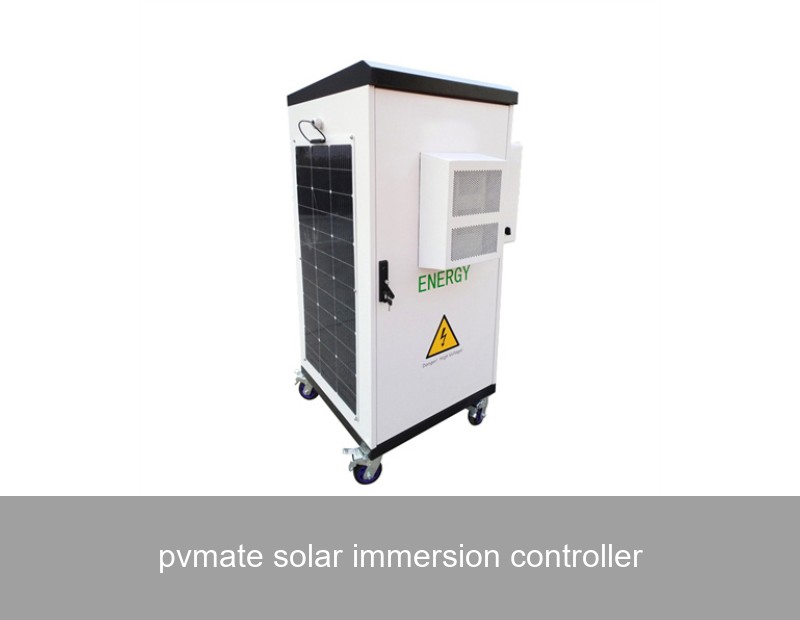
it's a brilliantly sunny afternoon. Your rooftop solar panels are humming away, producing more clean electricity than your home can use. You glance at your energy monitor and see that precious kilowatt-hours are being exported back to the grid for a minimal feed-in tariff. Meanwhile, your gas or electric boiler is quietly burning fossil fuels (or using expensive grid power) to heat your water tank. There's a disconnect here, isn't there? What if you could channel that surplus solar energy directly into heating your water, slashing your bills and boosting your green credentials? This is precisely where a PVMate solar immersion controller comes in – it's the smart device that acts as an energy traffic cop, ensuring no solar photon goes to waste.
The "Spilled Solar" Problem and a Brilliantly Simple Solution
For many homeowners with solar PV, the midday solar surplus is a common phenomenon. Your system is sized to meet your annual needs, but production peaks when consumption is often low. The result? Up to 50% of your self-generated solar energy might be exported if you don't have a battery. While selling it back is good, the financial return is often a fraction of the cost of buying power from the grid later that evening.
This is where solar diversion, or "power dumping," shines. The concept is elegantly simple: use a dedicated controller to detect surplus solar power and divert it to an immersion heater element in your hot water cylinder. It's a direct, efficient way to store energy as heat. The PVMate solar immersion controller is a leading example of this technology, but it goes far beyond simple on/off switching. It represents the intelligent evolution of this idea, optimizing for both energy capture and system health.
The PVMate Solar Immersion Controller: A Smart Energy Manager, Not Just a Switch
So, what makes a modern controller like the PVMate stand out? It's the brains behind the operation. Early diverters were often crude, turning the heater on at a fixed export threshold and off when import was detected. Today's advanced controllers are dynamic energy managers.
Think of the PVMate as having a constant, real-time conversation with your home's energy flow. It doesn't just look for export; it precisely matches the power to the immersion heater to the *exact* amount of surplus available. This means:
- No Grid Import: It has sophisticated sensors to ensure it never, ever causes you to draw from the grid to heat water.
- Optimized Heating: It can modulate power (if used with a compatible heater) to use even small amounts of surplus efficiently, rather than needing a large surplus to trigger.
- System Protection: It includes safeguards to prevent overheating of the water cylinder and the immersion heater itself.
This intelligent operation maximizes the utilization of every watt you generate. It transforms your hot water cylinder into a thermal battery, a concept we at Highjoule are deeply passionate about. While a thermal battery stores energy as heat, a chemical battery system stores electricity for later use. The most efficient homes often combine both.
Highjoule's Integrated Approach: From Thermal to Chemical Storage
At Highjoule, we view technologies like the PVMate solar immersion controller as a crucial first layer in a comprehensive home energy management strategy. It's the most cost-effective way to capture initial surplus. For energy independence, the next step is integrating a high-performance battery storage system like our Highjoule H-Power Series.
Imagine this setup: Your surplus solar first satisfies all home loads. Any excess is intelligently diverted by a controller to heat your water. Once the water is hot, further surplus is then channeled to charge your home battery. Finally, any remaining energy is exported. This multi-layer approach ensures absolute priority for self-consumption, creating a truly resilient and efficient energy ecosystem for your home.
Real-World Savings: A Case Study from the UK
Let's move from theory to hard numbers. A 2023 monitoring study of a household in Bristol, UK, provides a clear picture of the impact. The home had a 4.2kWp solar array and a standard gas boiler for hot water.
| Metric | Before PVMate Controller | After PVMate Controller Installation |
|---|---|---|
| Solar Self-Consumption | 35% | 68% |
| Gas Used for Water Heating | ~12 kWh per day | ~4 kWh per day |
| Estimated Annual Savings | -- | £320-£380 |
The household installed a PVMate solar immersion controller alongside a new immersion heater. Over the summer months, the gas boiler rarely fired for hot water. The controller increased their direct solar use by over 30%, effectively providing nearly free hot water from April to September. The payback period for the hardware and installation was calculated at under 3 years – a fantastic return on investment. You can explore similar field study data from the U.S. Department of Energy.

Image: A conceptual diagram of solar energy being used for home electricity and water heating. (Source: Wikimedia Commons, Creative Commons)
Beyond the Water Tank: Integrating with Full Energy Storage Systems
While immensely valuable, a solar immersion controller addresses one specific load. For whole-home energy resilience and to maximize off-grid potential, pairing thermal storage with electrical storage is the ultimate goal. This is where Highjoule's expertise as a global provider of advanced battery energy storage systems (BESS) comes into play.
Our Highjoule H-Power Series for residential use is designed with this synergy in mind. These intelligent lithium-ion phosphate (LiFePO4) systems come with integrated energy management software that can be configured to prioritize loads. In practice, the system can be set to direct surplus solar in this order: 1) Home loads, 2) Hot water diversion (via a relay signal to your PVMate), 3) Battery charging, 4) Grid export.
For commercial and industrial applications, our Highjoule C&I Matrix Solutions take this logic to a massive scale, managing solar, storage, and multiple thermal or process loads to reduce demand charges and provide backup power. The core principle remains: intelligent control unlocks the full value of generated renewables.
Choosing the Right Controller for Your Home
If you're considering a PVMate solar immersion controller or similar, here are key factors to discuss with your installer:
- Compatibility: Does it work with your existing inverter and meter type? Most modern controllers are compatible with standard systems.
- Monitoring: Does it offer user-friendly app-based monitoring? Seeing your savings in real-time is rewarding and informative.
- Scalability: Is it part of a broader ecosystem? Choosing a device that can integrate with a future battery system, like those from Highjoule, protects your investment.
- Safety Certifications: Ensure it has all necessary regional safety marks (e.g., CE, UL).
For deeper technical insights on inverter and controller interactions, resources from the National Renewable Energy Laboratory (NREL) can be invaluable.

Image: Modern energy monitoring is key to managing solar diversion and storage. (Source: Unsplash)
The Future of Solar Diversion is Intelligent and Integrated
The journey of a home from energy consumer to "prosumer" starts with maximizing self-consumption. The PVMate solar immersion controller is a proven, accessible entry point on that journey. It turns an unavoidable byproduct of solar production – the midday surplus – into a tangible asset: free, renewable hot water.
As we move towards smarter grids and more dynamic energy tariffs, the role of such intelligent devices will only grow. They will communicate not just with your solar system, but with the grid itself, heating water when energy is cheapest and greenest. At Highjoule, we are building that integrated future today, where thermal storage, chemical battery storage, and sophisticated software work in unison to create affordable, reliable, and 100% sustainable power solutions for homes and businesses.
Is your hot water tank ready to become the first step in your home's intelligent energy ecosystem? What could you power with the energy you're currently sending back to the grid?
 Inquiry
 Online Chat