


How Much Does a Railway Battery System Cost? A Comprehensive Guide
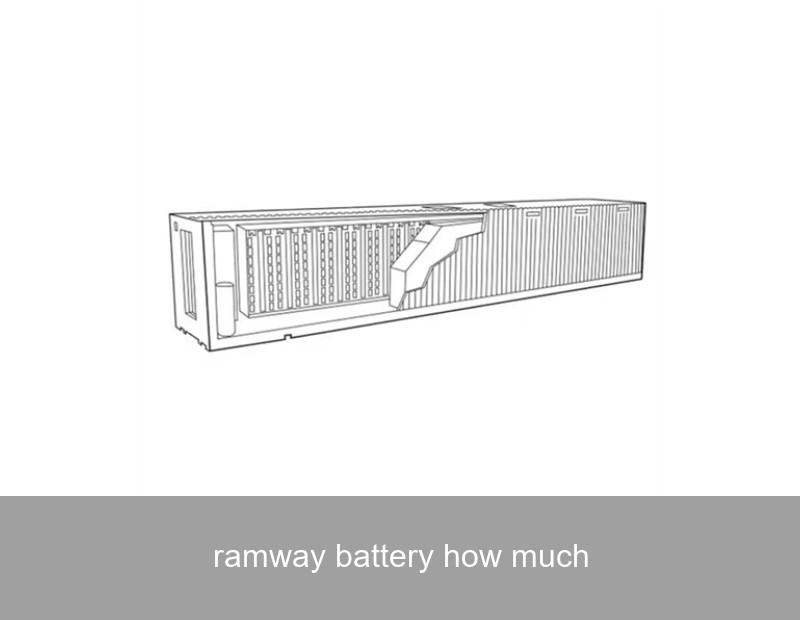
If you're involved in railway operations, whether for a mainline, a tram network, or an industrial siding, you've likely asked the question: "Railway battery how much?" It's the crucial starting point for any project considering energy storage. But as you'll discover, the answer is less like a simple price tag and more like a tailored investment plan. The cost of a railway battery system is a fusion of technology, scale, and long-term value, directly impacting operational resilience, energy bills, and sustainability goals. Let's unpack the real factors behind the investment.
Table of Contents
- The Real Question Behind "How Much?"
- Key Cost Factors for Railway Battery Systems
- Battery Technology Breakdown: From Chemistry to Cost
- Case Study: Real Numbers from a European Tram Depot
- The Highjoule Solution: Engineering Value Beyond the Price
- Understanding Total Cost of Ownership (TCO)
- Your Next Step: From Cost Question to Project Plan
The Real Question Behind "How Much?"
Asking "railway battery how much?" is similar to asking "how much does a house cost?" The range is vast. A basic backup system for signaling on a remote line is fundamentally different from a multi-megawatt hour installation for regenerative braking energy recovery in a busy metro network. The initial capital expenditure (CapEx) is just one piece of the puzzle. The more insightful question is: What is the total value and return on investment (ROI) this system will deliver over its 15-20 year lifespan? This shifts the focus from mere purchase price to long-term benefits like reduced peak demand charges, lower energy consumption, deferred grid infrastructure upgrades, and enhanced operational reliability.

Image Source: Unsplash - Railway systems are prime candidates for battery storage to capture regenerative braking energy.
Key Cost Factors for Railway Battery Systems
To understand the cost, you must understand the components that drive it. Here are the primary levers:
- Energy Capacity (kWh/MWh): How much energy do you need to store? This determines the number of battery cells and is a major cost driver. Needs range from hundreds of kWh for backup to tens of MWh for full electrification support.
- Power Rating (kW/MW): How quickly do you need to charge or discharge the energy? High-power applications (like capturing braking energy from a heavy train in seconds) require robust power conversion systems, impacting cost.
- Battery Chemistry: The choice between Lithium Iron Phosphate (LFP), NMC, or emerging technologies affects upfront cost, lifespan, safety, and operational tolerance.
- System Integration & Engineering: This includes the Power Conversion System (PCS), medium-voltage switchgear, thermal management, control software, and grid interconnection. For railways, this must meet stringent reliability and safety standards.
- Site-Specific Costs: Civil works, containerization, fire suppression systems, and local permitting can vary significantly by location, especially between different US states or European countries.
| System Scale | Typical Configuration | Primary Application | Cost Influence Range |
|---|---|---|---|
| Small / Backup | 500 kWh - 2 MWh | Signaling, station backup, remote section power | High per-kWh cost due to fixed integration expenses |
| Medium / Recuperation | 2 MWh - 10 MWh | Regenerative braking capture, peak shaving for depots | Most common for ROI projects; optimized balance |
| Large / Grid Support | 10 MWh+ | Full electrification support, grid frequency services | Lower per-kWh cost; dominated by core battery & PCS costs |
Battery Technology Breakdown: From Chemistry to Cost
Not all batteries are created equal. For railway applications, safety, cycle life, and durability are paramount.
- Lithium Iron Phosphate (LFP): The dominant choice for modern railway storage. It offers excellent thermal stability, long cycle life (often 6000+ cycles), and is cobalt-free. While its energy density is lower than NMC, its safety and longevity make it the preferred chemistry for stationary storage, providing a better TCO. This is the core technology Highjoule utilizes in its H-Series Industrial Battery Systems.
- Nickel Manganese Cobalt (NMC): Higher energy density but historically higher cost and greater thermal runaway risk. Advancements are ongoing, but for large-scale, safety-critical railway infrastructure, LFP is often the engineered choice.
According to a 2023 NREL cost report, the average installed cost for utility-scale battery storage in the US has been declining, but site-specific engineering for railway applications means costs are tailored to the challenge.
Case Study: Real Numbers from a European Tram Depot
Let's move from theory to practice. A municipal tram operator in Germany was facing steep “peak demand” charges from their utility, spiking every morning when trams were prepared for service and during evening braking. Their question was: "Railway battery how much would it cost to solve this?"
The Project: A 4.2 MWh / 2.5 MW battery storage system was installed at a central depot.
- Capital Cost: The turnkey project had a total installed cost of approximately €1.8 million.
- Savings Mechanism: The system was programmed to charge slowly during off-peak, low-cost hours. During morning and evening peaks, it discharged to power the depot and capture braking energy, avoiding drawing expensive power from the grid.
- Annual Financial Return: The system reduced the depot's peak demand by over 30%, leading to annual savings of €280,000 on electricity costs.
- Simple Payback Period: €1.8M investment / €280k annual savings = ~6.4 years. With an expected system life of 20+ years, the long-term value is clear.
- Additional Benefits: The system also provided backup power for critical control systems, enhancing network resilience.

Image Source: Unsplash - A technician inspecting a containerized battery energy storage system similar to those used in railway applications.
The Highjoule Solution: Engineering Value Beyond the Price
At Highjoule, we understand that your "railway battery how much" inquiry is the beginning of a partnership. We don't just sell hardware; we deliver intelligent, integrated power solutions. For railway applications, our H-Series GridStack platform is engineered for mission-critical performance.
Our systems feature:
- LFP Battery Architecture: Built for safety and marathon-long endurance, not just a sprint.
- Advanced Energy Management System (EMS): The true brain of the operation. Our EMS seamlessly integrates with railway traction power systems, optimizing charge/discharge cycles in real-time to maximize financial savings and grid support. It can be configured for peak shaving, renewables integration, or virtual power plant (VPP) participation.
- Modular & Scalable Design: Start with what you need and expand as your operations grow, protecting your initial investment.
- Global Support & Service: With experience across Europe and North America, we provide full lifecycle support, from feasibility studies and regulatory guidance to long-term performance guarantees.
Understanding Total Cost of Ownership (TCO)
So, let's reframe the initial question. Instead of "railway battery how much to buy?", consider "what is the net cost over its life?"
- Positive Cash Flow: A well-designed system starts generating savings from day one, offsetting its financed cost.
- Maintenance & Warranty: Factor in planned service. Highjoule's predictive analytics minimize downtime and unexpected costs.
- End-of-Life & Recycling: Responsible partners like Highjoule plan for this phase, ensuring environmental compliance and potential residual value from materials.
The ultimate metric is Levelized Cost of Storage (LCOS) – the net present cost per kWh of usable energy over the system's life. A higher-quality, longer-lasting system like those built on LFP chemistry often has a lower LCOS than a cheaper, less durable alternative.
Your Next Step: From Cost Question to Project Plan
The journey to answering "railway battery how much" for your specific operation begins with a conversation about your unique challenges. Are you looking to cut energy costs at a depot, stabilize voltage on a 25kV AC line, or provide resilience for a signaling section?
What specific operational or financial pain point is driving your interest in battery storage today? Share your scenario, and let's explore the tangible value a Highjoule system can bring to your tracks.
 Inquiry
 Online Chat